
Companion Plants
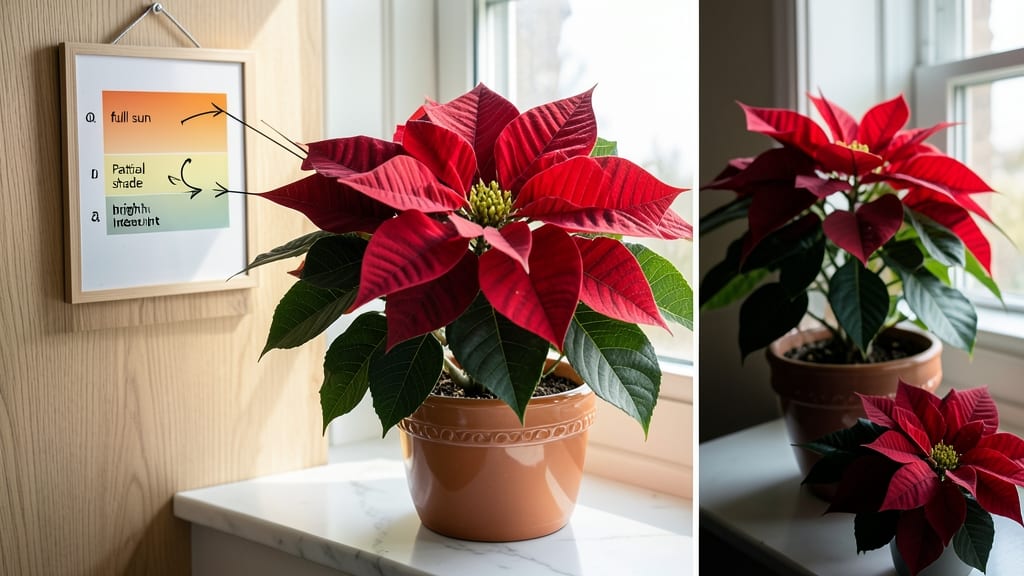
Ideal light requirements for poinsettias: bright indirect light explained
Poinsettias thrive on bright indirect light, making them perfect for indoor holiday decor. Unlike sun-loving plants, they despise harsh rays that can scorch their delicate leaves and bracts. The key is finding that sweet spot where sunlight filters gently through a sheer curtain or bounces off nearby walls.
For optimal growth, aim for 6-8 hours of bright indirect light daily. This mimics their natural tropical habitat where dappled sunlight filters through dense canopies. South-facing windows can work, but only if your poinsettia sits 3-4 feet away from the glass to diffuse intensity.
🎄
| Light Requirement | Specifications | Seasonal Adjustments |
|---|---|---|
| Daily Light Hours | 6-8 hours | Summer: Reduce to 4-6 hours to prevent stress |
| Light Type | Bright indirect | Winter: Supplement with grow lights if natural light drops |
| Distance from Window | 2-4 feet | East/West: Ideal year-round |
| Avoid | Direct sunlight | South: Use sheer curtains to filter light |
| Low-Light Tolerance | 3-4 weeks max | North: Rotate plant weekly for even growth |
In summer months, when sunlight is most intense, poinsettias may need protection from midday rays. I recommend moving them to a spot where they receive morning sun and afternoon shade. This prevents leaf burn while still providing the energy they need for vibrant blooms.
During winter, natural light decreases, and poinsettias may stretch toward windows in search of light. This "legginess" occurs when they don't get enough light. To combat this, rotate your plant quarter-turns weekly so all sides receive equal exposure.
If your home lacks adequate light, consider adding a grow light for 12-14 hours daily.
One common misconception is that poinsettias need direct sunlight to bloom. In reality, they thrive under artificial grow lights that mimic natural conditions. LED grow lights with a 6500K color temperature work exceptionally well, providing the blue and red spectrums poinsettias need for photosynthesis and flowering.
For outdoor enthusiasts, poinsettias can be placed on covered patios or porches during mild weather. Just ensure they're shielded from wind and direct sun. I've had success growing them in partial shade gardens during spring and fall, where they receive filtered sunlight through tree canopies.
🌿
To test if your poinsettia is getting the right light, observe its leaves and stems. Healthy foliage should be deep green and glossy, while stems should be sturdy.
If you notice yellowing leaves or brown spots, it's a sign of too much direct sun. Conversely, pale leaves and elongated stems indicate insufficient light.
Pro tip: Use a light meter to measure your space's light levels. Poinsettias thrive in 1,000-2,000 foot-candles of light. Most indoor spaces fall within this range near windows, but north-facing rooms often require supplementation.
Ideal light requirements for poinsettias: bright indirect light explained
Poinsettias thrive under bright indirect light, mimicking their natural tropical habitat where sunlight filters through the canopy. Aim for 6-8 hours of light daily, but never place them in harsh, direct sunlight—this can scorch their delicate bracts (colored leaves) and leaves.
Think of it like a sunny morning in the shade of a tree.
The key is finding a balanced light spot—near a window but not directly in it. South-facing windows can be too intense unless filtered through sheer curtains. North-facing windows provide gentle light but may not offer enough intensity for vibrant blooms. East or west-facing windows are ideal for most homes.
| Requirement | Specification |
|---|---|
| Daily Light Hours | 6-8 hours |
| Light Type | Bright indirect |
| Best Window | East or west-facing |
| Distance from Window | 2-3 feet away |
| Avoid | Direct sunlight, drafts |
In summer months, poinsettias may need extra care. If you notice leaves turning pale or yellowing, it’s a sign of too much light. Move the plant back a few feet or use a sheer curtain to diffuse the intensity.
During winter, when natural light is scarce, supplement with a grow light for 12-14 hours daily to maintain health.
Rotate your poinsettia quarter-turn weekly to ensure even light exposure. This prevents one side from leaning toward the window, which can lead to uneven growth or sparse foliage. A simple habit like this keeps your plant symmetrical and lush.
If you’re growing poinsettias outdoors in USDA Zone 6a or warmer, they can handle partial shade but still need filtered sunlight. Avoid placing them under the midday sun, especially during peak summer months. Instead, opt for morning sun and afternoon shade for the best results.
Remember, poinsettias are light-sensitive plants. The right balance of light triggers their iconic color change—without it, they may stay green or produce weak, sparse blooms. With the perfect light setup, your poinsettia will reward you with vibrant, show-stopping bracts every holiday season. 🎄