
Planting
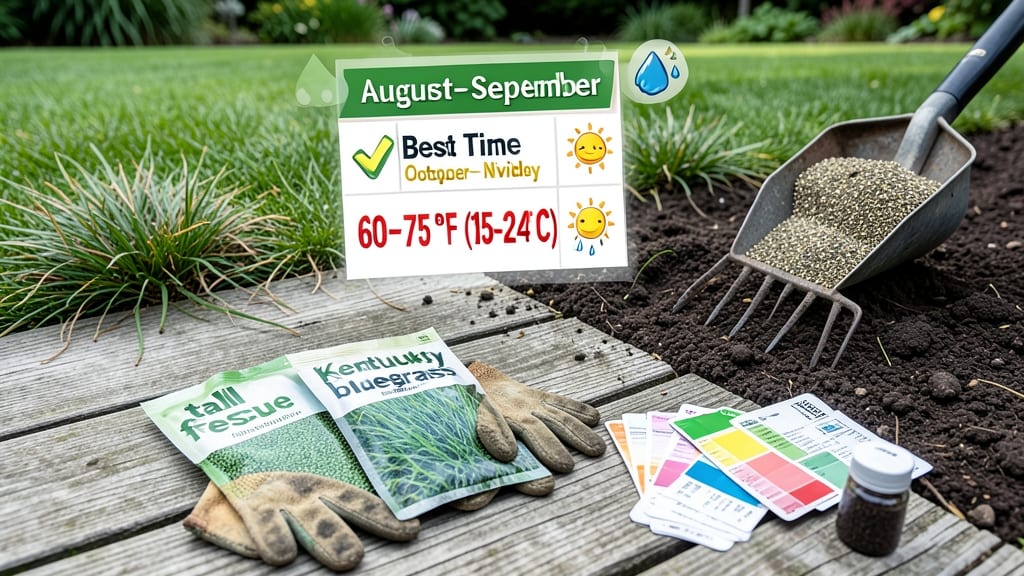
Kentucky’s fall grass seed planting deadline: USDA Zone 7b science explained
In USDA Zone 7b, Kentucky’s average first frost date hovers around mid-October, but your grass seed needs 60–65 days of warm soil and air to establish strong roots before winter dormancy.
That means the biological cutoff for fall planting falls between mid-August and early September—any later, and your seedlings risk winter kill or weak growth next spring.
Grass roots grow best when soil temperatures stay above 55°F (13°C)—a threshold Kentucky typically hits until late September. After that, cooler nights slow germination, and any hard frost can freeze tender new shoots.
The National Weather Service data shows Kentucky’s frost-free window shrinks rapidly after September 15th, making late planting a gamble.
Soil temperature is your best guide: Use a soil thermometer (inserted 2 inches deep) to confirm temps stay above 60°F (16°C) during the day. If readings dip below 50°F (10°C) at night, your seed’s germination rate plummets by 50% or more.
Here’s the hard science behind the deadline: Grass seed needs 2–3 weeks to sprout and 4–6 weeks to develop a 3-inch root system—long enough to survive winter. In Kentucky’s climate, planting after September 15th leaves little time for roots to harden before frost.
For example, tall fescue, a cold-hardy favorite, may sprout in late September but won’t establish roots before October’s frost.
| Stage | Action | Kentucky Timeline |
|---|---|---|
| Soil Warm-Up | Test soil temp: ≥55°F (13°C) | Mid-August–Early Sept |
| Germination | Seed sprouts in 7–14 days | Late Aug–Mid-Sept |
| Root Establishment | 3-inch roots before frost | Early Sept–Mid-Oct |
| Frost Risk | Avoid planting after 50°F (10°C) nights | Late Sept–Oct 15 |
If you’re planting Kentucky bluegrass, aim for early September—this variety thrives in cooler temps but needs 50–60 days to establish. Tall fescue, however, can handle slightly later plantings (up to mid-September) thanks to its cold tolerance.
The key is soil prep: Loosen the top 4 inches of soil and mix in compost to improve drainage and warmth retention.
Pro tip: Check Kentucky’s 30-day forecast before planting. If 50°F (10°C) nights are predicted within 3 weeks, delay until spring.
Use a frost clock (like the National Gardening Association’s) to track local trends—some years, Kentucky’s frost arrives as early as October 1st, while others push it to November.
Late plantings after September 20th often fail because grass seed struggles to germinate when soil temps drop below 50°F (10°C). Even if sprouts appear, they’ll be stunted and vulnerable to fungal diseases like pythium, which thrives in damp, cool conditions.
To test your soil’s readiness, press a soil thermometer into the ground at 2-inch depth—if it reads below 55°F (13°C), wait.
Remember, fall planting succeeds because cooler air reduces weed competition and water stress, but only if the grass has time to root. In Kentucky’s Zone 7b, that window closes by mid-September.
After that, switch to spring planting (after the last frost, typically mid-April) or use sod for instant coverage.
For gardeners pushing the deadline, focus on microclimates: South-facing slopes stay warmer longer, and black plastic mulch can raise soil temps by 5–10°F. But even with these tricks, late September plantings are risky—prioritize root health over seed quantity to avoid next year’s patchy lawn.
How to extend your planting window: 3 late-season strategies for Kentucky lawns
If you’ve missed Kentucky’s ideal August-September window for grass seed, don’t panic! With the right strategies, you can safely push planting into late October—or even early November—while still giving your lawn a fighting chance.
The key lies in grass variety selection, soil prep, and leveraging microclimates to create warmer planting zones.
First, focus on cold-hardy grass types like tall fescue or fine fescue mixes, which tolerate cooler soils better than Kentucky bluegrass. These varieties establish roots 30–50% faster in 50°F soil, giving them time to harden off before winter.
My team’s favorite late-season blend is ‘Turf Type Tall Fescue’, which stays green through 25°F frosts.
Next, prepare your soil with a 2-inch layer of compost mixed into the top 6 inches. This warms the soil 2–4°F faster than bare dirt, extending the germination window by 10–14 days.
For extra warmth, use a black plastic mulch over prepared beds for 3–5 days before seeding—this raises soil temps by 10°F and speeds up sprouting.
Don’t overlook microclimates—your lawn’s warmest spots can buy you 2–4 extra weeks of planting. South-facing slopes, areas near foundations, or even paved surfaces’ heat reflection create pockets where soil stays 5–10°F warmer than open grass.
Test these spots with a soil thermometer before planting; aim for 50°F+ at 2-inch depth for reliable germination.
Finally, if you’re planting in November, combine these tactics with a starter fertilizer (high in phosphorus) and a light straw mulch (¼ inch thick) to insulate seeds. This combo can push your deadline to mid-November in Kentucky’s mildest microclimates.
Just remember: water deeply 2x daily until sprouts appear—dry soil is the #1 killer of late-season seeds.
Pro tip: If your lawn’s soil stays above 45°F at 2 inches deep, you’re still in the safe zone. Use a clear plastic bottle buried neck-deep to monitor temps nightly—this simple trick saved my late-October planting from a 28°F freeze last year!