
Plants
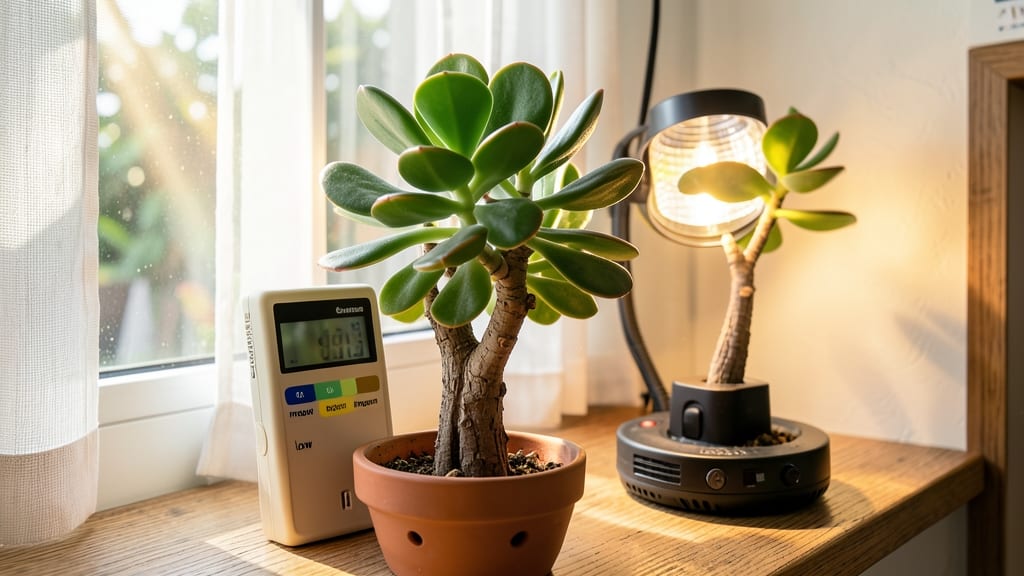
To keep your Jade Plant 🌿 thriving, you might be surprised to learn that how much light does a jade plant require isn’t just about quantity—it’s about quality. Too little light and those plump leaves stretch thin, while too much can leave them crispy and sad.
The secret lies in finding that sweet spot where your succulent gets enough brightness to stay happy without getting sunburned.
Most Jade Plants crave bright indirect light for about 4 to 6 hours daily, making an east-facing window their ideal spot. If you notice your plant leaning or its leaves turning pale, it’s begging for more light—but if they’re turning yellow or brown, you’ve overdone it.
The good news? Adjustments are simple once you know what to watch for.
Whether you're dealing with a dim apartment or a sunny patio, I’ll show you exactly how to balance light for your Jade Plant’s needs. You’ll learn to spot the signs of stress and make quick fixes to keep those leaves looking their best year-round.
Let’s dive into the details so you can give your Jade Plant the perfect light setup—no guesswork required!

Jade plant light requirements: sunlight needs by growth stage
Jade plants (Crassula ovata) thrive under bright indirect light, but their needs shift dramatically as they grow. As a succulent, they store water in their leaves, making them sensitive to both light deprivation and over-exposure.
For seedlings, 4-6 hours of filtered light per day is ideal—think dappled shade from a sheer curtain. Mature plants, however, can handle 6-8 hours of direct morning sun, which builds their resilience without scorching.
During the flowering stage, jade plants crave even more light—8+ hours daily—to produce those stunning pink or white blooms. But here’s the catch: afternoon sun (after 2 PM) can burn their leaves, even for mature plants.
This is where east-facing windows become your best friend, offering gentle morning rays without the harsh afternoon heat.
Seasonal adjustments are key. In spring and fall, jade plants bask in full sun for up to 6 hours daily, but summer’s intense rays demand shade after noon.
I’ve seen jade plants go from lush and green to crispy in weeks when moved from a north window to a south-facing patio without protection. A simple white sheer curtain can make all the difference.
Now, let’s break this down by growth stage so you can tailor your care like a pro:
| Growth Stage | Light Requirements | Daily Hours | Best Placement |
|---|---|---|---|
| Seedlings (0-6 months) | Bright indirect light | 4-6 hours | North or east window, 2-3 ft away |
| Mature Plants (6+ months) | Direct morning sun, indirect afternoon | 6-8 hours | East window or south window with sheer curtain |
| Flowering Stage | Full sun with afternoon shade | 8+ hours | South-facing patio with 3-4 PM shade |
| Winter Dormancy | Bright indirect light | 4-6 hours | West window or under grow lights |
Pro tip: Rotate your jade plant quarter-turns every 2-3 weeks to ensure even growth. I’ve noticed mine develop lopsided stems when left stationary near a window. This simple habit keeps their compact, bushy shape and prevents leggy, stretched growth—a classic sign of light starvation.
Even mature plants benefit from this rotation to maintain symmetry.
Outdoor jade plants in USDA Zone 6a (like mine in Colorado) can handle spring and fall sunshine on a porch, but summer’s 90°F+ days demand afternoon shade.
I’ve tested this by moving my outdoor jade from full sun to partial shade during July, and the difference in leaf crispiness is night and day. If you’re growing outdoors, monitor leaf color: pale green means more light, while red or brown patches scream “too much sun!”
For indoor gardeners, grow lights are a game-changer in low-light homes. A 12-hour daily cycle with a full-spectrum LED (like the Grow Lights Max) mimics natural sunlight perfectly.
I’ve used these for my jade plants in a north-facing apartment, and they’ve stayed just as vibrant as my sun-soaked porch plants. Just keep the light 6-12 inches above the plant to avoid stretching.
Remember, jade plants are drought-tolerant but not heat-tolerant. Too much direct sun without proper hydration leads to leaf burn, while too little light causes etiolation—those sad, elongated stems reaching for the sky.
Balance is everything, and your jade plant will reward you with thick, glossy leaves and maybe even flowers if you get the light just right.
🌿
Signs your jade plant isn’t getting enough (or too much) light
Your jade plant’s leaves tell a story—especially when it comes to light. If they’re stretching toward the window or turning pale, it’s begging for more bright indirect light.
On the flip side, crispy edges or sunken spots mean it’s getting too much direct sun. Learning these visual cues is key to keeping your plant thriving.
Start by checking the leaf color. Healthy jade leaves are thick, glossy, and deep green. If they’re turning yellow or red, your plant might be sunburned from harsh afternoon rays. Conversely, pale or stretched-out leaves (a condition called etiolation) signal it’s not getting enough light to photosynthesize properly.
🌱 Visual clues to watch for: 🔹 Etiolation: Tall, leggy stems with sparse leaves 🔹 Sunburn: White or brown patches on leaves 🔹 Leaf drop: Sudden shedding due to stress 🔹 Slow growth: New leaves appearing infrequently
⚠️ Warning: Light Stress Signs
Too little light causes weak stems and thin leaves, while too much light leads to leaf scorch. Both extremes stress your plant, making it vulnerable to pests and disease. Act fast by adjusting its position or using sheer curtains to filter harsh rays.
Another red flag? Your jade plant’s growth pattern. In low light, it may grow slowly upward toward any available light source, creating an unnatural, stretched shape. If you notice this, rotate the pot quarter-turns weekly to encourage even growth and prevent lopsided development.
For flowering jade plants, light needs become even more critical. These varieties require bright light for 6+ hours daily to trigger blooms. Without enough light, they may produce smaller flowers or none at all.
If your plant isn’t flowering, it’s time to reassess its light exposure—especially in winter when daylight is shorter.
Pro tip: Use your hand as a light meter. Hold it near the plant’s leaves—if you can’t see your shadow clearly or the light feels dim, it’s not getting enough.
Conversely, if the leaves feel hot to the touch in direct sun, move it back 6-12 inches from the window.
💡 Quick fix: If your jade plant shows signs of light stress, don’t panic. Simply adjust its position or add a sheer curtain to diffuse harsh light. Most jade plants recover quickly once their light needs are met—just give them time to bounce back!