
Watering
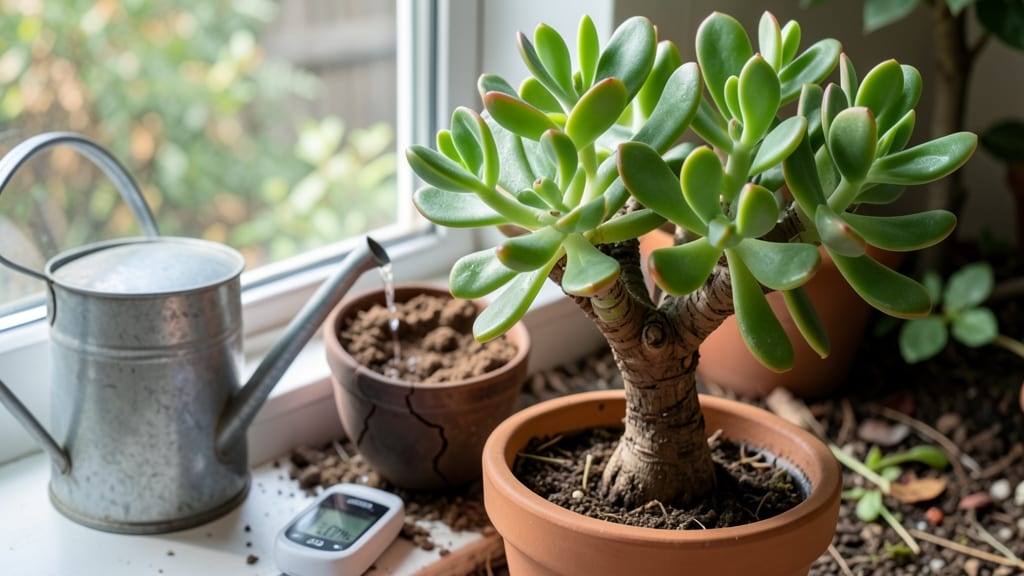
When your jade plant how much water it needs is the secret to keeping it thriving—because these plump succulents thrive on neglect, not attention. The key to keeping your jade plant happy isn't complicated: it's all about the soak-and-dry method, a simple technique that prevents both underwatering and drowning.
Most gardeners either drown their jade plants with daily waterings or let them shrivel from thirst, but the solution lies in understanding when the soil is truly dry.
I've learned the hard way that sticking your finger in the soil or guessing based on time won't cut it—your jade plant needs a more precise approach to stay healthy and vibrant.
In this guide, I'll walk you through exactly how often to water your jade plant, what seasonal adjustments are necessary, and how to spot the signs of over- or underwatering before it's too late.
Whether you're a beginner or have lost a few plants to watering mistakes, these tips will help you master the art of keeping your jade plant thriving.
You'll discover the best soil moisture tests, how pot size affects watering frequency, and why winter care is completely different from summer. Let's get your jade plant the perfect amount of water—no more guesswork, just happy, plump leaves all year round.
Jade plant watering schedule: the exact soak-and-dry method explained
Jade plants thrive on the soak-and-dry method, a technique that mimics their natural desert environment. This approach ensures your Crassula ovata gets just enough water without drowning its roots. The key? Let the soil dry completely between waterings—typically every 2-3 weeks in summer and even less in winter.
First, choose a well-draining pot with drainage holes to prevent waterlogging. Use a cactus or succulent mix combined with perlite or pumice for optimal airflow. When watering, saturate the soil until water flows freely from the drainage holes—this ensures deep hydration without excess moisture lingering.
Here’s the step-by-step breakdown to master the soak-and-dry method:
Insert your finger 1-2 inches deep into the soil. If it feels completely dry, it’s time to water.
Water until 20-30% of water drains out the bottom of the pot. This ensures roots get hydration without soggy soil.
Empty the saucer 10 minutes after watering to prevent root rot from sitting water.
Let the top 2 inches of soil dry out before repeating. In summer, this may take 10-14 days; in winter, 4-6 weeks.
Reduce watering in fall and winter when growth slows. Increase slightly in spring and summer as new leaves emerge.
Seasonal adjustments are critical. During spring and summer, your jade plant will drink more as it enters its active growth phase. In fall and winter, reduce watering by 50% since the plant enters dormancy.
Even a slight overwatering during these months can lead to root rot or leaf drop.
Pay attention to your plant’s visual cues. Healthy jade leaves are thick, plump, and vibrant green. If leaves start wrinkling or shrinking, it’s a sign of underwatering.
Conversely, yellowing or mushy leaves indicate overwatering. Always adjust your schedule based on these signals rather than sticking rigidly to a calendar.
Another pro tip: Bottom-watering can be helpful, especially in humid climates. Place your pot in a tray of water for 10-15 minutes to allow the roots to absorb moisture.
This method reduces the risk of fungal diseases caused by overhead watering. However, avoid leaving the plant sitting in water for extended periods.
For gardeners in drier climates, you might need to water more frequently, while those in humid areas should extend the drying period. Humidity traps moisture in the soil, increasing the risk of rot.
If your home has high humidity, consider using a terracotta pot, which wicks away moisture faster than plastic.
Finally, always water in the morning. This gives the soil time to dry out during the day, reducing the chance of fungal infections. Avoid evening watering, as damp leaves overnight can encourage mold growth.
With this method, your jade plant will reward you with thick, glossy leaves and robust growth year-round.
How to tell when your jade plant needs water (without guessing)
Jade plants are masters of disguise—they don’t wilt dramatically like thirsty petunias or droop like sad ferns. Instead, they silently shrivel or develop wrinkled leaves as a cry for help.
The key to saving your jade is learning its subtle signals, starting with the soil moisture test and leaf texture check.
Most gardeners make the mistake of watering on a fixed schedule, but jade plants thrive on demand-based watering. Think of them like a camel: they store water in their thick stems and only need a drink when they’re truly parched.
Your goal? Mimic their natural drought tolerance by watering only when the top 2-3 inches of soil are bone-dry.
🌱 Jade Plant Watering Indicators
| Sign | What It Means | Action |
|---|---|---|
| 🌿 Wrinkled leaves | Severe dehydration—plant is begging for water | Water deeply, then reduce frequency |
| 🤏 Lightweight pot | Soil is completely dry—time to water | Soak until water drains from bottom |
| 💧 Damp soil (1-2 inches down) | Wait 1-2 more weeks before watering | Check again in 7 days |
| 🌡️ Cooler temps (below 60°F) | Growth slows—reduce watering by 50% | Water every 4-6 weeks |
Pot size plays a huge role in watering needs. A small 4-inch pot may need water every 2 weeks, while a large 10-inch container can go 6-8 weeks between drinks. The rule?
Bigger pots hold moisture longer, so adjust your schedule accordingly. Pro tip: Use your finger to check soil moisture—if it feels like a dry sponge, it’s time to water.
Another trick is the weight test. Lift your potted jade—if it feels light as a feather, the soil is bone-dry. If it’s heavy and soggy, you’ve overdone it.
Jade plants in terracotta pots dry out faster than ceramic because the material wicks moisture away. For extra accuracy, invest in a moisture meter (they’re cheap and save plants!).
Seasonal changes drastically alter your jade’s thirst. In summer’s heat, water every 2-3 weeks, but in winter’s dormancy, stretch it to monthly. Watch for yellowing leaves (overwatering) or shriveled stems (underwatering)—both are red flags.
The secret? Less is always more with jades. Better to underwater slightly than drown them.
Remember, jade plants store water in their thick stems, so they’re far more resilient than they look. If you’re unsure, wait one more week before watering—your plant will thank you with glossy, plump leaves for years to come. 🌱