
How To
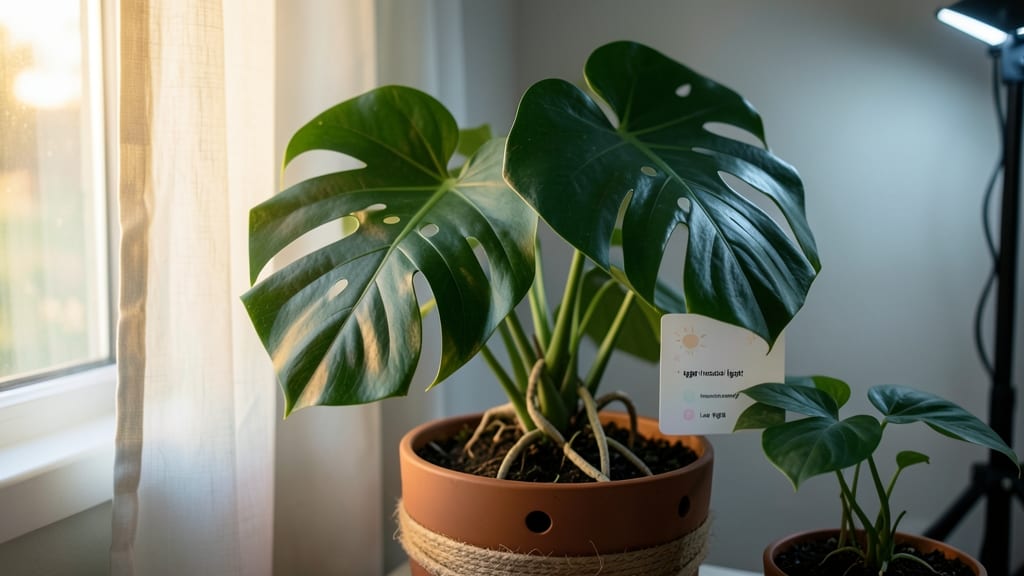
If your monstera plant needs much more light than it’s getting right now, that’s why it’s growing slower than a sloth on a Sunday—and that’s a game-changer for its health and those coveted splits.
Most people assume Monsteras need direct sunlight, but the truth is, they thrive in bright, indirect light. Too much harsh sun, and you’ll end up with crispy brown edges.
Too little, and you’ll watch your plant stretch out like a sleepy cat in the morning. Finding that sweet spot is easier than you think.
In this guide, I’ll break down exactly how much light your Monstera needs, where to place it in your home (even if you don’t have a sunroom), and how to spot the signs when it’s begging for more—or less—light.
Ready to turn your Monstera from a struggling survivor into a lush, fast-growing beauty? Let’s fix that lighting once and for all.
Monstera light requirements: bright indirect light explained for optimal growth
Your monstera plant thrives in bright indirect light, but many gardeners struggle to find the perfect balance. Too little light leads to slow growth and tiny leaves, while too much causes leaf scorch and crispy edges. The key is understanding how light intensity affects your plant’s health and development.
Monsteras naturally grow under the canopy of tropical forests, where sunlight filters through leaves. This means they need dappled sunlight—bright but never harsh. In your home, this translates to placing them near east or west-facing windows, where morning or afternoon sun is gentler than midday rays.
Here’s the breakdown: low light (under 10,000 lux) slows growth and prevents fenestrations (those iconic splits in leaves). Medium light (10,000–20,000 lux) is ideal for steady growth, while high light (over 20,000 lux) risks burning leaves. Most homes fall in the medium range with filtered sunlight.
Watch for these light deficiency signs: elongated stems, small leaves, and a pale green color. On the flip side, too much light causes brown patches, yellowing, and a brittle texture. Your goal is to mimic the natural forest floor lighting as closely as possible.
🌿
| Light Level | Intensity (Lux) | Growth Impact | Best Window Placement |
|---|---|---|---|
| Low Light | Under 10,000 | Slow growth, small leaves, no splits | North-facing windows or deep indoors |
| Medium Light | 10,000–20,000 | Healthy growth, fenestrations develop | East or west windows, 2–3 feet away |
| High Light | Over 20,000 | Leaf scorch, brown edges, brittle texture | South windows without filters |
South-facing windows can work, but you’ll need to filter the light using sheer curtains or a sheer panel. Direct midday sun (11 AM–3 PM) is the most intense and should be avoided.
If your monstera is near a west window, monitor it closely in summer—afternoon sun can quickly become too harsh.
For indoor gardeners with limited natural light, grow lights are a game-changer. LED grow lights with a 5000K–6500K color temperature mimic natural sunlight and can be placed 6–12 inches above the plant for 12–14 hours daily. This is especially useful in low-light rooms like basements or north-facing offices.
Seasonal changes also affect your monstera’s light needs. In winter, days are shorter, and light is weaker, so supplement with a grow light if you notice slowed growth.
Conversely, in summer, longer days mean more light exposure—rotate your plant quarter-turns weekly to prevent uneven growth toward the light source.
🪴
Pro tip: If your monstera’s leaves are facing one direction, it’s leaning toward the light. This isn’t harmful, but rotating the pot every 2–4 weeks encourages even growth and helps the plant develop a fuller shape.
Think of it like turning a sunflower toward the sun—your monstera does the same, but you can guide its growth habit.
Remember, the goal isn’t just survival—it’s maximizing those stunning fenestrations and lush, glossy leaves. With the right light, your monstera will reward you with rapid growth and the dramatic splits that make it a showstopper in any space.
Best locations for monsteras: where to place your plant for maximum splits and health
Finding the perfect spot for your monstera plant can feel like solving a puzzle, especially if your home has limited natural light. The key is balancing bright indirect light with protection from harsh rays. East-facing windows are ideal—they provide gentle morning sun without the intense heat of afternoon exposure.
If you only have a south-facing window, place your monstera at least 3-4 feet away to prevent leaf scorch.
West windows can work too, but monitor your plant closely. The strong afternoon sunlight can cause brown patches on leaves. A sheer curtain will diffuse the light while still allowing your monstera to thrive.
For low-light conditions, like north-facing rooms or dimly lit offices, consider supplementing with a grow light for 12-14 hours daily to encourage growth and fenestrations.
Window Comparison for Monsteras
| Window Type | Best Distance | Light Intensity | Notes |
|---|---|---|---|
| East-Facing | 2-3 feet | Bright Indirect | Ideal for growth |
| West-Facing | 3-4 feet | Moderate Indirect | Use sheer curtains |
| South-Facing | 4+ feet | High Indirect | Risk of sunburn |
| North-Facing | 1-2 feet | Low Light | Supplement with grow light |
Don’t overlook creative solutions like placing your monstera near a reflective surface, such as a white wall or mirror, to bounce extra light onto its leaves. Bathrooms with windows can also work well—the humidity helps keep the plant happy, while the indirect light supports steady growth.
Just avoid drafty spots near doors or windows that open frequently, as cold drafts can stress your monstera.
If you’re unsure about your home’s lighting, try this quick test: Hold your hand near the plant’s spot. If you can’t comfortably read a book there, it’s likely too dim.
For maximum fenestrations, aim for 4-6 hours of bright indirect light daily. Rotate your plant every 2-4 weeks to ensure even growth, as monsteras naturally lean toward light sources.
Pro tip: Group your monstera with other low-to-medium light plants, like pothos or snake plants, to create a microclimate that mimics its natural tropical habitat. This not only looks stunning but also helps regulate humidity, which your monstera will thank you for with larger, healthier leaves.
Remember, every home is different. Start with the best window you have, adjust as needed, and don’t hesitate to experiment. Your monstera’s growth speed and leaf splits will tell you what’s working—so pay attention to those visual cues! 🌱