
Companion Plants
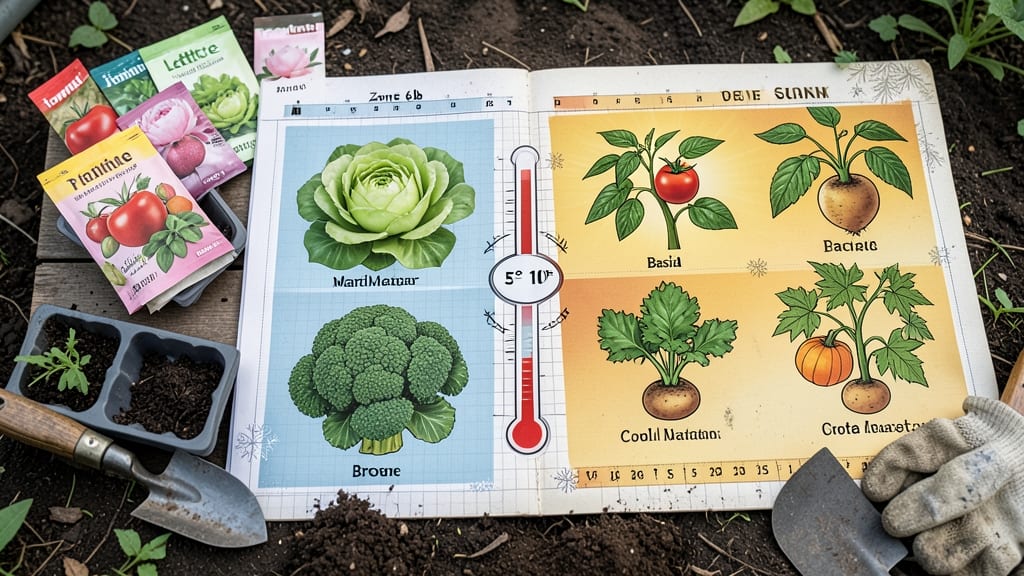
Planting in Zone 6b feels like walking a tightrope between frost and flourishing—get the timing wrong, and your hard work could vanish overnight. The average last frost date hovers around April 15, but warm-season crops like tomatoes and peppers won’t thrive until soil temperatures hit 50°F consistently.
That’s why knowing exactly when to plant isn’t just helpful—it’s the difference between a bountiful harvest and a disappointed gardener.
Cool-season crops like spinach and peas can handle early spring planting, even before the last frost, while heat-lovers need to wait until late May or early June. But here’s the catch: Zone 6b’s 150 frost-free days mean you’ve got a narrow window to maximize your garden’s potential.
Whether you’re a first-time gardener or a seasoned pro, mastering these deadlines will help you avoid common pitfalls and extend your growing season.
Let’s break down the science behind frost dates, soil temperatures, and regional tweaks so you can plant with confidence. From succession planting to frost protection hacks, I’ll share the strategies that work in my Zone 6b garden—and how you can adapt them to your microclimate.
Ready to turn your garden into a year-round powerhouse? Let’s get started.
The key is balancing patience with action: plant too early, and frost will strike; too late, and your harvest suffers. But with the right timing, you’ll transform your garden into a productive, efficient space that yields results all season long.
Stick with me, and you’ll never second-guess your planting schedule again.
Zone 6B last frost dates: when to plant cool vs warm-season crops
In Zone 6B, the difference between a thriving garden and a frost-killed disaster often comes down to timing. The average last frost date falls between April 15 and May 1, while the first frost typically arrives around October 15–30.
These dates create a 150-day frost-free window—your golden opportunity to grow everything from crisp lettuce to juicy tomatoes. But not all plants play by the same rules.
Cool-season crops like spinach, peas, and kale thrive when soil temperatures hover between 40°F and 60°F. They’re the early birds of the garden, ready to be sown as soon as the ground is workable—often 4–6 weeks before your last frost date.
On the flip side, warm-season lovers like tomatoes, peppers, and cucumbers demand soil temps above 50°F and won’t tolerate frost. They need to wait until 2 weeks after your last frost to avoid a chilly shock.
Here’s the kicker: microclimates in Zone 6B can shift these dates by 1–2 weeks. A south-facing slope might warm up faster than a low-lying area, while urban heat islands can push back frost dates. Always check your local Almanac’s frost predictions and observe your garden’s unique patterns over time.
| Plant Type | Planting Window | Key Notes | Soil Temp |
|---|---|---|---|
| Cool-Season Veggies (spinach, peas, lettuce) | March 15–April 15 | Sow 4–6 weeks before last frost | 40°F–60°F |
| Warm-Season Veggies (tomatoes, peppers, cucumbers) | May 15–June 1 | Wait 2 weeks after last frost | 50°F+ |
| Herbs (basil, cilantro, parsley) | April 1–May 15 (basil later) | Basil needs warmth; cilantro bolts in heat | 50°F+ (basil) |
| Flowers (marigolds, zinnias, sunflowers) | April 15–June 1 | Direct sow after frost risk passes | 55°F+ |
| Perennials (lavender, rosemary, asparagus) | March–April (asparagus crowns) | Plant early; establish roots before heat | 45°F–60°F |
| Fall Crops (kale, carrots, radishes) | August 1–September 15 | Sow 8–10 weeks before first frost | 50°F–65°F |
For cool-season crops, think of your garden as a race against time. Plant spinach and peas in early March if your soil isn’t frozen, but be ready to protect them with row covers if late frosts linger.
These crops can handle light frosts, but a hard freeze will turn your greens to mush. Lettuce and radishes are even more resilient—they’ll often survive 28°F with a little mulch.
Warm-season crops, however, demand patience. Tomatoes and peppers planted too early will sulk in cold soil, stunting growth and delaying fruit production. If you’re itching to start seeds indoors, begin them 6–8 weeks before your last frost date (around March 1 for Zone 6B).
Harden them off and transplant after the soil warms to 60°F.
Pro tip: Use a soil thermometer to track temperatures. If your soil is still chilly in early May, hold off on planting cucumbers or squash—they’ll rot in cold ground. For extra insurance, lay down black plastic mulch a week before planting to warm the soil faster.
Don’t forget about succession planting! In Zone 6B, you can squeeze in 2–3 harvests of bush beans or 5–6 harvests of lettuce by sowing every 2 weeks after your initial planting. This keeps your kitchen stocked and your garden productive all season long.
Finally, mark your calendar for September 1—that’s when you should start planning your fall garden. Cool-season crops planted by Labor Day will have time to mature before frost, giving you a second harvest bounty. Just like spring, timing is everything.
🌱
How to adjust planting dates for early or late Zone 6B seasons
Even in Zone 6B, your planting schedule can shift dramatically based on early freezes or late springs. I’ve learned to adjust deadlines by tracking soil temperatures and using frost protection tools—like row covers—to extend your growing season.
For example, if your last frost arrives late (after May 1), hold off on warm-season crops like tomatoes and peppers until mid-May when soil hits 60°F.
Conversely, if frost threatens early (before October 15), prioritize fast-maturing varieties or use cold frames to shield greens like kale and spinach. I once saved a late-season crop by covering it with a floating row cover during a 28°F dip—those plants survived and produced until November!
🌱
A soil thermometer is your best friend. Warm-season crops (like cucumbers) need soil at 60°F+—wait until then, even if air temps seem warm. Cool-season crops (like broccoli) can handle 40°F+ soil.
Extend spring planting by 2-4 weeks with lightweight covers. Remove them during the day to let pollinators access flowers like squash blossoms. For fall, covers can add 4-6 weeks of harvest time.
Sow radishes every 2 weeks from March to August for a continuous harvest. Pair them with slow growers like carrots (90 days to maturity) to maximize space.
In short seasons, opt for early-maturing hybrids. For example, 'Early Girl' tomatoes (55 days) outperform 'Beefsteak' varieties (80+ days) in Zone 6B’s 150-day frost-free window.
South-facing beds warm 2-3°F faster than north sides. Use this to your advantage by planting heat-lovers (like eggplants) near walls or fences where warmth lingers.
Start cool-season crops in late July for a fall harvest. Aim to plant 6-8 weeks before your first frost (e.g., spinach by August 15 in Zone 6B).
Don’t overlook local weather patterns. I’ve noticed my high-elevation plots (even in Zone 6B) frost 10 days earlier than valley gardens. Adjust your timeline by 1-2 weeks if you’re above 2,000 feet.
For instance, plant peas by March 15 in valleys but wait until April 1 at higher elevations.
Pro tip: Keep a gardening journal to note when your last frost actually occurs each year. Over time, you’ll spot trends—like my garden’s shift from a May 1 to a May 10 average in recent years. This data lets you fine-tune your planting dates for peak productivity.
☀️