
Companion Plants
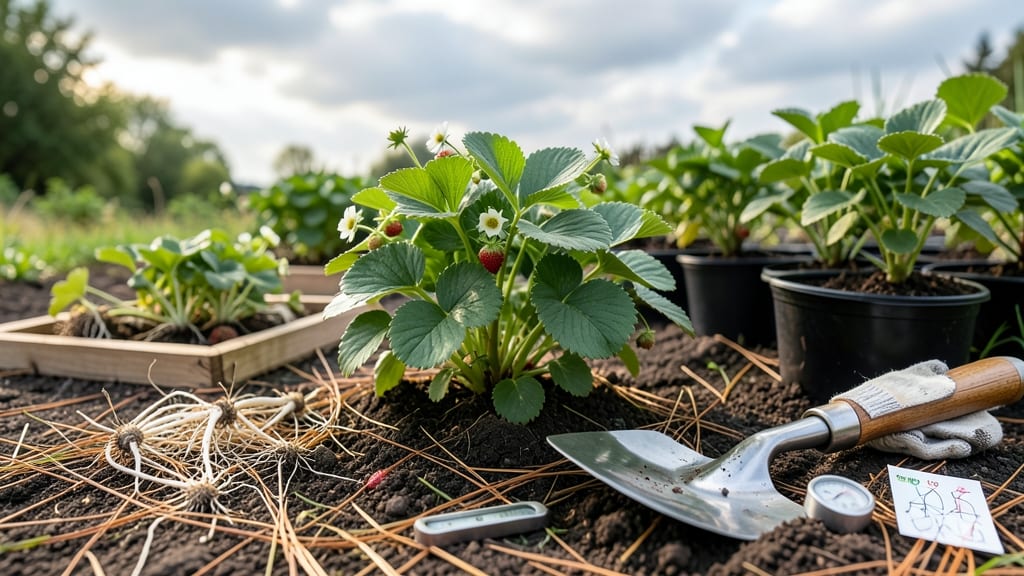
Planting strawberries at the wrong time in Zone 6 can mean the difference between a bountiful harvest and wasted effort.
The ideal planting window for these sweet 🍓 treats arrives when soil temperatures reach 40°F—typically 4-6 weeks before your last frost, which usually lands in mid-April for most 6a-6b regions.
Most gardeners in Zone 6 focus on early spring planting, but late summer offers a second chance for everbearing varieties. Whether you're working with bare-root plants or potted varieties, timing matters more than you might think—get it right, and you'll enjoy berries by June or September.
I’ve learned the hard way that rushing the process can lead to frost damage or poor establishment.
Let me show you exactly when to plant, how to prepare your soil, and which strawberry types thrive best in your climate—so you can avoid common pitfalls and enjoy a garden full of ripe, juicy berries.
From adjusting for microclimates to extending your growing season with mulch, these strategies will help you maximize your strawberry yield. Ready to get started? Let’s dive into the perfect planting schedule for your Zone 6 garden.
Optimal planting weeks before last frost in Zone 6 for June-bearing vs. everbearing strawberries
Zone 6 gardeners know timing is everything—especially for strawberries, which can produce juicy harvests or wasted plants depending on when you pop them in the ground.
The last frost date in Zone 6 typically falls around April 15, but your exact window depends on the strawberry variety you’re growing.
For June-bearing strawberries, the most popular type, you’ll want to plant 4-6 weeks before your last frost. This gives roots time to establish before the spring growing rush begins.
In Zone 6, that means late March to early April—just as soil temperatures creep into the 45-50°F range.
Everbearing varieties, like Albion or Ozark Beauty, are more flexible. You can plant them 2-4 weeks before or after your last frost, giving you a second harvest window in late summer. This flexibility makes them ideal for gardeners who want extended production without extra effort.
Here’s the key difference: June-bearing strawberries focus all their energy on one big spring harvest, while everbearing types produce smaller yields twice a year. Your choice depends on whether you prioritize quantity or convenience.
🌱
| Strawberry Type | Planting Window (Zone 6) | Soil Temp Requirement | Harvest Time | Best For |
|---|---|---|---|---|
| June-Bearing | 4-6 weeks before last frost (Late March-Early April) | 45-50°F (7-10°C) | June-July (one big harvest) | Large yields, canning/jamming |
| Everbearing | 2-4 weeks before/after last frost (Early April or Late May) | 40-55°F (4-13°C) | June + September-October (two harvests) | Fresh eating, extended season |
| Day-Neutral | Late April-June (flexible) | 45-60°F (7-16°C) | Summer-Fall (continuous) | Container growing, urban gardens |
Soil temperature is just as critical as air temperature. Strawberry roots struggle to establish in cold, wet soil, so wait until the ground warms to at least 45°F. Use a soil thermometer to check—bury it 2 inches deep for accurate readings.
If your soil is still chilly, consider raising beds or using black plastic mulch to warm it faster.
Pro tip: If you’re planting bare-root strawberries (the most common type), soak the roots in lukewarm water for 1-2 hours before planting. This jumpstarts root growth and reduces transplant shock. For potted strawberries, gently tease apart the roots if they’re circling the pot.
Zone 6’s microclimates can vary dramatically—even within the same county. A south-facing slope might warm up weeks earlier than a low-lying valley. Watch local weather forecasts and adjust your planting date accordingly. If frost is predicted, cover new plants with row fabric or a cloche for protection.
🌡️
One common mistake is assuming all strawberries thrive under the same conditions. June-bearing varieties, like Jewel or Chandler, need cold stratification (a period of cold temps) to flower properly. If you plant them too early, they might bolt to flower before establishing roots, leading to small, weak berries.
Everbearing types, however, are more adaptable and can handle warmer spring soils. This makes them a great choice for gardeners in warmer microclimates or those who want to extend their harvest into fall. For example, Seascape strawberries produce fruit throughout the growing season if given consistent care.
For container growing, timing shifts slightly. Potted strawberries warm up faster, so you can plant them 2-3 weeks earlier than in-ground varieties. Just ensure your containers have drainage holes and use a lightweight potting mix to prevent waterlogging.
How to adjust planting timing based on strawberry type, microclimate, and soil conditions
Not all strawberries thrive on the same schedule in Zone 6. The type of strawberry you plant—June-bearing, everbearing, or day-neutral—drastically changes when you should get them in the ground.
June-bearing varieties, like Jewel or Allstar, need a 4-6 week head start before your last frost to produce their signature summer harvest. Everbearing types, such as Ozark Beauty, are more flexible and can handle planting 2-4 weeks before or after your last frost date.
Your local microclimate also plays a role. If you live in a cooler pocket of Zone 6, like a valley, aim for planting bare-root strawberries in early March.
In warmer microclimates, like near a south-facing wall, you can push planting to late March or even early April without frost risk. Always check your last frost date—in Zone 6, it’s typically around April 15, but local variations can shift this by 1-2 weeks.
Soil temperature is another critical factor. Strawberries won’t thrive if the soil is too cold. Use a soil thermometer to confirm the ground has warmed to at least 45°F before planting. In Zone 6, this usually aligns with late March to early April for spring plantings. For late-summer plantings (July-August), soil temps are rarely an issue, but you’ll need to protect young plants from late-season heat stress.
- June-bearing: Plant 4-6 weeks before last frost (early March in Zone 6).
- Everbearing: Flexible—plant 2-4 weeks before/after last frost (March-April or July-August).
- Day-neutral: Can plant anytime soil is workable (March-October).
To extend your planting window, consider raised beds or row covers. Raised beds warm up faster in spring, allowing you to plant 2-3 weeks earlier than in-ground soil.
Row covers (like floating row fabric) protect young plants from late frosts and can push your planting window into early April without risk. For late-summer plantings, use shade cloth to protect seedlings from intense Zone 6 summer sun, which can stress young roots.
Preparing your soil is just as important as timing. Strawberries prefer well-draining, slightly acidic soil with a pH of 5.5-6.8. Amend your soil with compost or peat moss 2-3 weeks before planting to improve drainage and fertility.
Avoid fresh manure—it can burn delicate roots. If your soil is heavy clay, mix in sand or perlite to create a looser texture that strawberries love.
For bare-root plants, soak the roots in water for 1-2 hours before planting to rehydrate them. If using potted strawberries, plant them 1-2 weeks earlier than bare-root varieties—they establish more slowly. Always plant the crown (where leaves meet roots) at soil level.
Burying it too deep causes rot, while planting it too high stunts growth. Mulch with straw or pine needles after planting to retain moisture and suppress weeds.
Finally, monitor your plants closely after transplanting. If you notice yellowing leaves or slow growth, it could signal root stress from poor soil contact or temperature shock. A light foliar feed with fish emulsion can help revive struggling plants.
With the right adjustments, you’ll enjoy juicy strawberries all season, whether you planted in spring or late summer! 🍓