
Companion Plants
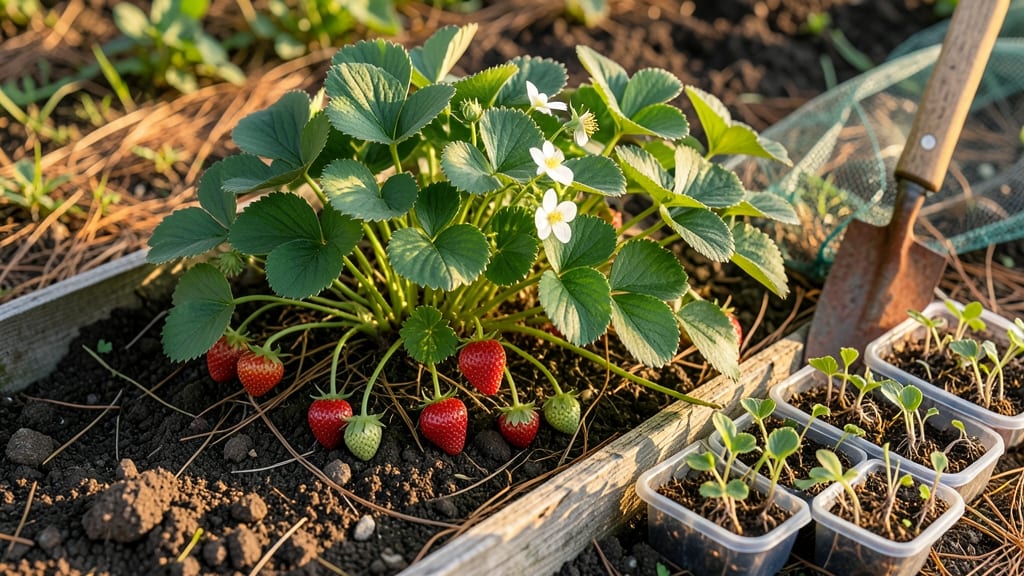
Planting strawberries in Arkansas at the wrong time can mean the difference between a bountiful harvest and wasted effort. The chill-hour requirements of your strawberry varieties demand precise timing—whether you're growing June-bearing or everbearing types.
In zones 7a-8b, the window is narrow but critical, and missing it could leave you without those sweet, juicy berries you crave.
Most Arkansas gardeners know the two best planting windows—early spring or late summer—but what you might not realize is how local frost dates and soil temperatures factor in. Planting too early risks frost damage, while waiting too long can delay fruiting.
I’ll break down exactly when to plant for your specific region, so you can align your schedule with nature’s rhythm and enjoy a reliable fall harvest.
Whether you’re using bare-root plants or potted varieties, preparation is key. We’ll cover soil prep, spacing, and the essential mulching that protects your strawberries from Arkansas’s heat and humidity. With the right timing and care, your 🍓 patch will thrive year after year.
Ready to turn your garden into a strawberry paradise? Let’s dive into the step-by-step guide that will help you avoid common mistakes and maximize your yield—no more guesswork, just delicious results.
Arkansas strawberry planting calendar: chill-hours and seasonal windows
Arkansas’s unique climate—spanning USDA zones 7a-8b—creates distinct planting windows for strawberries. Unlike cooler northern states, Arkansas’s mild winters and hot summers demand precise timing to match chill-hour requirements and avoid summer stress.
June-bearing varieties need 300-500 chill hours, while everbearing types thrive with fewer (200-300 chill hours).
Northern Arkansas (zones 7a) has slightly cooler winters, allowing earlier spring planting, while southern Arkansas (zones 8a-8b) benefits from extended fall planting. The key is aligning your variety’s chill needs with your region’s frost dates—typically March 15 (last frost) for spring and November 15 (first frost) for fall.
For a reliable fall harvest, focus on late summer planting (July-August). This gives plants time to establish roots before cooler weather triggers flowering. Everbearing varieties planted in summer often produce fruit in fall and spring, while June-bearing types planted in spring yield in late spring.
| Region | Best Planting Window | Variety Type | Chill Hours Needed | Harvest Time |
|---|---|---|---|---|
| Northern Arkansas (7a) | February-March (spring) or July-August (fall) | June-bearing | 400-500 | Late May-June (spring) or September-October (fall) |
| Central Arkansas (7b-8a) | March-April (spring) or August (fall) | Everbearing | 200-300 | June-July (spring) and September-November (fall) |
| Southern Arkansas (8a-8b) | April (spring) or September (fall) | Day-neutral | 0-100 | May-June and September-October |
Southern Arkansas gardeners can push boundaries with day-neutral varieties, which produce fruit continuously when temperatures stay above 50°F (10°C). These are ideal for container gardening on patios or balconies, where soil warms faster. However, avoid planting too early—soil temperatures below 50°F (10°C) stunt root growth.
For both spring and fall plantings, prioritize well-draining soil to prevent rot. Arkansas’s clay-heavy soils often need amendments like compost or sand. Test your soil’s pH (ideal: 5.5-6.8) before planting, as strawberries are sensitive to acidity. Adjust with lime if needed.
Mulching is non-negotiable in Arkansas’s heat. Use straw or pine needles to retain moisture and keep berries off the soil, reducing disease risk. In fall, add a 4-6 inch layer of mulch before the first frost to protect roots from freezing. Remove it in early spring to allow soil warming.
Local nurseries often carry Arkansas-adapted varieties like ‘Chandler’ (June-bearing) or ‘Seascape’ (everbearing). These tolerate Arkansas’s humidity and heat better than northern varieties. Ask for disease-resistant strains like ‘Albion’ to combat common Arkansas pests like spider mites and strawberry weevils.
Timing your irrigation is just as critical as planting dates. Water deeply in the morning (6-9 AM) to reduce fungal diseases like gray mold, which thrives in Arkansas’s humid summers. Drip irrigation systems work best, delivering water directly to roots while keeping foliage dry.
Remember: Arkansas’s extended growing season means you can enjoy two harvests a year—spring and fall—if you plant both June-bearing and everbearing varieties. Start with a small patch to test what works best in your microclimate, then expand based on your success.
Arkansas strawberry planting calendar: chill-hours and seasonal windows
Arkansas’s USDA zones 7a-8b create unique challenges and opportunities for strawberry growers. Unlike northern states, Arkansas’s mild winters and hot summers demand precise timing to match chill-hour requirements while avoiding extreme heat stress.
June-bearing varieties need 500-1,000 chill hours, while everbearing types tolerate 200-400 chill hours—critical for fall harvests.
For June-bearing strawberries, plant in early spring (February-March) when soil temps reach 40°F but before last frost dates (March 15). This ensures plants establish roots before summer heat arrives. Everbearing varieties thrive with late summer planting (July-August), producing fruit in fall before winter dormancy.
Arkansas’s central and southern regions (like Little Rock) can extend planting into early April for June-bearing types, while northern areas (Fayetteville) should plant by mid-March to avoid late frosts. Chill-hour mismatches often cause poor fruiting—everbearing types planted too early may bolt in summer heat.
| Planting Window | Variety Type | Chill Hours Needed | Best Arkansas Region |
|---|---|---|---|
| February-March | June-bearing | 500-1,000 | North/Central |
| July-August | Everbearing | 200-400 | All regions |
| Early April | June-bearing | 500+ | South |
Use bare-root plants for spring planting—they establish faster than potted varieties. For late summer plantings, opt for potted strawberries to avoid transplant shock during Arkansas’s 90°F+ heat waves. Always amend soil with compost and peat moss to improve drainage, as Arkansas’s clay-heavy soils can suffocate roots.
Monitor first frost dates (November 15) to schedule fall harvests. Everbearing types planted in July-August will fruit September-October, while June-bearing varieties need spring planting for May-June harvests. Mulch heavily after planting to retain moisture during Arkansas’s dry spells and protect crowns from temperature swings.
Pro tip: Arkansas gardeners often double-crop by planting June-bearing in spring and everbearing in summer for continuous harvests. Just ensure 12 inches between plants and 18 inches between rows to prevent disease spread in Arkansas’s humid climate. 🌱