
Plants
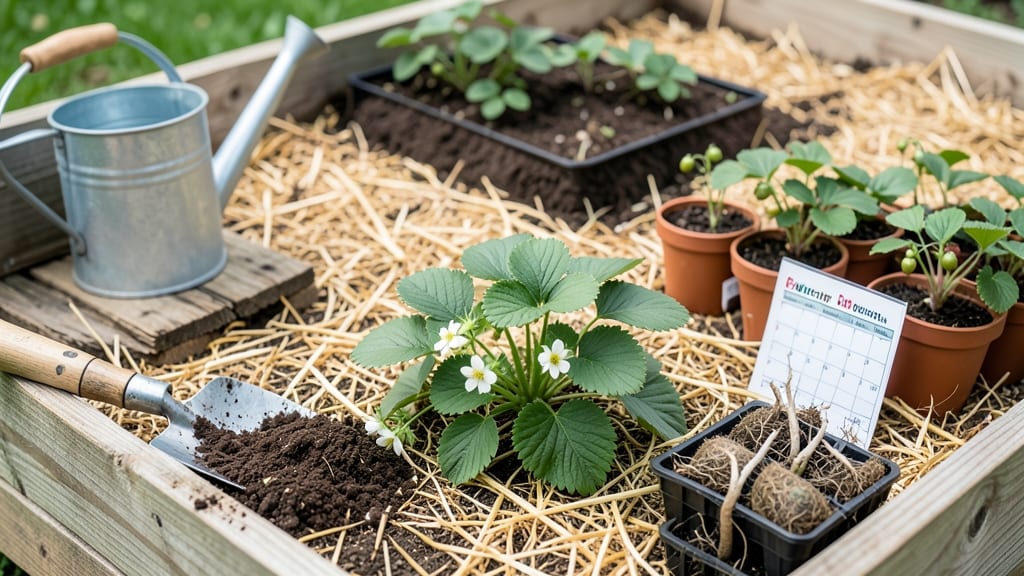
Planting strawberries in Missouri isn’t just about picking a month—it’s about matching your 🍓 plants to the region’s chill hours and frost patterns. Skip the guesswork, and you could end up with berries that bolt in heat or freeze before fruiting.
The key? Timing your spring or fall plantings to align with USDA zones 5b-6b, where a late frost in April or early heatwaves can derail even the best-laid plans.
Most gardeners in Missouri swear by early spring (March–April) for bare-root plants, but late summer (August) offers a second chance for fall harvests. The trick is knowing whether your area leans toward 400 chill hours (warmer southern zones) or 1,000+ hours (cooler northern stretches)—and how that affects variety selection.
Get it wrong, and you might spend June watching your plants struggle instead of savoring ripe berries.
I’ve tested both approaches in my own garden, and the difference between a successful harvest and a flop often comes down to soil prep and microclimate tweaks.
Whether you’re planting potted varieties for urban containers or bare-root crowns in raised beds, I’ll walk you through the exact steps to beat Missouri’s unpredictable weather—so you can enjoy June–July strawberries (or September–October for fall plantings) without the stress.
Ready to turn your patch into a berry bonanza? Let’s dive into the chill-hour matching system that’s helped Missouri growers double their yields—and how you can apply it to your garden, no matter where you are in the state.
Missouri strawberry planting dates by chill-hour zones (2024 guide)
Missouri’s strawberry planting success hinges on chill hours, not just calendar dates. The state spans USDA zones 5b–6b, where 400–1,000+ chill hours (temperatures 32–45°F) determine when varieties wake from dormancy.
Plant too early in low-chill zones (e.g., southwest Missouri), and frost zaps tender crowns; too late in high-chill zones (northern Missouri), and berries fail to ripen.
Use the table below to match your local chill hours with planting windows. Check your zone via the Missouri Climate Center or USDA Plant Hardiness Map.
For bare-root plants, aim for 4–6 weeks before last frost (typically mid-March to early April); for potted varieties, extend planting until late April.
Pro tip: Stagger plantings by 2–3 weeks to extend harvests. For example, plant ‘Chandler’ (day-neutral) in early April and ‘Jewel’ (June-bearing) in late April for a 6-week harvest window.
| Chill-Hour Zone | Spring Planting Window | Fall Planting Window | Best Varieties | Notes |
|---|---|---|---|---|
| 400–600 hrs (SW MO) | Late March–Early April | August 15–30 | ‘Chandler’, ‘Seascape’ | Use row covers for frost |
| 600–800 hrs (Central MO) | Mid-March–Mid-April | August 1–20 | ‘Jewel’, ‘Honeoye’ | Ideal for June-bearing |
| 800–1,000+ hrs (NE MO) | Early–Mid-April | Late July–August 10 | ‘Albion’, ‘Ozark Beauty’ | Best for cold hardiness |
For bare-root plants, soak roots in lukewarm water for 30 minutes before planting to reduce transplant shock. Dig holes twice as wide as the root ball and amend soil with compost for drainage. Space rows 18–24 inches apart to allow airflow and reduce gray mold risk.
Missouri’s fall planting (August) works best for everbearing varieties like ‘Seascape’. Plant 6–8 weeks before first frost (typically late July–early August) to let roots establish before winter. Mulch heavily with straw (not hay) to insulate crowns and prevent heaving during freeze-thaw cycles.
Use a strawberry planting calendar to track chill hours via local weather stations (e.g., Missouri State Climate Office). For example, Columbia (zone 6a) averages 850 chill hours, while Springfield (zone 6b) gets only 600–700 hours.
Adjust varieties accordingly—‘Albion’ thrives in high-chill areas, while ‘Chandler’ tolerates lower chill.
Missouri’s urban heat islands (e.g., St. Louis) can push planting 2–3 weeks later than rural areas. Monitor soil temperatures with a probe; aim for 45–55°F for root growth. If nights dip below 32°F after planting, use floating row covers until danger of frost passes.
Extend your harvest by planting day-neutral varieties (e.g., ‘Seascape’) in
How to adjust planting for Missouri’s microclimates (frost risks & heat tolerance)
Missouri’s diverse microclimates mean your neighbor’s perfect planting window might not work for you. Urban areas like St. Louis (USDA Zone 6b) often experience urban heat islands, while higher elevations near Branson (Zone 6a) face earlier frosts. Understanding these variations helps you stagger plantings for extended harvests.
For frost-prone areas, like northern Missouri, use row covers or cloches to protect young plants until mid-April. In heat-sensitive zones (e.g., Kansas City), opt for heat-tolerant varieties like ‘Chandler’ or ‘Jewel,’ which thrive in 85°F+ temperatures without bolting prematurely.
🌱
Missouri Microclimate Checklist
- 📍 Urban Areas (St. Louis, KC): Plant 2 weeks later than rural zones; use shade cloth in summer.
- 🏔️ Highlands (Branson, Ozarks): Start bare-root plants in March; monitor frost until May 1.
- 🌾 River Valleys (Mississippi, Missouri): Stagger plantings every 2 weeks for 3 harvest waves.
- 🌡️ Heat Islands (Pavements/Cement): Choose everbearing varieties like ‘Seascape’ for longer fruiting.
To extend your harvest, plant everbearing varieties in late July for a fall crop. Use black plastic mulch to warm soil in spring or straw mulch to insulate roots in winter.
In high-humidity areas (e.g., near rivers), space plants 18 inches apart to improve airflow and reduce gray mold risks.
For St. Louis gardeners, the last frost date averages April 15, but urban heat can push it to April 25. In Kansas City, aim for March 20–April 5 for bare-root plants. Always check the Missouri Climate Center’s frost maps for real-time updates.
Pro tip: Test your microclimate by placing a thermometer in your garden for a week. If temps rise above 90°F frequently, drip irrigation and afternoon shade are essential for strawberry health.
🌿