
Plants
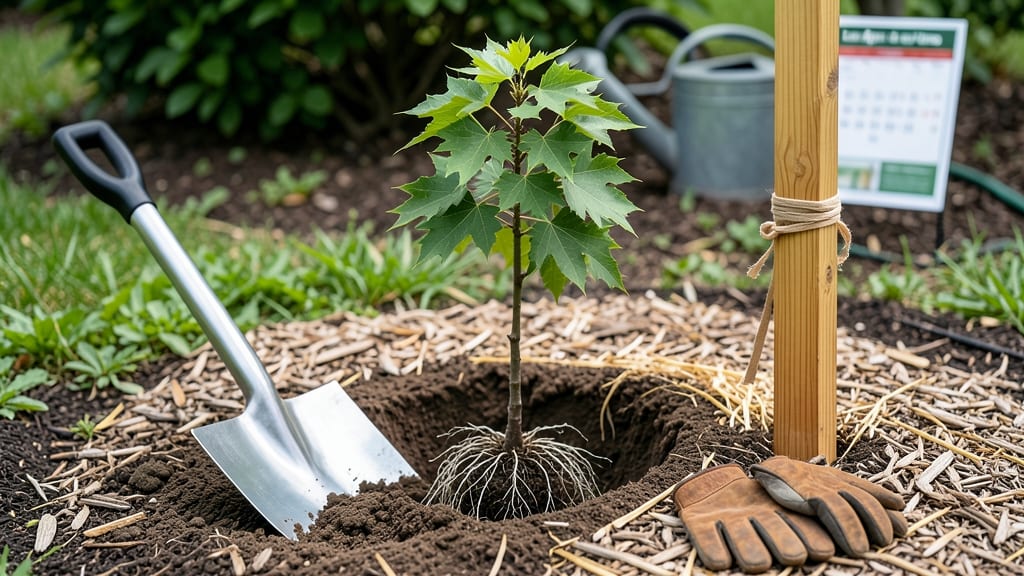
Planting a tree in Iowa’s Zone 5a-5b climate isn’t just about grabbing a shovel—it’s about timing your move to give your 🌳 the best chance to thrive before winter’s icy grip.
Get it wrong, and you’re looking at weak roots, frost damage, or even a sad, withered sapling by next spring.
I’ve learned the hard way that Iowa’s unpredictable frosts and heavy clay soil demand a strategy. Whether you’re planting a towering oak or a delicate maple, the 6-week window between late April and early June is your golden opportunity.
But here’s the catch: fall planting? Not so much in Zone 5a-5b—unlike milder climates, our early frosts can catch young roots off guard.
What you’ll discover here is how to read Iowa’s soil and microclimates like a pro. We’re talking soil temperature tricks, windbreak hacks, and species that actually stand a chance in our tough conditions.
No more guessing—just science-backed steps to set your tree up for strong, deep roots before the first frost hits.
Ready to plant with confidence? Let’s break down the exact months, prep work, and care tips that’ll turn your yard into a thriving forest—one tree at a time.
Iowa’s ideal tree planting window: month-by-month breakdown for Zone 4b
Iowa’s Zone 4b climate demands precise timing for tree planting—miss the window, and your tree’s root establishment suffers. The optimal 6-week window runs from late April to early June, when soil temperatures hover around 50°F (10°C) and frost risk drops below 10%.
This aligns with Iowa’s last frost date (April 15), but microclimates (urban heat islands vs. rural areas) can shift this by 1-2 weeks.
Fall planting, popular in milder zones, fails in Zone 4b because trees need 6-8 weeks of root growth before winter dormancy. Planting in September or October leaves roots vulnerable to early freezes (October 15), stunting growth.
The science? Trees establish roots when soil temps are above 40°F (4°C)—spring’s warmer, thawed soil gives roots a head start.
Here’s why spring dominates: warmer soil speeds root growth, longer daylight fuels photosynthesis, and consistent rainfall (Iowa averages 4.5 inches/month in May) keeps roots hydrated. Southern Iowa (e.g., Des Moines) can plant 1-2 weeks earlier than northern regions (e.g., Sioux City), thanks to 5°F warmer microclimates.
| Month | Soil Temp (°F) | Frost Risk | Root Growth Rate | Best For |
|---|---|---|---|---|
| Late April | 45-50°F | 15% | Slow (new roots) | Bare-root trees |
| May | 55-65°F | 5% | Rapid (1-2" roots/week) | Container-grown trees |
| Early June | 60-70°F | 1% | Peak (3" roots/week) | Large specimens |
| September | 50-55°F | 30% | Stunted (high risk) | Avoid (unless urgent) |
🌱 Key: Soil temp and frost risk vary by Iowa region—adjust timing for urban vs. rural sites.
Urban Iowans face unique challenges: heat islands can push planting 2 weeks earlier, while compacted clay soils slow root growth. Test soil moisture—if it’s dry 2" below surface, delay planting until rains return.
For container-grown trees, the window extends to early June because their roots adapt faster to transplant shock.
Evergreens like white pine or blue spruce need earlier planting (late April) to avoid winter desiccation. Deciduous trees (e.g., oak or maple) thrive planted in May, when soil warmth triggers cambial activity.
Pro tip: Plant bare-root trees in late April—their roots emerge faster in cold soil than container-grown roots.
Watch for late-May frosts (common in northern Iowa)—if temps drop below 32°F (0°C), protect young trees with burlap wraps or row covers. Mulch with 3-4 inches of wood chips to insulate roots and retain moisture.
In southern Iowa, where Zone 5a overlaps, you can plant 1-2 weeks later without frost risk.
Post-planting, monitor soil moisture—Iowa’s low humidity in May can dry roots quickly. Water deeply 2-3 times/week for the first month, then taper to weekly once roots establish. Fertilize with 10-10-10 in early June to fuel growth, but avoid high-nitrogen mixes, which promote top growth over roots.
Remember: root growth > top growth in Iowa
How to prepare your Iowa site for tree planting: soil, location, and species matching
Preparing your Iowa yard for tree planting isn’t just about digging a hole—it’s about creating the perfect conditions for root establishment and long-term health. Iowa’s clay-heavy soils and variable microclimates (urban heat islands vs. rural wind exposure) demand careful planning to avoid common pitfalls like poor drainage or stunted growth.
Start by testing your soil pH—most Iowa trees thrive in slightly acidic to neutral soil (pH 6.0-7.5). Native species like bur oak and redbud adapt well to Iowa’s natural soil, while non-natives may need amendments like compost or sand to improve drainage in heavy clay areas.
Next, choose the right location based on your tree’s mature size and sunlight needs. A 40-foot oak needs at least 50 feet of clearance from structures, while a dwarf apple tree can thrive in partial shade. Use a sunlight map of your yard to match species to light conditions.
Here’s how to balance soil prep, location, and species selection for Iowa’s top trees:
| Tree Species | Soil Needs | Sunlight | Iowa Adaptability |
|---|---|---|---|
| Bur Oak | Clay, well-drained | Full sun | Excellent (drought-tolerant) |
| Sugar Maple | Loamy, moist | Full sun | Good (avoid waterlogged soil) |
| Eastern Redbud | Well-drained | Partial shade | High (urban-friendly) |
| White Pine | Sandy loam | Full sun to partial shade | Very high (wind-resistant) |
| Apple (Dwarf) | Well-drained, fertile | Full sun | Moderate (needs pollinator) |
For clay-heavy soils, mix in 2-3 inches of compost or sand to improve drainage before planting. If your yard has poor drainage, consider raised beds or mounding soil to elevate roots. Always plant trees 2-3 inches deeper than their container level to encourage root spread.
Finally, group trees by water needs. Pair drought-tolerant oaks with moisture-loving maples in separate zones to simplify irrigation. Mulch with 3-4 inches of wood chips (keep mulch 6 inches away from the trunk) to retain moisture and regulate soil temperature.
With the right prep, your Iowa trees will establish strong roots and thrive for decades—no guesswork required! 🌳