
Trees
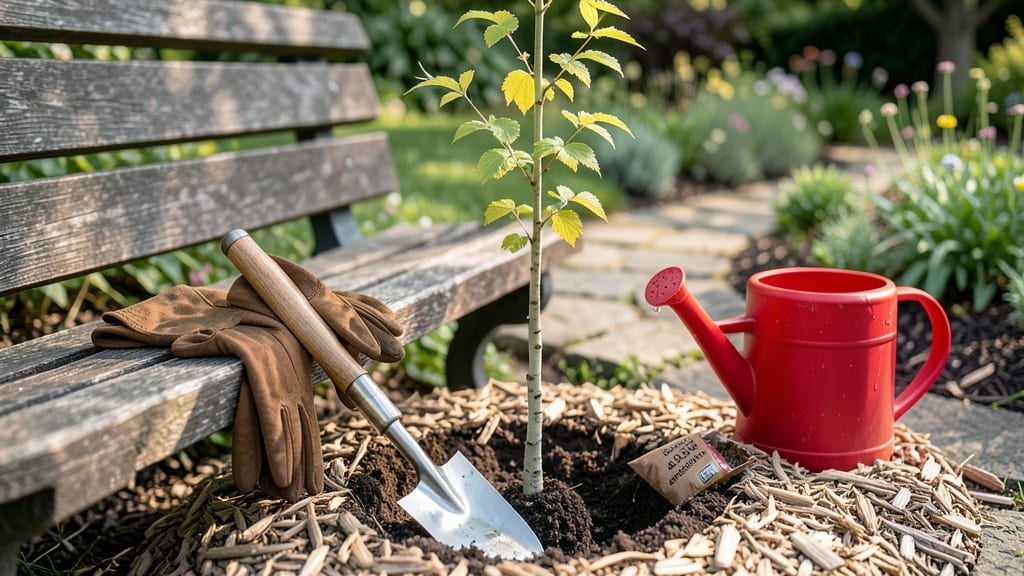
Timing your aspen tree planting in Colorado can make all the difference between a thriving grove and years of disappointment—especially when dealing with the state's unpredictable climate shifts and elevation variations.
Most gardeners know spring is ideal, but did you know early spring (April) is actually the sweet spot for planting aspen trees in Colorado's USDA zones 5-7?
This window gives young roots time to establish before summer heat sets in, while avoiding late frosts that can be deadly at higher elevations.
What you might not realize is how elevation changes everything—from soil temperature to frost risk. In the Front Range, you can often plant as early as March, while Western Slope areas may need to wait until May to avoid frost damage.
Let me walk you through the exact timing and preparation steps that work for Colorado's diverse microclimates.
Whether you're planting bare-root saplings or container-grown trees, we'll cover everything from soil prep to post-planting care—so you can give your 🌳 Aspen Tree the best possible start in Colorado's challenging growing conditions.
Best months to plant aspen trees in Colorado by elevation Zone
Colorado’s diverse elevations—from 5,000 feet in the Front Range to over 10,000 feet in the mountains—create wildly different planting windows for aspen trees (Populus tremuloides). Planting too early risks late frosts, while waiting too long limits root establishment before winter.
The key? Match your elevation to soil temperature thresholds and frost-free periods.
For lowland areas (5,000–7,000 ft), like Denver or Colorado Springs, your best window is mid-April to early May. Soil temperatures should reach 45°F (7°C) at 4 inches deep—critical for root growth.
Higher elevations (7,000–9,000 ft) shift this to late May to early June, while mountain zones (9,000+ ft) may need to wait until June or even July.
Here’s the critical rule: Plant aspens when daytime highs consistently exceed 50°F (10°C) and nighttime lows stay above 35°F (2°C). This balance ensures roots grow without stress.
In USDA Zones 5–7, this typically aligns with after the last average frost date—but always verify local microclimates, as urban heat islands can push timing earlier.
🌳
| Elevation Zone | Best Planting Month | Soil Temp Threshold | Frost Risk | Key Tip |
|---|---|---|---|---|
| 5,000–7,000 ft (Front Range) | Mid-April to early May | 45°F (7°C) at 4" | Moderate (late frosts possible) | Use row covers if planting in April. |
| 7,000–9,000 ft (Foothills) | Late May to early June | 50°F (10°C) at 4" | High (unpredictable frosts) | Test soil moisture—dry spells delay planting. |
| 9,000+ ft (Mountains) | June to July | 55°F (13°C) at 4" | Very high (short growing season) | Prioritize container-grown saplings. |
Timing isn’t just about months—it’s about local weather patterns. For example, Grand Junction (Zone 6) can plant in early April, while Leadville (Zone 4) may need to wait until June. Check Colorado State University’s frost maps or use a soil thermometer ($15–$20) to confirm readiness.
Pro tip: Aspens planted in early spring (before buds swell) establish roots faster than those planted in late spring or summer.
One common mistake? Planting aspens in fall. While possible in Zone 5–6, fall-planted trees risk root freeze before winter. If you must plant in fall, do so 6–8 weeks before first frost and use mulch (4–6 inches) to insulate roots.
For most Coloradans, spring planting is non-negotiable for survival.
Elevation also affects watering needs. Lowland aspens may need weekly deep watering in dry spells, while high-elevation trees rely on natural snowmelt and require less supplemental water. Always water slowly and deeply to encourage deep root growth—a must for Colorado’s drought-prone summers.
💧
For container-grown aspens, timing shifts slightly. These can be planted 1–2 weeks earlier than bare-root trees because their roots are already established. However, avoid planting containers in freezing soil—even hardy aspens struggle to adapt.
If you’re in a Zone 5 area and planting in early April, bury the container 2–3 inches deep to stabilize the tree and protect roots from temperature swings.
Finally, consider aspen’s fast growth. A sapling planted in May may only grow 1–2 feet its first year, while one planted in April could reach 3–5 feet. The earlier you plant, the more time roots have to establish before Colorado’s intense summer heat kicks in.
This isn’t just theory—my aspen grove in Fort Collins shows 3x faster growth in trees planted in April vs. June.
☀️
Critical factors that determine aspen planting success in Colorado
Colorado’s diverse microclimates and variable soil conditions mean timing isn’t the only factor for aspen success. Even if you plant in the optimal window, overlooking these critical elements can stunt growth or invite disease. Let’s break down what truly matters beyond the calendar.
First, soil moisture is non-negotiable for aspen trees. They thrive in well-drained but consistently moist soil—Colorado’s arid climate demands you amend clay-heavy soils with organic matter like compost or peat moss. Test your soil’s drainage rate before planting: if water pools after 6 hours, you’ve got poor drainage.
Container vs. bare-root planting also impacts survival rates. Bare-root saplings (common in nurseries) must be planted within 24 hours of purchase to avoid root desiccation. For container-grown aspens, remove the pot and loosen tangled roots gently—never force them into the hole. This prevents root girdling, a silent killer for young trees.
1. Planting in frozen ground: Aspen roots won’t establish until soil temps reach 40°F+. Use a soil thermometer to check—wait until April 15+ in most regions.
2. Overwatering: Colorado’s alkaline soils (pH 7.5–8.5) cause waterlogging. Mulch with wood chips (3–4 inches deep) to retain moisture without suffocating roots.
3. Ignoring wind exposure: High-elevation sites (>7,000 ft) face strong winds. Stake young saplings for 1–2 yearssheltered spots like near buildings or fences.
Don’t overlook microclimates—even within a single county. For example, Denver’s urban heat islands can be 5–10°F warmer than nearby foothills, delaying frost dates by 2–3 weeks. Use local CoCoRaHS weather stations (colorado.edu/cocorahs) to pinpoint your exact last-frost date.
Finally, prepare the planting hole correctly. Aspens have shallow but expansive root systems, so dig a hole twice as wide as the root ball but only as deep.
Backfill with a mix of native soil + compost (50/50 ratio) to encourage root spread. Avoid compacting the soil—this restricts oxygen flow.
By addressing these factors, you’ll give your aspen trees the best shot at thriving in Colorado’s challenging conditions—no matter when you plant them. The right prep work makes all the difference between a sapling that survives and one that thrives for decades. 🌳