
Plants
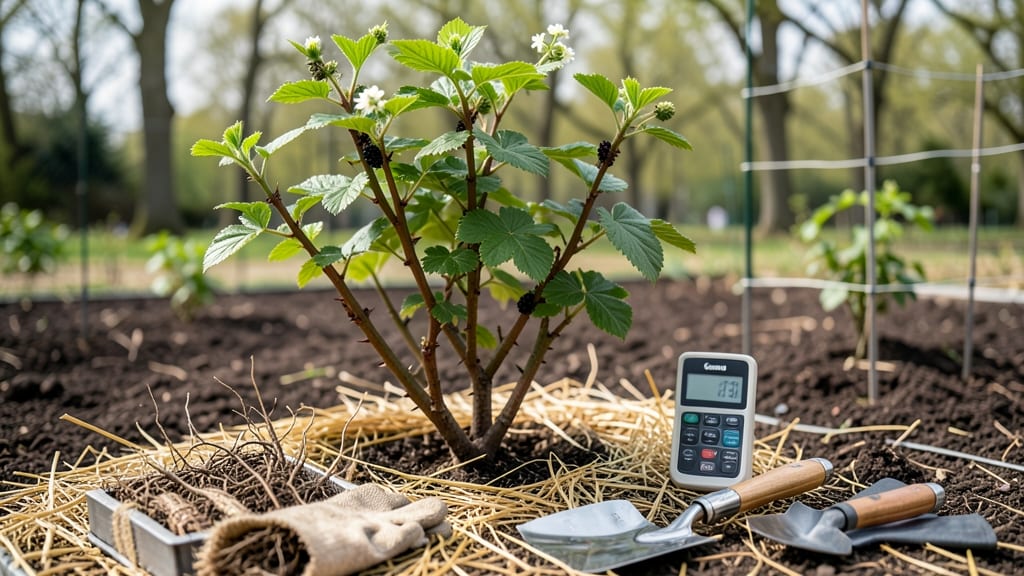
Timing your blackberry 🫐 planting in Virginia can make or break your harvest—get it wrong, and you might end up with frost-nipped canes or stunted growth.
The key lies in matching your local chill hours (those cold winter days that prep the plant for fruit) with the right planting window, whether you're in the cooler Appalachian mountains or the milder coastal plains.
Most Virginia gardeners swear by late winter to early spring (February through April) for bare-root planting, but fall (September to October) works too if you’ve got the right variety.
The trick? Avoid planting when the ground stays frozen or when late frosts lurk—especially in zones 6a-7b where temperatures can swing wildly.
I’ve tested both approaches across Virginia’s microclimates, and the results speak for themselves: proper timing means stronger roots, bigger canes, and sweeter berries by summer. Whether you’re prepping soil for in-ground planting or setting up containers, this guide breaks down the exact steps to time it right.
Ready to skip the guesswork? Let’s dive into how to align your planting with Virginia’s climate—so you’re not left with a patch of sad, underperforming brambles. Your future blackberry pies will thank you.
Virginia blackberry planting timeline by USDA Zone and chill-hour needs
Virginia’s diverse climate—from the Coastal Plain to the Appalachian Mountains—means your blackberry planting window depends on both USDA zone and chill-hour requirements. Most Virginia gardeners fall in USDA Zones 6a-7b, but even within those zones, microclimates can shift your ideal planting time by weeks.
For example, ‘Chester’ thornless blackberries (300-400 chill hours) thrive in Zone 6a, while ‘Triple Crown’ (900+ chill hours) needs the cooler highlands of Zone 7b.
Timing isn’t just about frost dates—it’s about matching your variety’s dormancy needs with Virginia’s last frost averages. In the Tidewater region (Zone 7b-8a), you might plant as late as March 15, while in the Piedmont (Zone 6b-7a), early February is safer.
The key? Plant when soil temps hit 40°F (4°C)—cold enough to prevent root rot but warm enough for root growth.
Here’s how Virginia’s three main regions break down for blackberry planting:
| Region | USDA Zone | Best Planting Window | Chill-Hour Match | Frost Risk |
|---|---|---|---|---|
| Coastal Plain | 7b-8a | Late Feb–March 15 | 300–600 hrs (e.g., ‘Natchez’) | Low (last frost: March 1–15) |
| Piedmont | 6b-7a | Early Feb–March 30 | 500–800 hrs (e.g., ‘Chester’) | Moderate (last frost: Feb 15–March 1) |
| Appalachian | 6a-7b | Jan 15–Feb 15 | 800–1,000+ hrs (e.g., ‘Triple Crown’) | High (last frost: Feb 1–15) |
| Urban Heat Islands | 7a-7b | March 1–April 15 | 400–700 hrs (e.g., ‘Arapaho’) | Variable (microclimate-dependent) |
🌡️ Pro Tip: Use a soil thermometer to confirm temps—plant when soil is 40–50°F (4–10°C).
Fall planting (September–October) is also an option in Virginia, but it’s riskier unless you’re in Zone 7b+. The goal is to give roots 6–8 weeks to establish before winter. In cooler zones like Roanoke (Zone 6b), aim for September 15 to avoid early frosts.
Container-grown blackberries adapt better to fall planting than bare-root canes, which need immediate moisture.
For thornless varieties like ‘Ouachita’ or ‘Apache,’ prioritize early spring planting—they’re more sensitive to late frosts. If you’re unsure about your chill hours, check Virginia Cooperative Extension’s chill-hour maps or use a home weather station to track your local accumulation.
Most Virginia gardeners hit 500–800 chill hours, perfect for ‘Chester’ or ‘Navaho’.
One common mistake? Planting too early in hopes of an early harvest. Blackberry canes need 60–90 days to establish roots before producing fruit. If you plant in January in Zone 6a, you might see frost damage to emerging shoots.
Wait until soil temps stabilize—typically after three consecutive days above 45°F (7°C).
For container growing, extend your window by 2–4 weeks. Pots warm up faster in spring, so you can plant bare-root canes in late March even in Zone 6b. Just ensure your container has drainage holes and use a well-draining potting mix with 30% compost.
🌱 Key Takeaway: Match your
How to adjust planting time for Virginia’s microclimates and soil conditions
Virginia’s diverse microclimates—from the Coastal Plain’s milder winters to the Appalachian Mountains’ longer frost seasons—mean your blackberry planting window can shift by weeks. For example, Norfolk’s Zone 8a may safely plant in early March, while Roanoke’s Zone 6b should wait until mid-April to avoid frost damage.
Always check your last frost date (typically March 15 in Piedmont) and adjust accordingly.
Urban heat islands in cities like Richmond can create earlier planting opportunities by 2-3 weeks compared to rural areas. Use a soil thermometer to confirm ground temps are above 40°F (4°C) before planting bare-root canes.
For container-grown blackberries, you can plant 1-2 weeks earlier since pots warm up faster in spring sunlight.
Soil type plays a critical role in timing. Clay-heavy soils in the Piedmont region (like Lunenburg County) drain poorly and may require amending with compost before planting to prevent waterlogged roots. Test your soil pH (ideal: 5.5-6.5)—if it’s too high, add sulfur or peat moss 4-6 weeks before planting to adjust it naturally.
🌱 Organic matter is non-negotiable for Virginia’s sandy Coastal Plain soils (e.g., Virginia Beach), which drain too quickly. Mix in 3-4 inches of compost or well-rotted manure into the planting hole to improve moisture retention.
For acid-loving varieties like ‘Chester’, add pine bark fines to lower pH further if needed.
Mulching extends your planting window by 1-2 weeks in both spring and fall. Apply 3-4 inches of straw or wood chips around plants after planting to insulate roots from late frosts (common in Zone 6a) or heat stress in urban areas.
Remove mulch in late winter to let soil warm up for spring planting.
💧 Watering schedules also shift with microclimates. In drier western Virginia (e.g., Blacksburg), water newly planted blackberries daily for the first 2 weeks to establish roots, while humid eastern regions (like Williamsburg) may only need watering every 3-4 days.
Always water in the morning to prevent fungal diseases like anthracnose, which thrives in Virginia’s damp springs.
For fall planting (ideal for Zone 7b+), aim for September-October when soil temps drop below 70°F (21°C). This gives roots time to establish before winter dormancy.
In cooler mountain zones (e.g., Bristol), plant by mid-September to avoid early frosts, while coastal areas can extend until early November.