
Plants
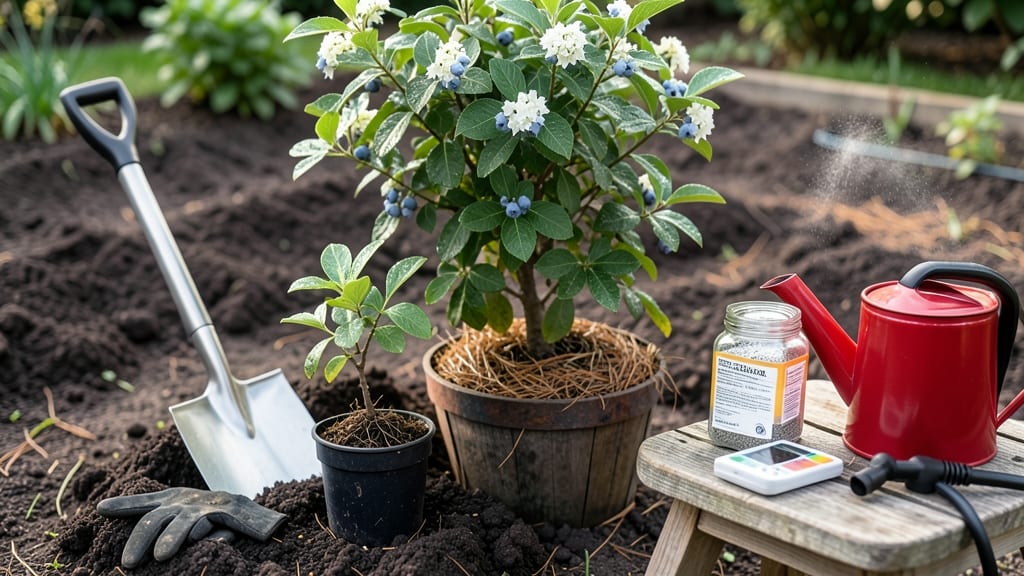
Planting blueberries in Massachusetts isn’t just about grabbing a bush and sticking it in the ground—it’s about matching your 🫐 blueberries to the region’s chill hours and frost dates for a reliable harvest.
Whether you’re in the cooler hills of the Berkshires or the milder coastal plains, timing your planting window wrong can mean the difference between a bountiful crop and a sad, leafy shrub.
Most gardeners in 5b-6b zones swear by early spring or fall planting, but the right choice depends on your microclimate. Too early, and frost can damage tender roots; too late, and your bushes won’t establish before winter’s chill sets in.
I’ll break down the exact months that work best for your specific part of the state—and why some varieties thrive where others fail.
You’ll also discover how to prep your soil for those acid-loving 🫐 blueberries, whether container gardening is your best bet for urban spaces, and which planting method (bare-root or potted) gives you the fastest start.
Let’s get those bushes in the ground the right way, so you’re enjoying homegrown berries by next summer.
From avoiding common pitfalls to adjusting for MA’s unpredictable weather, this guide ensures your blueberries get off to the best possible start. Ready to turn your garden into a berry patch? Let’s dive in.
Massachusetts chill-hour zones: matching blueberry varieties to your location
Massachusetts spans USDA zones 5b-6b, but the real game-changer for blueberries is chill hours—the number of hours below 45°F your bushes need to fruit well. Most MA regions range from 300–1,000+ hours, and picking the wrong variety means skipping harvests or sparse berries.
Let’s match your location to the perfect cultivar and planting window.
Northern MA (e.g., Pittsfield, North Adams) gets 600–900 chill hours, while coastal areas (e.g., Providence, Cape Cod) often see 300–500 hours. Inland valleys like the Connecticut River region can hit 1,000+ hours.
Your choice of Northern Highbush, Southern Highbush, or Rabbiteye depends entirely on these numbers—and your planting timing shifts with them.
Here’s how to decode your zone and pick the right blueberry for reliable harvests in MA, plus the ideal spring vs. fall planting windows for each:
| Zone & Location | Chill Hours | Best Varieties | Spring Planting Window | Fall Planting Window |
|---|---|---|---|---|
| Northern MA (Zones 5b) | 600–900 hrs | Patriot, Bluecrop, Jersey | Late April–early May | September 15–October 10 |
| Central MA (Zones 5b-6a) | 500–700 hrs | Duke, Bluegold, Legacy | Early April–mid-May | September 1–October 5 |
| Coastal MA (Zones 6b+) | 300–500 hrs | Southern Highbush (Top Hat, Sunshine Blue) | Mid-April–early May | October 1–15 |
| Valley Regions (Zones 6a-6b) | 700–1,000+ hrs | Northland, Earliblue, Berkeley | Late March–April 15 | September 1–September 20 |
If you’re in Zone 5b (e.g., Worcester, Springfield), Northern Highbush varieties like Patriot thrive with 700+ chill hours and fruit 2–3 years after planting. For Zone 6b+ (e.g., Boston, Providence), Southern Highbush types like Top Hat handle lower chill hours and produce earlier in the season.
Rabbiteye varieties (e.g., Climax) are rare in MA but work in valley microclimates with 1,000+ hours.
Timing matters just as much as the variety. In northern MA, plant bare-root bushes in early spring (April) to avoid late frosts, while coastal gardeners can push fall planting to October thanks to milder winters. Inland valleys?
Aim for September planting to let roots establish before first frost.
One critical mistake? Ignoring microclimates. A south-facing slope in Zone 5b might get 500 extra chill hours than a low-lying frost pocket. Use this rule: Plant high and south for earlier springs and longer growing seasons.
For urban gardeners, containers work year-round—just move pots to garages in winter if temps drop below 10°F.
Blueberries need 6+ hours of sun, but afternoon shade helps in hot inland zones like Pittsfield. Mulch with pine needles (to lower pH) and wood chips (to retain moisture). Coastal areas? Windbreaks are a must—blueberries hate salt spray.
Ready to plant? Grab a soil pH test kit (aim for 4.5–5.5) and check your last frost date—most of MA averages April 15, but coastal areas can be 2 weeks earlier.
Spring planting gives roots 6–8 weeks to establish before summer heat, while fall planting lets bushes focus on root growth instead of fruiting.
🌿
Step-by-step planting timeline: from frost dates to soil prep
Massachusetts’ unpredictable spring frosts mean your blueberry planting window is a tightrope walk between soil thaw and last frost dates. For most regions, April–May is ideal for bare-root plants, while September–October works for container-grown bushes—but timing varies by USDA Zone 5b–6b.
Start by checking your local average last frost date (typically April 15 in central MA, later near the coast). Plant 4–6 weeks before this date to give roots time to establish before warm soil triggers growth. For fall planting, aim for 6–8 weeks before first frost (usually mid-October).
📅 Step-by-Step Planting Timeline
- 🌱 Late Winter (Feb–March): Test soil pH (4.5–5.5); amend with peat moss or sulfur if needed.
- 🪴 Early Spring (April): Dig holes twice as wide as root ball; loosen soil 12 inches deep for drainage.
- 💧 Spring Planting (April–May): Soak bare-root plants 2–3 hours; plant at same depth as nursery pot.
- 🌿 Fall Planting (Sept–Oct): Water container plants thoroughly; bury root ball 1 inch deeper than in pot.
- ❄️ Post-Planting: Mulch 3–4 inches with pine needles; protect with burlap if frost threatens.
For coastal areas (e.g., Cape Cod), delay spring planting until mid-May to avoid late frosts. Inland zones like Pittsfield can plant 2–3 weeks earlier. Always choose acid-loving varieties like ‘Bluecrop’ (Northern Highbush) or ‘Jersey’ (Southern Highbush) to match your chill-hour zone.
After planting, water deeply (1–2 gallons per plant) and avoid wetting foliage to prevent fungal diseases. In container gardens, use larger pots (15+ gallons) to prevent root-bound stress—a common issue in urban MA yards.
Pro tip: Mark your planting date on a calendar and schedule first pruning for early spring (remove dead wood and crossing branches) to boost next year’s fruit production.