
Plants
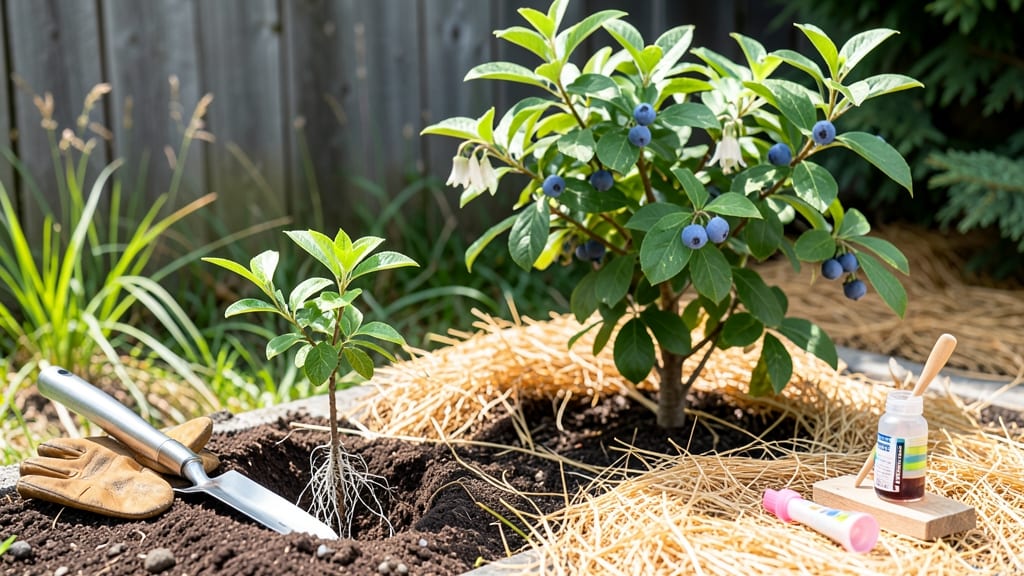
Planting blueberry bushes in Alabama at the wrong time could mean waiting years for that first sweet harvest—because these 🫐 powerhouses need just the right chill hours to thrive. Unlike northern states, Alabama’s warm winters demand precise timing, especially when choosing between Southern Highbush or Rabbiteye varieties.
Most gardeners in zones 7a-8b swear by fall planting—between October and November—when soil stays warm enough for roots to establish before winter. But there’s a catch: Northern Alabama’s cooler microclimates might still benefit from an early spring window (February-March), while southern areas should avoid planting too late, risking frost damage.
Whether you’re digging in-ground or container planting, the key is matching your variety to Alabama’s chill-hour zones. I’ll break down exactly when to plant for your specific region, plus soil prep tricks to set your bushes up for a bountiful harvest next May.
Skip the guesswork—let’s get your blueberry bushes off to the right start, because patience now means plump, juicy berries in just a season or two. Ready to learn the exact timing that works for your Alabama yard?
Alabama’s chill-hour zones and best blueberry varieties to plant
Alabama’s climate presents a unique challenge for blueberry growers: too much heat without enough winter chill can prevent fruiting. The state spans USDA Zones 7a-8b, but chill-hour requirements vary dramatically between Northern Alabama (7a-7b) and Southern Alabama (8a-8b).
Northern regions typically get 400-600 chill hours, while southern areas often see 200-400 chill hours—critical for blueberry varieties.
Choosing the right blueberry variety ensures your bushes thrive and produce fruit. Southern Highbush varieties like 'Climax' or 'Misty' need 300-500 chill hours, making them ideal for Southern Alabama.
Meanwhile, Rabbiteye varieties like 'Powderblue' or 'Tifblue' thrive in Northern Alabama with 500-700 chill hours. Half-High varieties like 'Top Hat' offer a middle ground for transitional zones.
Here’s how Alabama’s chill-hour zones break down and which varieties match best:
| Region | Chill Hours | Best Varieties | Notes |
|---|---|---|---|
| Northern Alabama (Zones 7a-7b) | 500-700 | Rabbiteye: 'Powderblue', 'Tifblue' | Cold-hardy, thrives in cooler winters. |
| Central Alabama (Zones 7b-8a) | 400-500 | Half-High: 'Top Hat', 'O'Neal' | Adaptable to transitional zones. |
| Southern Alabama (Zones 8a-8b) | 200-400 | Southern Highbush: 'Climax', 'Misty' | Low-chill, heat-tolerant varieties. |
If you’re unsure about your chill hours, check with your local Cooperative Extension office or use a chill-hour calculator based on your ZIP code. For example, Huntsville (Zone 7b) averages 600 chill hours, while Mobile (Zone 8b) sees only 300-350 chill hours.
Matching your variety to your region ensures better flowering and fruit set.
Another key factor is soil acidity. Blueberries require acidic soil (pH 4.5-5.5). Alabama’s native soil is often too alkaline, so amend with peat moss or sulfur before planting. Test your soil’s pH 3-4 months before planting to allow time for amendments to take effect.
For container growing, Southern Highbush varieties like 'Peach Sorbet' (a day-neutral variety) are excellent choices, as they require fewer chill hours and can be moved to cooler microclimates during summer. Containers also allow you to control soil acidity more precisely, which is crucial for blueberries.
When selecting your blueberry bushes, prioritize disease-resistant varieties like 'Aureole' (Southern Highbush) or 'Centurion' (Rabbiteye). These varieties are bred to handle Alabama’s humid summers and occasional fungal pressures better than standard types.
Finally, consider pollination needs. Most blueberry varieties are self-pollinating, but planting two compatible bushes increases yield. For example, 'Climax' and 'Misty' pollinate each other well, making them a great pair for Southern Alabama gardens.
Now that you’ve matched your variety to Alabama’s chill-hour zones, the next step is timing your planting—and that’s where regional microclimates come into play. For instance, Northern Alabama’s cooler winters allow for earlier spring planting, while Southern Alabama’s milder winters may require fall planting to avoid summer heat stress.
Step-by-step planting timeline for Alabama’s climate zones
Alabama’s diverse climate zones mean the best time to plant blueberry bushes depends on whether you’re in North Alabama (USDA Zone 7a) or South Alabama (Zone 8a-8b).
In cooler northern regions, aim for late winter to early spring (February–March), while southern areas can plant as late as November to avoid summer heat stress. This timing ensures roots establish before extreme heat or cold arrives.
For container planting, you have more flexibility—plant in fall (October) or early spring (March). Containers warm up faster in spring, so avoid planting too early when soil temperatures are still chilly.
Always check your local last frost date (mid-March in North Alabama, late February in the South) to guide your schedule.
⚠️ CRITICAL WARNING: Planting at the wrong time can stunt growth or kill young bushes.
⚠️ Avoid These Planting Mistakes in Alabama
❌ Planting too early (before last frost) – Young roots can’t survive freezing temperatures, even if the bush looks healthy. Wait until soil is at least 45°F (7°C).
❌ Planting in summer heat (June–August) – High temperatures stress young plants, causing transplant shock. If you must plant in summer, use shade cloth and extra water.
❌ Skipping soil prep in clay-heavy Alabama soil – Blueberries need acidic, well-draining soil (pH 4.5–5.5). Amend clay soil with peat moss or pine bark before planting to prevent root rot.
❌ Ignoring microclimates – A south-facing slope in North Alabama may warm up faster than a shaded valley. Adjust planting dates by 2–4 weeks based on your specific location’s frost patterns.
Start by testing your soil’s pH level—Alabama’s native soil is often alkaline, which harms blueberries.
Use a soil test kit (available at garden centers) and amend with sulfur or aluminum sulfate if needed. Work compost or peat moss into the top 12 inches of soil to improve drainage and fertility.
When planting, dig a hole twice as wide as the root ball but no deeper. Gently remove the bush from its container, loosen any circled roots, and place it so the top of the root ball sits 1 inch above ground level.
This prevents water from pooling around the stem, which causes rot. Backfill with amended soil and water deeply to settle it.
After planting, mulch heavily with pine straw or wood chips (avoid cedar mulch—it’s too acidic). Mulch helps retain moisture and regulate soil temperature, which is crucial in Alabama’s hot summers and mild winters. Keep mulch 3–4 inches thick but avoid piling it against the stem.
For container-grown bushes, use a pot with drainage holes and fill it with a 50/50 mix of peat moss and perlite. Place containers in a protected spot (like a porch or patio) during winter if you’re in Zone 8b, where frost is rare but possible.
Move containers to a sheltered location in late fall to prevent cold damage.