
Trees
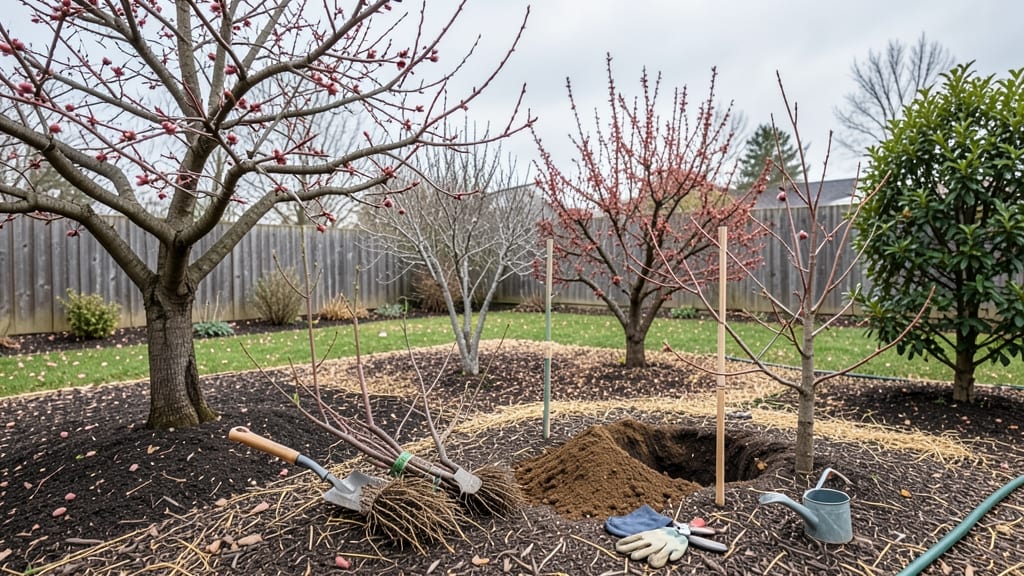
Planting a fruit tree 🍎 in Wisconsin isn’t just about digging a hole—it’s about timing it perfectly to beat frost, avoid drought stress, and give your sapling the best shot at thriving for years.
One wrong move, and you could end up with a sad, frost-nipped sapling instead of a future orchard. The good news? With the right window—either late April through early June or early September—you’ll set your tree up for success.
Why does timing matter so much in Wisconsin’s 4a-6b zones? Because chill hours (the cold winter hours trees need to fruit) and frost dates vary wildly from Madison to Green Bay. Plant too early, and a late frost will wipe out tender new roots.
Too late, and your tree won’t establish before winter dormancy kicks in. I’ll break down the exact months that work best for your specific fruit tree variety—and how to prep your soil like a pro.
You might think spring is the only option, but fall planting actually gives roots a head start in cooler soil. We’ll compare the pros and cons of each season, plus how to protect your young tree from deer, late frosts, and even Wisconsin’s infamous wind.
By the end, you’ll know not just when to plant, but how to do it right for apples, cherries, pears, and more.
Ready to turn your backyard into a fruit-filled paradise? Let’s get your fruit tree off to the best possible start—because the best time to plant a tree was 20 years ago, but the second-best time is right now.
Wisconsin fruit tree planting timeline: month-by-month guide by chill-hour zones
Wisconsin’s USDA hardiness zones 3b–5b create unique challenges for fruit tree planting. The key? Understanding chill-hour requirements—the number of hours below 45°F your tree needs to produce fruit. For example, Honeycrisp apples require 600+ chill hours, while Montmorency cherries thrive with just 400–500 hours.
Planting at the wrong time can mean wasted saplings or poor fruit production.
Most Wisconsin gardeners choose between spring (April–May) and fall (September–October) planting. Spring planting lets you see frost risks, while fall gives roots time to establish before winter. However, Zone 3b (northern WI) has a shorter window—plant too late in fall, and roots may not harden before freeze.
Always check your last average frost date (typically May 10–20 in most regions).
Here’s a breakdown of Wisconsin’s planting timeline by chill-hour zones and key varieties:
| Month | Zone 3b (North) | Zone 4a (Central) | Zone 5a (South) |
|---|---|---|---|
| April | ❌ Avoid (frost risk) | ✅ Good (after frost) | ✅ Best (soil warms faster) |
| May | ✅ Best (soil thawed) | ✅ Best (active growth) | ✅ Best (longer window) |
| June | ⚠️ Risky (drought, heat) | ⚠️ Risky (establish roots) | ⚠️ Risky (late for fall prep) |
| September | ✅ Best (6+ weeks before frost) | ✅ Best (root growth before cold) | ✅ Best (ideal for Zone 5a) |
| October | ❌ Too late (frost imminent) | ⚠️ Late (Zone 4a limit) | ✅ Possible (mild Zone 5a) |
For Zone 3b gardeners, focus on low-chill varieties like ‘Northwest Greening’ apple (400 hours) or ‘Montmorency tart cherry. In Zone 5a, you can grow Honeycrisp apples (600+ hours) or ‘Harvest Gold’ pears.
Always check UW-Extension’s frost maps for your county—Madison’s last frost is typically May 15, while Green Bay’s can linger until May 25.
Pro tip: Bare-root trees (sold dormant) are best for fall planting—they establish roots before spring growth. If planting in containers, wait until soil temps reach 50°F to avoid root shock. Mulch heavily (4–6 inches) after planting to protect roots from winter temperature swings.
Common mistakes to avoid:
- Planting peaches or nectarines in Zone 3b—they need 800+ chill hours and often fail.
- Skipping soil amendments—Wisconsin’s clay-heavy soil benefits from compost or sand for drainage.
- Ignoring tree spacing: Dwarf varieties need 8–12 ft apart; standard trees require 20–30 ft.
Use this timeline as your guide, and your fruit trees will thrive for decades—just like my 20-year-old ‘Zestar!’ apple tree that produces 50+ pounds of fruit annually. The secret? Perfect timing + proper care.
Top 5 Wisconsin-adapted fruit trees: chill-hour needs and best planting months
Wisconsin’s chill-hour requirements determine which fruit trees thrive in your yard. Most varieties need 400–1,000 hours below 45°F to produce fruit reliably. For example, ‘Honeycrisp’ apples demand 600+ chill hours, while ‘Stella’ cherries adapt well to 400–500 hours.
Choosing the right variety ensures your tree survives winters and bears fruit annually.
In USDA Zones 3b–5b, timing matters just as much as variety selection. Plant bare-root trees in early spring (April–May) or container-grown trees in fall (September–October) for best results. Fall planting gives roots time to establish before winter, while spring planting avoids late frosts.
Always check your local last-frost dates—Madison averages May 15, but northern Wisconsin can delay until June 1.
| Variety | Chill Hours | Best Planting Month | Cold Hardiness | Mature Size |
|---|---|---|---|---|
| ‘Zestar!’ Apple | 600–800 hrs | April–May or Sept | ⭐⭐⭐⭐⭐ (Zone 3) | 15–20 ft |
| ‘Stella’ Tart Cherry | 400–500 hrs | April–May | ⭐⭐⭐⭐ (Zone 4) | 15–20 ft |
| ‘Harvest Gold’ Pear | 500–700 hrs | Sept–Oct | ⭐⭐⭐⭐ (Zone 4) | 20–25 ft |
| ‘Montmorency’ Sour Cherry | 400–500 hrs | April–May | ⭐⭐⭐⭐ (Zone 3) | 12–18 ft |
| ‘Patriot’ Pear | 500–600 hrs | Sept–Oct | ⭐⭐⭐⭐ (Zone 4) | 18–22 ft |
For apples and pears, fall planting is ideal—roots establish before winter, and trees fruit 1–2 years earlier than spring-planted varieties. Cherries, however, prefer spring planting to avoid late frosts that damage blossoms.
Always amend soil with compost and a balanced fertilizer (10-10-10) before planting, and mulch heavily to retain moisture and insulate roots.
⚠️ Warning: Avoid planting peaches or nectarines in Zone 4 or colder—they require 800+ chill hours and struggle with Wisconsin’s winters. Stick to apple, cherry, or pear varieties for reliable harvests. If you’re in northern Wisconsin (Zone 3b), choose ‘Zestar!’ apples or ‘Montmorency’ cherries for best cold tolerance.
Once planted, prune in late winter (February–March) to shape the tree and remove dead wood. Thin fruit in June to improve size and quality.
With the right variety and timing, your Wisconsin fruit tree could produce harvests for 20+ years—just imagine fresh-picked apples in September or tart cherries in July!