
Planting
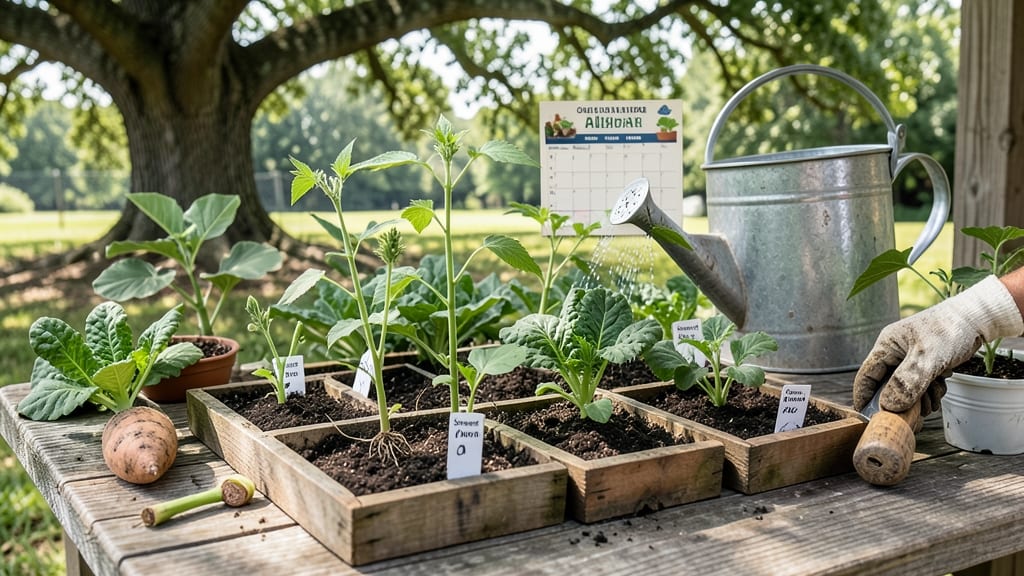
Planting your General Alabama Garden 🌱 at the wrong time can mean the difference between a thriving harvest and wilting disappointment—especially in Alabama’s humid, fast-changing climate.
The key isn’t just knowing what to plant, but when to put it in the ground to beat the heat and pests that strike after March 15.
Alabama’s 7a-8b zones create two distinct planting worlds: North Alabama’s cooler microclimates give you a 2-3 week head start compared to the Gulf Coast, where summer heat arrives earlier. Whether you’re sowing cool-season greens or heat-loving tomatoes, timing your General Alabama Garden right means faster germination and bigger yields.
I’ve tested these strategies in my own Alabama garden, and the results speak for themselves—fast growth, fewer pests, and harvests that last from spring to fall.
Let me show you exactly when to plant for each crop type, plus pro tips to stretch your growing season in Alabama’s tricky climate.
From shade cloth hacks to mulching secrets, you’ll learn how to turn Alabama’s heat into your garden’s advantage. Ready to plant with confidence? Let’s get started.
Alabama’s planting zones & heat zone deadlines by crop type
Alabama’s USDA hardiness zones 7a-8b create a unique gardening challenge—cool mountain air in the north clashes with humid heat near the Gulf Coast. Your planting timeline must account for these extremes, especially when balancing last frost dates (late February to mid-April) with soil temperature thresholds (60°F+ for warm-season crops).
For cool-season crops like lettuce, spinach, and broccoli, aim to sow seeds 4-6 weeks before your area’s last frost. In North Alabama (zones 7a-7b), this means starting in early February, while Southern Alabama (zones 8a-8b) gardeners can wait until late February to early March.
These crops thrive in 50-65°F soil and bolt when temperatures rise above 75°F.
Warm-season powerhouses like tomatoes, peppers, and okra demand patience—wait until 2-3 weeks after your last frost and soil temperatures hit 65°F+. In Birmingham, this is typically mid-April, but coastal areas like Mobile can start as early as late March.
Heat-tolerant varieties (e.g., ‘Celebrity’ tomatoes or ‘Jalapeño M’) are your best bet for Southern Alabama’s longer, hotter summers.
🌱Pro Tip: Use a soil thermometer to verify readiness—warm-season seeds won’t germinate below 60°F, even if air temps are perfect.
🌱 Alabama Planting Deadlines by Crop Type
| Crop Type | Planting Window | Soil Temp Requirement | Notes |
|---|---|---|---|
| Cool-Season (Leafy Greens) | Feb–March (North AL) / Mar–Apr (South AL) | 45–65°F | Bolt-resistant varieties for heat |
| Warm-Season (Tomatoes, Peppers) | Apr–May (North AL) / Mar–Apr (South AL) | 65°F+ | Use black plastic mulch to warm soil |
| Fall Crops (Kale, Carrots) | Aug–Sept (North AL) / Sept–Oct (South AL) | 50–70°F | Extend season with row covers |
| Perennials (Herbs, Shrubs) | Early Spring or Fall | 50–60°F | Plant bare-root in moist soil |
Native Alabama plants like passionflower and black-eyed Susan thrive with minimal timing stress—they’re adapted to the state’s humidity and heat. For non-natives, succession planting is key: sow radishes every 2 weeks for continuous harvests, or replace bolted lettuce with spinach in late summer.
Southern Alabama’s longer frost-free season (up to 260 days) lets you push limits—try double-cropping beans after early peas or planting sweet potatoes in May for a fall harvest. In North Alabama, focus on early maturing varieties (e.g., ‘Early Girl’ tomatoes) to beat the first frost in November.
🌡️Heat Zone Hack: If your soil stays below 65°F after last frost, use clear plastic mulch to raise temperatures by 5–10°F—ideal for jumpstarting warm-season crops in cooler microclimates.
Missed the spring window? Don’t panic—fall planting (August–September) offers a second chance for cool-season crops. Southern Alabama’s milder winters even allow overwintering kale or cabbage for early spring harvests. Just monitor first frost dates: North AL (early November) vs. South AL (mid-November).
How to adjust planting times for Alabama’s microclimates (coastal vs. mountain regions)
Alabama’s geography creates distinct microclimates—think North Alabama’s cooler mountain air versus Southern Alabama’s sweltering Gulf Coast humidity. These differences can shift your planting window by 2-3 weeks, so knowing your region’s nuances is key.
For example, Huntsville’s last frost might average March 15, while Mobile’s could be as early as February 28. A soil thermometer (under $20) becomes your best friend here to track when soil warms to 60°F+ for warm-season crops like tomatoes or peppers.
Coastal areas like Mobile and Pensacola have longer growing seasons thanks to milder winters and earlier springs, but they also face higher humidity and pests like squash vine borers.
Meanwhile, mountain regions (e.g., Chattanoooga, AL) enjoy cooler nights that slow pest activity but demand hardier varieties to survive occasional late frosts. Even within cities, urban heat islands can make downtown Birmingham 5°F warmer than rural areas, accelerating seed germination.
🌱
| Region | Last Frost Avg. | First Frost Avg. | Planting Adjustment | Heat-Tolerant Picks |
|---|---|---|---|---|
| North AL (Huntsville, Decatur) | March 15 | November 1 | Plant cool crops 3-4 weeks earlier | Okra, Sweet Potatoes, Black-Eyed Peas |
| Central AL (Birmingham, Montgomery) | March 1 | October 31 | Standard 2-3 week window for warm crops | Peppers, Eggplant, Southern Peas |
| South AL (Mobile, Gulf Shores) | February 28 | December 1 | Extend warm-season crops into October | Okra, Sweet Corn, Collard Greens |
| Urban Heat Islands (Birmingham, Huntsville) | March 1 (earlier in city centers) | October 15 (later in city centers) | Use shade cloth for seedlings | Zucchini, Cucumbers, Basil |
For North Alabama gardeners, focus on early spring crops like cabbage and peas by planting in late February—just as soil temperatures creep above 50°F.
In contrast, Southern Alabama’s longer frost-free season lets you double-crop warm-season veggies like okra or sweet potatoes by planting in both May and August.
Pro tip: Heat-loving varieties such as ‘Celebrity’ tomatoes or ‘Crimson Sweet’ watermelons thrive in Southern Alabama’s humidity but may bolt prematurely in North Alabama’s cooler summers.
If you’re unsure about your local microclimate, check the Alabama A&M Extension’s frost maps or use the USDA Plant Hardiness Zone Map to pinpoint your exact zone.
For container gardening, urban heat islands can be your ally—pots warm up faster, so you can start warm-season seeds indoors 2 weeks earlier than ground planting. Just ensure containers have drainage holes to prevent root rot in Alabama’s clay-heavy soils.
Even within a single county, elevation changes can shift planting times. For instance, Montevallo (elevation 500 ft) might have a 2-week earlier frost date than Daphne (sea level). When in doubt, opt for heat-tolerant varieties and mulch heavily to protect young plants from soil temperature swings.
With these adjustments, you’ll maximize your garden’s potential—no matter where in Alabama you’re growing!
🌿