
How To
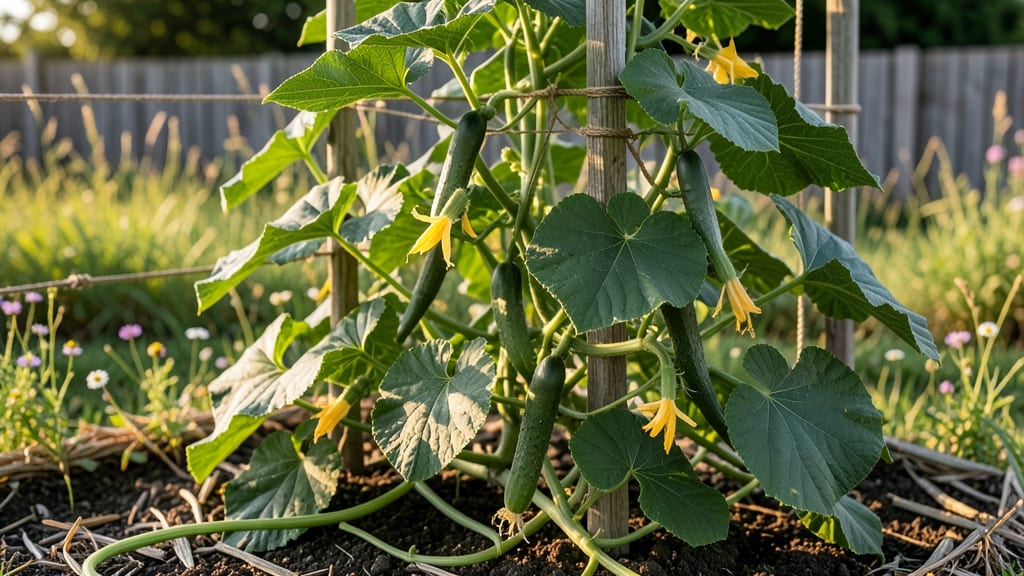
When you picture cucumber plants 🥒, you might imagine sprawling vines—but did you know how tall a cucumber plant can grow varies dramatically depending on the variety? Some stay compact, while others stretch far beyond expectations.
Understanding these differences is key to planning a space-efficient garden, whether you're working with a tiny balcony or a small backyard plot.
The truth is, cucumber heights can vary dramatically depending on the type you choose. Some bush varieties top out around 2-4 feet, making them perfect for containers, while traditional vining types can stretch up to 10 feet if left unchecked.
For gardeners in USDA Zone 6a, knowing these differences means the difference between a manageable harvest and a tangled mess.
I’ve tested everything from dwarf varieties to towering climbers, and the key to success isn’t just picking the right plant—it’s also how you train them. Whether you’re trellising, pruning, or simply choosing the best spot, small adjustments can turn a space constraint into a productivity boost.
Let’s break down the options so you can grow more cucumbers in less room.
Ready to maximize your garden’s potential? You’ll discover which varieties thrive in tight spaces, how to support tall plants without sacrificing yield, and the simplest tricks to keep your cucumbers productive from June through September. No more guessing—just proven strategies for a bountiful, organized harvest.


Cucumber plant height variations: from bush types to vining giants
Cucumber plants come in two primary growth habits that dramatically affect their height and space needs: bush types and vining types.
Understanding these differences is key to planning your garden layout, especially if you're working with limited space. Bush cucumbers are the compact champions, while vining cucumbers can reach impressive heights if given the right support.
The average height of a cucumber plant depends entirely on its variety. Bush types typically stay between 2 to 4 feet tall, making them ideal for containers or small garden plots.
In contrast, traditional vining varieties can sprawl up to 10 feet or more if left unchecked. Even trained vertically, these vines can reach heights of 6 to 8 feet when properly supported.
Growth habits also influence how much space your cucumbers will occupy. Bush cucumbers grow in a compact, bushy form with multiple stems radiating from the base, while vining types send out long, trailing runners that can cover large areas if not controlled. This distinction is crucial when choosing varieties for your garden.
For example, the Armenian cucumber is a classic vining type that can climb up to 15 feet when trellised, while Bush Champion stays neatly contained at just 2 to 3 feet tall.
The difference in growth patterns means you can grow 10 times more cucumbers in the same space by choosing compact varieties or training vining types vertically.
Environmental factors also play a role in determining how tall your cucumber plants will grow. Sunlight exposure, soil fertility, and water availability can all influence vine length and bush density.
Plants grown in full sun with consistent moisture tend to grow taller and more vigorously than those in shaded or drought-stressed conditions.
Here’s how these growth habits break down in real-world gardening scenarios:
| Type | Height Range | Growth Habit | Best For |
|---|---|---|---|
| Bush Cucumbers | 2–4 ft | Compact, multi-stemmed | Containers, small gardens |
| Semi-Dwarf Vining | 4–6 ft | Moderate vining, needs support | Trellises, small spaces |
| Standard Vining | 6–10+ ft | Long, trailing runners | Large gardens, trellises |
If you're growing cucumbers in a container garden, bush types are your best bet. A 5-gallon bucket can comfortably hold a Bush Champion plant, while even semi-dwarf vining types may need a 10-gallon container with proper trellising.
For in-ground planting, vining types can be trained to climb trellises or fences, saving valuable ground space for other crops.
One common misconception is that taller cucumber plants always produce more yield. While some vining types like 'Straight Eight' can produce heavy yields when properly supported, bush types often ripen faster and are easier to harvest in small spaces.
The key is matching your variety choice to your available space and gardening goals.
For gardeners with limited space, vertical training is a game-changer. Even standard vining cucumbers can be pruned and guided to grow upward rather than outward, reducing their footprint by up to 80%.
This technique not only saves space but also improves air circulation, reducing the risk of fungal diseases like powdery mildew.
When planning your cucumber garden, consider both the mature height of your chosen varieties and how you’ll support them. A well-trained vining cucumber can produce just as much as a sprawling one—it just needs the right framework to reach its potential.
With the right approach, even a 10-foot vine can thrive in a small backyard or balcony setup.
Cucumber plant height variations: from bush types to vining giants
Cucumber plants can range from compact bush varieties to towering vines, and the difference isn’t just in height—it’s in how they grow and how much space they need.
Most traditional cucumbers are vining types, stretching up to 10 feet if given the freedom, while bush varieties stay under 4 feet. This variation is why choosing the right type for your space is critical—especially in USDA Zone 6a, where summer heat can accelerate growth.
The key difference lies in their growth habits. Vining cucumbers send out long, sprawling tendrils that need support, while bush types grow in a more controlled, compact form. For example, the ‘Straight Eight’ variety can reach 10 feet without trellising, while ‘Bush Champion’ stays neatly under 3 feet.
This distinction affects everything from yield potential to harvesting ease.
Environmental factors also play a role. Cucumbers grown in full sun (6+ hours daily) tend to grow taller and produce more vigorously than those in partial shade. Additionally, soil fertility, water consistency, and even temperature fluctuations can influence how tall your plants become.
In my garden, I’ve seen vining types reach 12 feet in ideal conditions, while bush varieties rarely exceed 3.5 feet.
| Variety Type | Average Height | Growth Habit | Space Needs |
|---|---|---|---|
| Bush Types | 2–4 ft | Compact, no vines | Low (containers, small plots) |
| Semi-Dwarf | 4–6 ft | Short vines, needs light support | Moderate (trellis or stakes) |
| Vining Types | 6–10+ ft | Long, sprawling vines | High (trellis or ground cover) |
🌱 Height varies by variety and training!
If you’re working with limited space, bush cucumbers are your best bet—they produce just as many cucumbers (if not more) in a fraction of the area. For example, ‘Sweet Success’ yields 10–12 cucumbers per plant in a 2-foot radius.
Meanwhile, vining types like ‘Marketmore’ can produce 20+ cucumbers but require 6+ feet of vertical space or horizontal sprawl.
Another factor to consider is pruning and training. Even vining cucumbers can be controlled with proper support, like trellises or cages, reducing their footprint by up to 50%.
I’ve seen ‘Straight Eight’ vines trained vertically reach 8 feet instead of their natural 10-foot spread, saving valuable garden real estate. The key is to prune aggressively in early growth to encourage upward rather than outward expansion.
For gardeners in small spaces or containers, prioritize bush or semi-dwarf varieties. They’re equally productive but require minimal maintenance. If you’re committed to vining types, invest in a vertical trellis system—it’s the only way to grow 10-foot cucumbers without sacrificing your patio or walkway.
Either way, understanding these height variations lets you plan your garden like a pro.