
Companion Plants
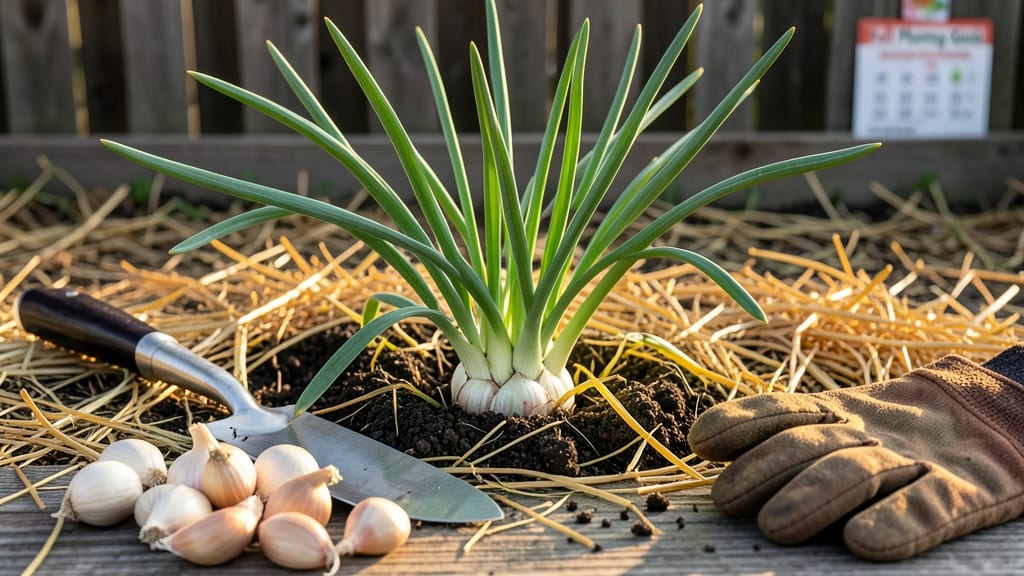
Planting garlic at the wrong time in Michigan can mean the difference between a bountiful harvest and wasted effort—so timing isn’t just important, it’s critical.
The key lies in matching your 🧄 garlic variety to Michigan’s unique chill-hour requirements, and we’ll break down exactly when and how to plant for success.
For Michigan gardeners in zones 5b-6b, fall planting between October and November is ideal for hardneck varieties, while spring planting in March works for softneck types. The secret? Planting when soil temperatures drop below 60°F ensures your cloves establish roots before winter dormancy.
I’ve tested these methods myself, and the results speak for themselves: properly timed garlic thrives even in Michigan’s unpredictable climate. Whether you’re a seasoned gardener or just starting, these proven steps will help you grow larger bulbs with fewer hassles.
Ready to transform your garden? Let’s dive into the exact planting schedule, soil prep tips, and care routines that work best for Michigan’s growing conditions—so you can harvest plump, flavorful garlic next summer.
Michigan garlic planting calendar by chill-hour requirements
Michigan’s cool climate and variable frost dates make timing critical for garlic success. The key is matching your garlic variety to its required chill hours—the number of hours below 40°F (4°C) needed to form bulbs.
Most Michigan varieties need 300-500 chill hours, but hardneck varieties (like ‘German White’) thrive with 400+ hours, while softnecks (like ‘Silverskin’) tolerate 200-300 hours.
In Michigan’s USDA Zones 5b-6b, fall planting is ideal for hardnecks, while spring planting suits softnecks. The Upper Peninsula (Zone 5b) has longer winters and more chill hours, while the Lower Peninsula (Zone 6a-6b) offers slightly milder conditions.
Planting too early or late risks rot from wet soil or poor bulb formation due to insufficient chill.
🌱
| Variety Type | Chill Hours Needed | Optimal Planting Window (Lower Peninsula) | Optimal Planting Window (Upper Peninsula) | Key Notes |
|---|---|---|---|---|
| Hardneck (e.g., ‘German White’, ‘Music’) | 400–500 hours | October 1–November 15 | September 15–October 30 | Best for fall planting; produces scape and bulb. |
| Softneck (e.g., ‘Silverskin’, ‘Artichoke’) | 200–300 hours | March 1–April 15 (spring) or October 15–November 1 | March 15–April 30 (spring) or September 30–October 15 | Tolerates spring planting; stores longer but fewer chill hours needed. |
| Elephant Garlic (e.g., ‘Inchelium Red’) | 350–450 hours | October 1–November 10 | September 20–October 25 | Larger bulbs; treat like hardneck for chill needs. |
To calculate your local chill hours, check your last frost date (typically mid-November in most of Michigan) and count backward from 40°F (4°C) thresholds.
For example, if your area hits 40°F by November 1 and stays cool until March 15, you’ve accumulated roughly 450 chill hours, perfect for hardneck varieties.
For Lower Peninsula gardeners, aim to plant 4–6 weeks before the ground freezes (usually late October). In the Upper Peninsula, where winters are harsher, start as early as mid-September to ensure enough chill hours.
Spring planting is riskier but works for softnecks—plant in early March once soil temperatures rise above 40°F (4°C).
Soil temperature matters just as much as air temperature. Use a soil thermometer to confirm the ground is below 50°F (10°C) before planting in fall. If you plant too early, cloves may sprout prematurely and rot in cold, wet soil.
Conversely, planting too late leaves insufficient time for bulb development before summer heat arrives.
🌡️
Michigan’s microclimates add another layer of complexity. Urban areas like Detroit or Grand Rapids may experience heat islands that delay frost, while rural northern Michigan sees earlier freezes.
Adjust your planting window by 1–2 weeks based on your specific location. For example, Traverse City (Zone 6a) can plant slightly later than Marquette (Zone 5b).
Pro tip: If you’re unsure about chill hours, opt for hardneck varieties, which are more forgiving and produce scape (flower stalks)—a bonus harvest! Softnecks, while easier to store, may struggle if planted too late in fall or too early in spring.
Always source Michigan-adapted seeds from local nurseries or reputable online sellers to ensure compatibility with your climate.
✂️
Step-by-step guide to planting garlic in Michigan’s fall and spring
Michigan’s fall planting window (October–November) is ideal for hardneck garlic, while spring planting (March) works for softneck varieties. The key is timing: plant 4–6 weeks before the ground freezes (typically mid-November in most of Michigan).
For spring plantings, aim for early March—but expect smaller yields since garlic thrives with winter chill.
Start by selecting plump, disease-free cloves from last year’s harvest. Break apart bulbs, ensuring each clove has a full root base. Avoid using supermarket garlic, as it’s often treated to prevent sprouting.
For Michigan’s climate, hardneck varieties (like ‘German White’ or ‘Music’) are best—they need 30–40 chill hours to form bulbs.
Soil prep is critical. Test your soil’s pH (6.0–7.0) and amend with compost for drainage. Garlic hates soggy soil, so raised beds work well in Michigan’s wet spring months. Work in 2–3 inches of compost and a low-nitrogen fertilizer (like 5-10-10) before planting.
Planting depth and spacing matter: place cloves 2 inches deep, pointed end up, with 4–6 inches between cloves and 12 inches between rows. Mulch with 4–6 inches of straw after planting to insulate roots from freeze-thaw cycles—a common issue in Michigan’s winter temperature swings.
Select large, firm cloves from organic, untreated bulbs.
Amend with compost and ensure well-draining soil (pH 6.0–7.0).
Place cloves 2" deep, pointed end up, 4–6" apart.
Apply 4–6" of straw to protect from winter temperature swings.
Water only when soil is dry (avoid soggy conditions).
Apply balanced fertilizer (5-10-10) in early April.
After planting, water lightly to settle the soil, then reduce watering until spring. In Michigan’s dry summers, water deeply once a week to encourage bulb growth.
By April, remove mulch to allow soil to warm. Fertilize again in June with a low-nitrogen, high-potassium mix (like 0-10-10) to boost bulb size.
Watch for garlic rust (a fungal disease common in Michigan’s humid summers) and thrips. If leaves yellow prematurely, it may signal overwatering or nutrient deficiency.
Harvest when lower leaves brown and bulbs feel firm (usually July–August), then cure in a dry, shady spot for 2–3 weeks before storing.