
Trees
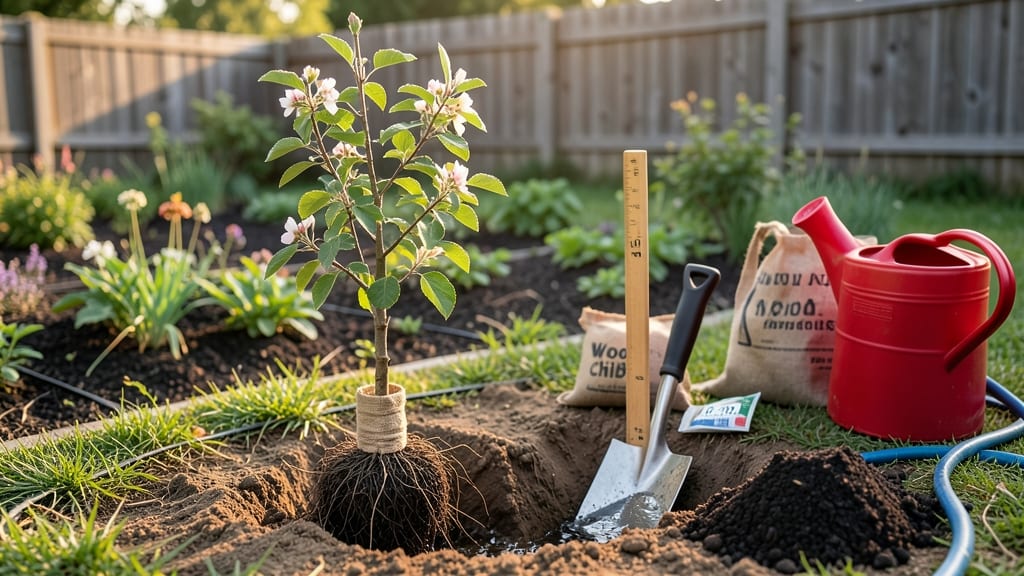
Planting an apple tree 🍎 in Alabama isn’t just about grabbing a sapling and digging a hole—it’s about matching your variety to the state’s tricky chill-hour zones.
Get the timing wrong, and you might end up with early blooms that get fried by late frosts or trees that never bear fruit. The key? Planting between late winter and early spring, when the ground is workable but before buds swell.
Alabama’s USDA zones 7a-8b mean your chill-hour needs vary wildly from North to South. A tree with 800 chill hours might thrive in Huntsville but struggle in Mobile.
I’ll break down the best months for your region and the top varieties that actually fruit here—no wasted money on varieties that won’t survive your microclimate.
Beyond timing, soil prep and spacing make or break your orchard. Alabama’s clay-heavy soils need amending, and spacing too close invites disease.
I’ll walk you through the 3 critical steps to set your apple tree up for success, from rootstock selection to post-planting care that keeps it thriving through Alabama’s humid summers.
Ready to grow apples that actually ripen? Let’s dive into the exact planting schedule, variety picks, and pro tips to turn your Alabama yard into a productive orchard—without the guesswork.
Alabama’s chill-hour zones: best planting months by region
Alabama’s climate varies dramatically from the cool mountain regions of North Alabama to the warmer Gulf Coast in the south. These differences create distinct chill-hour zones, which determine when—and which—apple trees will thrive.
Most Alabama regions fall within USDA Zones 7a–8b, but chill hours (the number of hours below 45°F) can range from 400 to 1,000 hours, drastically affecting planting success.
For example, North Alabama (e.g., Huntsville, Decatur) typically accumulates 800–1,000 chill hours, while Central Alabama (e.g., Birmingham, Montgomery) sees 600–800 hours, and the Deep South (e.g., Mobile, Dothan) often only gets 400–600 hours.
Choosing the right variety—and planting at the right time—ensures your tree gets enough winter chill to produce fruit.
In Alabama, the ideal planting window is late winter to early spring, specifically February through March. This timing allows roots to establish before the growing season kicks off in April.
However, bare-root trees should be planted as soon as they arrive (often in late winter), while container-grown trees can wait until after the last frost date, usually mid-March.
Here’s how Alabama’s regions break down for chill hours and planting windows:
If you’re in North Alabama, you can plant as early as February and still avoid late-winter frosts. But in South Alabama, waiting until March or April reduces the risk of early blooms damaged by unexpected cold snaps.
Always check your local last frost date—tools like the Alabama Cooperative Extension Service provide updated forecasts.
Pro tip: Bare-root trees should be planted as soon as possible after purchase, even if it’s still winter. Their roots are dormant but ready to absorb moisture. Container-grown trees, however, can wait until after the last frost to avoid transplant shock from early planting.
Another critical factor is soil temperature. Apple trees prefer soil temps above 40°F (4°C) for root growth. In Alabama, this usually aligns with late February to early March, but cooler microclimates (like valleys or shaded areas) may need a later start.
For container growing, you can plant slightly later—even into May—but expect slower initial growth compared to trees planted in optimal windows. Containers also require more frequent watering, especially in Alabama’s hot, dry summers.
Finally, consider microclimates within your property. A south-facing slope may warm up faster than a north-facing yard, allowing for earlier planting. Use these natural advantages to your benefit!
Top apple tree varieties for Alabama: chill-hour requirements and planting tips
Choosing the right apple tree variety for Alabama isn’t just about taste—it’s about matching your tree’s chill-hour needs to your region’s climate. Alabama’s USDA zones 7a-8b mean some varieties thrive in North Alabama’s cooler winters while others struggle in the Deep South’s milder climate.
I’ve handpicked 5 top-performing varieties that actually fruit reliably here, from crisp ‘Akane’ to sweet ‘Fuji’, plus their exact planting instructions.
For North Alabama (zones 7a-7b), where chill hours range from 800-1,000 hours, cold-hardy varieties like ‘Jonagold’ and ‘Akane’ excel. In Central Alabama (zone 7b-8a), you’ll need varieties with 500-700 chill hours, such as ‘Gala’ or ‘Red Delicious’.
Southern Alabama (zone 8a-8b) demands low-chill varieties like ‘Anna’ or ‘Ein Shemer’, which thrive with just 300-500 chill hours. Let’s break down the best picks for your region.
🍎 Pro Tip: Always check your local chill-hour map (available from the Alabama Cooperative Extension) to confirm your exact zone before buying. A tree with too many chill hours may bloom late, while one with too few might never fruit. I’ll include variety-specific planting tips to maximize success in Alabama’s humid summers.
| Variety | Chill Hours | Best Alabama Region | Planting Time | Key Notes |
|---|---|---|---|---|
| Akane | 800-1,000 | North/Central | Feb-Mar (bare root) | Crisp, disease-resistant; needs cross-pollination |
| Gala | 500-700 | Central/South | Mar-Apr (container) | Sweet, self-pollinating; thrives in heat |
| Fuji | 600-800 | North/Central | Feb-Mar (bare root) | Extra sweet; needs 2 varieties for pollination |
| Jonagold | 800-1,000 | North | Feb-Mar (bare root) | Juicy, flavorful; prone to fire blight |
| Anna | 300-500 | South | Mar-Apr (container) | Low-chill; self-pollinating; heat-tolerant |
Planting your apple tree correctly is just as important as choosing the right variety. For bare-root trees, plant in late winter (February-March) while dormant but before buds swell.
Dig a hole twice as wide as the root ball and amend the clay-heavy Alabama soil with compost or peat moss to improve drainage. Place the tree so the