
Trees
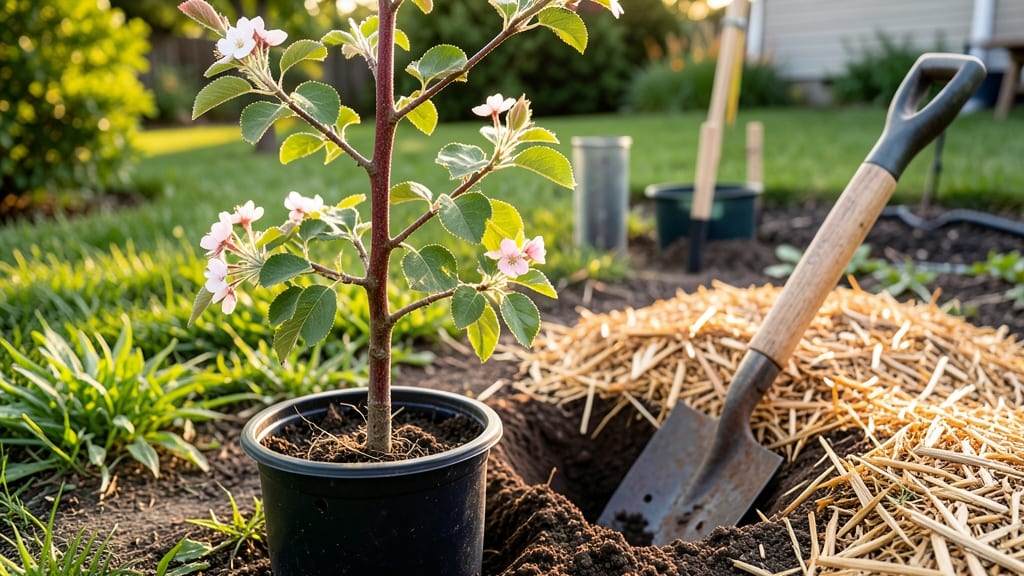
Planting an apple tree at the wrong time in Connecticut could mean waiting years for your first harvest—or worse, losing your young sapling to a late frost.
The key to success lies in understanding your local frost dates and hardiness zone, especially in 5b-6b regions where timing can shift dramatically between coastal areas and inland valleys.
Most gardeners in Connecticut know spring is the prime window, but did you know bare-root trees can also thrive when planted in late winter? I’ve learned the hard way that rushing the process—or waiting too long—can set back your 🍎 tree’s growth by months.
The secret isn’t just about the calendar; it’s about matching your planting schedule to your specific microclimate.
In this guide, I’ll break down the exact months to plant—whether you’re working with dormant trees or container-grown varieties—and how to protect your investment from Connecticut’s unpredictable frost patterns.
You’ll also discover which apple varieties handle our short growing season best, so you can pick the perfect match for your orchard.
Ready to get started? Let’s dive into the step-by-step timing, soil prep, and post-planting care that will give your apple tree the strongest possible start in Zone 5b-6b. Your future harvest depends on it!
Connecticut’s frost zones and best planting months for apple trees
Connecticut’s USDA zones 5b-6b create a delicate balance for apple tree planting—too early and frost zaps young roots, too late and summer heat stresses the tree. The average last frost date in Hartford is April 15, while coastal areas like Stamford may see it 2 weeks earlier.
Timing your planting around these dates maximizes survival rates.
Most Connecticut gardeners swear by early spring planting (March-April) for bare-root trees, when soil thaws but buds haven’t yet swollen. This gives roots 6-8 weeks to establish before summer heat arrives. Fall planting is riskier but possible in October’s first half if soil temps stay above 40°F.
Here’s how Connecticut’s three key regions differ in frost timing and planting windows:
🌱 Hartford Area (Zone 6a): Last frost April 15, first frost October 20. Ideal planting window is March 15-April 15.
🌱 New Haven (Zone 6b): Last frost April 10, first frost October 15. Plant between March 1-April 10 for best results.
🌱 Stamford (Zone 6b): Last frost April 1, first frost October 10. Coastal microclimates allow February 15-March 31 planting.
| Region | USDA Zone | Last Frost | First Frost | Best Planting Window |
|---|---|---|---|---|
| Hartford | 6a | April 15 | October 20 | March 15-April 15 |
| New Haven | 6b | April 10 | October 15 | March 1-April 10 |
| Stamford | 6b | April 1 | October 10 | February 15-March 31 |
For bare-root trees, aim to plant within 1-2 weeks of receiving them—roots dry out quickly. Soak roots for 4-6 hours before planting to rehydrate. Container-grown trees offer 2-3 extra weeks of flexibility since their roots stay moist longer.
Watch for bud swell—when buds look like tiny green peas—this signals it’s time to plant. If you miss this window, wait until late May when soil is fully warmed, but expect slower establishment.
Pro tip: Use mulch heavily (4-6 inches) after planting to insulate roots. Straw or shredded leaves work best—avoid grass clippings which mat down.
In Zone 5b areas like Torrington, consider row covers for early spring planting to protect against late frosts that can occur through May. These covers can raise soil temps by 5-10°F.
Remember: Fall planting requires soil temps above 50°F and 6-8 weeks before first frost. Most Connecticut gardeners find spring planting yields 30% better survival rates than fall.
Top 5 apple tree varieties for Connecticut gardens and when to plant them
Connecticut’s cool climate and short growing season demand apple tree varieties that thrive in USDA zones 5b-6b. I’ve narrowed down the top 5 cold-hardy varieties perfect for CT orchards, complete with their ideal planting windows and care tips.
For early spring planting (March-April), prioritize varieties like McIntosh and Cortland, which handle CT’s late frosts better than others. These varieties also produce fruit 1-2 weeks earlier than standard apples, giving you a harvest before fall frosts arrive.
Here’s how to match each variety to Connecticut’s microclimates and soil conditions:
| Variety | Cold Hardiness | Best Planting Window | Soil pH | Harvest Time |
|---|---|---|---|---|
| Honeycrisp | Zone 4-6 | Early spring (March) or fall (October) | 6.0-7.0 | Late September |
| McIntosh | Zone 4-5 | Late winter (February) or early spring (March) | 5.5-6.5 | Mid-September |
| Cortland | Zone 4-6 | Early spring (March-April) | 6.0-7.0 | Late October |
| Gala | Zone 5-8 | Early spring (March) or fall (October) | 6.0-7.5 | Early October |
| Liberty | Zone 4-7 | Late winter (February) or early spring (March) | 5.5-6.5 | Late September |
If you’re planting in western CT (zone 6b), varieties like Honeycrisp and Gala thrive with longer frost-free days. For eastern CT (zone 5b), opt for McIntosh or Liberty, which resist late spring frosts better.
For all varieties, amend your soil with compost before planting—CT’s clay-heavy soils need organic matter to improve drainage. Test your soil’s pH (aim for 6.0-7.0) and adjust with lime or sulfur if needed.
Once planted, mulch heavily around the base to protect roots from winter temperature swings. In Hartford’s zone 5b, I’ve seen Liberty trees survive -20°F with proper mulching—proof that variety + timing = success!