
Plants
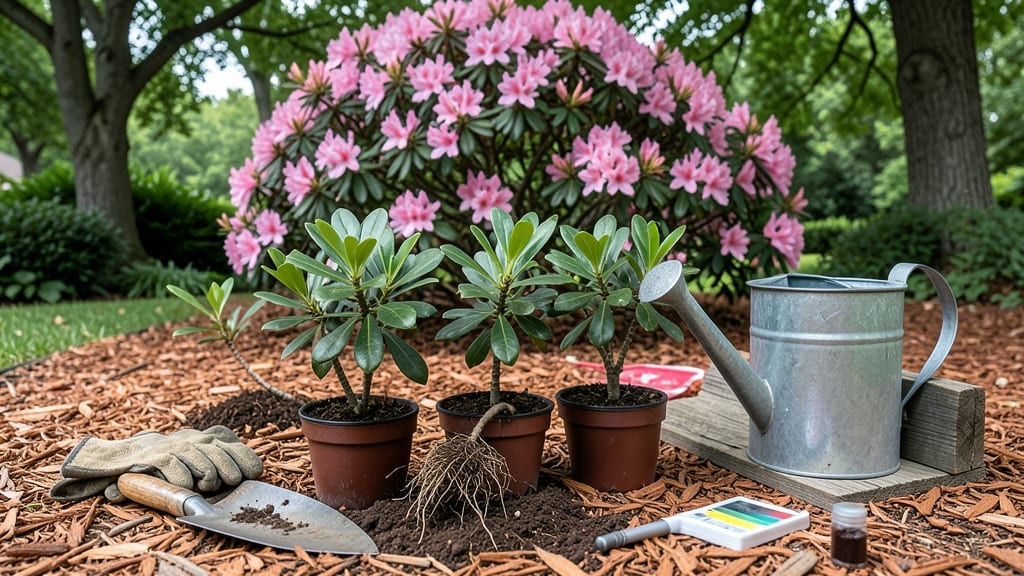
If your Maryland garden is missing those vibrant spring blooms from your azaleas 🌸, when to plant azaleas in Maryland might be the secret you're overlooking. Timing is everything—planting at the wrong time can leave your shrubs struggling with winter stress or weak growth.
Here’s exactly when to get it right for your 6b-7a zone.
Maryland’s climate gives you two prime windows to plant azaleas: fall or early spring. Fall planting (October-November) lets roots establish before winter, while early spring (March-April) avoids transplant shock as temperatures rise.
But there’s more to it than just months—your azaleas need the right chill hours to bloom beautifully next season.
I’ve seen gardeners rush planting in late spring only to watch their azaleas fight for survival. The key is matching your variety’s chill-hour needs with Maryland’s frost-free periods. Whether you’re in Baltimore County or Western Maryland, we’ll break down the best months and how to prepare your soil for success.
Ready to transform your yard into a springtime showcase? Let’s dive into the exact planting schedule that’ll have your azaleas thriving year after year—no more guesswork, just stunning results.
Best planting months for Maryland azaleas based on chill-hour requirements
Maryland’s azalea varieties thrive when planted during their natural dormancy period, which aligns with chill-hour requirements of 300-900+ hours. Most Maryland gardeners fall into USDA zones 6b-7a, where timing becomes critical to avoid transplant shock or winter damage.
The two ideal windows—fall (October-November) and early spring (March-April)—offer distinct advantages depending on your azalea type.
Fall planting (October-November) gives roots time to establish before winter, while spring planting (March-April) avoids late-season heat stress. Evergreen azaleas (like Rhododendron hybrids) need slightly earlier fall planting than deciduous types. Let’s break down the science behind these windows and how Maryland’s microclimates can shift your schedule by weeks.
🌸 Chill-Hour Matching: Azaleas require 300-900 chill hours (temperatures between 32°F-45°F) to bloom. Maryland’s Southern regions (zone 7a) accumulate these hours earlier than Northern areas (zone 6b). For example, Baltimore may hit 500 chill hours by November 15, while Frederick might need until December 1. Plant too early, and roots may not harden off; too late, and spring growth could be stunted.
| Region | Zone | Fall Window | Spring Window | Chill Hours |
|---|---|---|---|---|
| Southern MD (e.g., Annapolis) | 7a | Oct 15 - Nov 15 | Mar 15 - Apr 15 | 500-700 |
| Central MD (e.g., Baltimore) | 6b-7a | Oct 1 - Nov 10 | Mar 10 - Apr 10 | 400-600 |
| Northern MD (e.g., Frederick) | 6b | Sep 25 - Oct 30 | Mar 20 - Apr 5 | 300-500 |
| 🌱 Pro Tip: Test soil pH (4.5-6.0) before planting—Maryland’s clay soils often need sulfur amendments. | ||||
For Southern Maryland gardeners, the October 15-November 15 window is ideal because soil remains warm enough for root growth while temperatures drop gradually. In contrast, Northern Maryland’s shorter growing season demands earlier fall planting (by October 15) to avoid winter stress.
Spring planting should always occur 4-6 weeks before last frost (typically April 15 in Maryland) to allow root establishment before summer heat arrives.
One common mistake is planting bare-root azaleas too early in spring. These need 4-6 weeks to establish roots before Maryland’s summer heat peaks (July-August). If you’re in zone 6b, avoid planting after April 15—roots may not keep up with evaporative demand.
For container-grown azaleas, the window extends slightly later (until May 1) since they’re less stressed.
Maryland’s coastal areas (e.g., Chesapeake Bay) often experience milder winters, allowing a 2-week later planting schedule. Use local frost data (check The Old Farmer’s Almanac) to fine-tune your timing.
For example, Easton (zone 7a) can plant until November 20, while Cumberland (zone 6b) should finish by October 25.
If you missed the ideal window, September is a secondary option for container-grown azaleas, provided you mulch heavily and water deeply before winter. Conversely, late spring planting (May-June) risks summer stress—only attempt this with dwarf varieties in partial shade.
Always prioritize root establishment over bloom timing; azaleas planted outside their window may skip flowering for a year.
For urban gardeners in Baltimore or DC, heat islands can delay chill-hour accumulation by 1-2 weeks. Monitor your microclimate: if your backyard stays 5°F warmer than rural areas, adjust planting 10-14 days earlier.
Use a soil thermometer to confirm 60°F soil temps before planting—this ensures roots won’t shock from cold soil.
Finally, azalea varieties like Girard’s Pink (30
Best planting months for Maryland azaleas based on chill-hour requirements
Maryland’s USDA zones 6b-7a create a unique challenge for azalea growers—the state spans Southern and Northern regions with different chill-hour needs. Most azaleas require 300-900 chill hours (0°F-45°F) to bloom reliably, and Maryland’s climate delivers these hours between October and March.
Planting at the wrong time can starve your shrubs of needed dormancy or expose them to winter stress.
For Southern Maryland (zones 7a-8a), where winters are milder, focus on October-November planting. These areas accumulate chill hours earlier, and fall planting gives roots time to establish before winter rains.
In contrast, Northern Maryland (zones 6b-7a) should prioritize March-April planting to avoid late frosts that can damage tender new growth.
Here’s how chill-hour requirements translate to your planting schedule:
| Region | Chill Hours | Best Planting Window | Avoid Planting |
|---|---|---|---|
| Southern MD (7a-8a) | 300-600 | October-November | May-July (summer stress) |
| Northern MD (6b-7a) | 600-900 | March-April | September-October (early frost risk) |
| Coastal MD (7a) | 400-700 | November-December | April (spring rains) |
If you’re planting bare-root azaleas, aim for October-November regardless of region—they establish roots faster in cool soil. Container-grown azaleas can handle March-April planting, but avoid transplanting when soil temps exceed 50°F, which stresses roots.
Always check local frost dates: Northern Maryland’s last frost typically hits April 15, while Southern Maryland may see March 15.
Pro tip: Test your soil’s acidity (pH 4.5-6.0) before planting. Maryland’s native soil is often alkaline, and azaleas refuse to thrive without amendments like peat moss or sulfur. Adjusting pH can shift your planting window by 2-4 weeks—acidic soil helps roots establish faster in spring.
For evergreen azaleas, which retain leaves year-round, extend your fall planting window to early December in Southern Maryland. Their foliage acts as insulation, reducing winter damage. Just mulch heavily (3-4 inches) to protect roots from freeze-thaw cycles common in Maryland winters.
Remember: Azaleas planted in fall often bloom earlier and more vigorously than spring-planted shrubs. That’s because they’ve had months to establish roots before spring’s growth surge. But if you miss fall, don’t despair—March-April is your second-best window, provided you water deeply and shade young plants from harsh afternoon sun.