
Plants
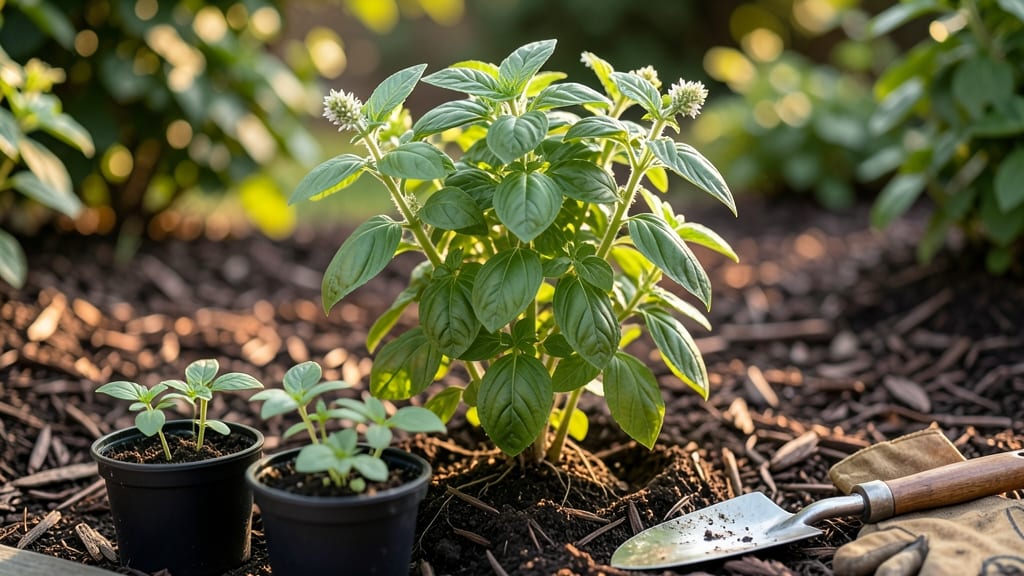
Timing your basil planting in Colorado can mean the difference between a thriving 🌿 herb garden and a sad, frost-nipped failure. Since Colorado's elevation zones shift frost dates dramatically—from late April in Denver to June in the mountains—getting it right is key to a bountiful harvest.
Most Colorado gardeners wait until after the last frost, but that's not the whole story. In USDA zones 5-7, where Denver sits, you'll want to plant basil seedlings in late May to early June for the best results.
Meanwhile, those in southern Colorado's warmer zones can start a bit earlier, around mid-April.
Whether you're growing basil in containers or in-ground, understanding your microclimate makes all the difference. High-altitude gardens face shorter seasons, while lower elevations can push basil's harvest well into September. Let me show you exactly how to time it right for your specific corner of Colorado.
From choosing the perfect planting window to extending your harvest with simple tricks, you'll learn how to grow basil that's flavorful, abundant, and frost-free. Let's get started with the strategies that actually work for Colorado's unpredictable growing conditions.
Colorado’s frost-free dates by elevation zone for basil planting
Colorado’s diverse elevation zones create a challenging but rewarding environment for growing basil. The last spring frost can arrive as early as mid-April in lowland areas like Pueblo (4,700 ft), while high-altitude regions like Leadville (10,000 ft) may not see frost-free conditions until late June.
Understanding these variations ensures your basil plants thrive without frost damage or wasted effort.
For most Colorado gardeners, the ideal planting window falls between late April and early June, depending on elevation. The Front Range (Denver, Boulder) typically offers a 120–140-day frost-free season, while the Western Slope (Grand Junction, Durango) enjoys 160+ days—perfect for extending basil harvests.
Let’s break down the critical frost dates by elevation zone to help you plan.
Visual Tip: Use a frost calendar from your local Cooperative Extension office (e.g., CSU Extension) for hyper-local adjustments. These resources often include microclimate data for urban heat islands or sheltered valleys.
| Elevation Zone (ft) | Last Spring Frost | First Fall Frost | Frost-Free Days | Best Planting Window |
|---|---|---|---|---|
| 2,000–4,000 ft (Pueblo, Colorado Springs) | Mid-April (April 15) | Mid-October (Oct 15) | 180–200 days | Late April – Early May |
| 4,000–6,000 ft (Denver, Fort Collins) | Late April (April 30) | Early October (Oct 1) | 150–170 days | Early May – Mid-May |
| 6,000–8,000 ft (Eagle, Estes Park) | Early May (May 15) | Late September (Sept 30) | 120–140 days | Mid-May – Early June |
| 8,000–10,000 ft (Leadville, Aspen) | Late May (May 30) | Mid-September (Sept 15) | 90–110 days | Early June – Mid-June |
If you’re growing basil in containers or urban gardens, consider microclimate adjustments. South-facing walls or rooftop gardens in Denver (6,000 ft) can add 1–2 weeks to your frost-free season, while shaded areas may delay planting by 10–14 days.
Always monitor nighttime temperatures—basil tolerates 50°F but wilts below 45°F.
For high-altitude gardeners, focus on heat-loving varieties like ‘Genovese’ or ‘Sweet Basil’, which thrive in short but intense summers. In lower elevations (2,000–4,000 ft), you can experiment with fall plantings in August for a late-season harvest before frost.
Just be prepared to protect seedlings with row covers or move containers indoors if unseasonable cold strikes.
Pro Colorado tip: Use hardening off for seedlings if you’re transplanting after May 15. Gradually expose them to outdoor conditions over 7–10 days to prevent shock from temperature swings common in mountain valleys. This is especially critical for basil, which is sensitive to transplant stress.
Remember, basil is an annual in Colorado, meaning it won’t survive winter outdoors. However
Colorado’s frost-free dates by elevation zone for basil planting
Colorado’s diverse elevations create a complex frost timeline for basil. At 2,000–5,000 ft (Denver, Colorado Springs), expect your last frost around April 15–May 1, while 6,000–8,000 ft (mountain towns) may delay planting until May 15–June 1.
The Western Slope (Grand Junction) warms earlier, with last frosts by April 1, giving you a 2–3 week head start over Front Range gardeners.
First frosts also vary wildly: September 15–October 15 in lowlands, but August 15–September 15 in high-altitude areas. This means your growing window shrinks from 160 days at 5,000 ft to just 90 days at 8,000 ft. Timing is critical—plant too late, and you’ll miss your harvest window entirely.
| Elevation Zone | Last Frost Date | First Frost Date | Planting Window | Growing Days |
|---|---|---|---|---|
| 2,000–3,000 ft (Grand Junction) | April 1–15 | October 15–30 | April 15–June 15 | 180–200 days |
| 3,000–5,000 ft (Denver, Colorado Springs) | April 15–May 1 | September 15–October 15 | May 1–June 15 | 140–160 days |
| 5,000–7,000 ft (Fort Collins, Boulder) | May 1–15 | September 1–15 | May 15–June 10 | 120–140 days |
| 7,000–9,000 ft (Aspen, Telluride) | May 15–June 1 | August 15–September 1 | June 1–July 1 | 90–110 days |
For accurate local timing, check the Colorado State University Extension frost maps or use a local weather station. Microclimates matter too—urban areas (like Denver) stay warmer than rural spots, while valleys freeze faster than slopes.
If you’re unsure, wait until May 1 to plant in most of Colorado to avoid frost risk.
Basil thrives as an annual in Colorado, so don’t waste time trying to overwinter it outdoors. Instead, focus on maximizing your growing season by planting early varieties (like ‘Genovese’) as soon as soil warms to 50°F.
In high-altitude areas, opt for heat-tolerant varieties like ‘Thai Basil’ to handle shorter summers.
Pro tip: Use row covers or a mini greenhouse to extend your season by 2–3 weeks in both spring and fall. This lets you plant basil as early as April 1 in lowland areas or as late as July 1 for a fall harvest before frost.
Remember, Colorado’s elevation extremes mean your neighbor’s perfect timing might not work for you. Always monitor soil temps and adjust your planting date accordingly—patience pays off with a longer harvest! 🌿