
Plants
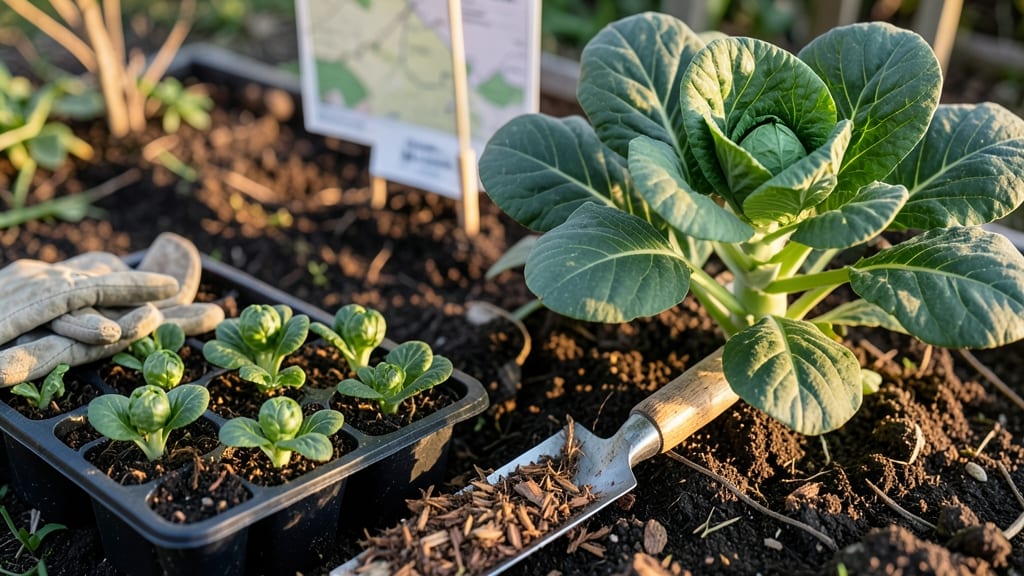
Timing your 🥦 brussel sprouts just right in Colorado isn’t about guessing—it’s about reading the mountain air, the soil’s secret signals, and the 120-180 frost-free days your plants need to thrive.
Skip the one-size-fits-all advice, because Denver’s Front Range, the Western Slope’s high desert, and the Eastern Plains’ wide-open skies all demand different moves.
Plant too early, and your sprouts bolt in the heat; too late, and frost nips them before they mature.
I’ve grown these towering greens for years in USDA Zones 5-8, and the difference between a bountiful harvest and a sad, stunted crop comes down to knowing when to tuck those seeds into the earth—whether you’re starting them indoors in March or sowing direct in July.
Here’s the game-changer: a microclimate-smart planting schedule that accounts for Colorado’s wild swings—from the Front Range’s late frosts> to the Western Slope’s early chills.
You’ll learn exactly when to plant for fall harvests, how to stretch the season with row covers, and which varieties hold up best in your neck of the woods.
Ready to turn your garden into a 🥦 powerhouse? Let’s dive into the exact dates and tricks that’ll have your brussel sprouts thriving—no matter where you farm in the Centennial State.
Optimal planting windows for Colorado’s 3 microclimates (Front Range, Western Slope, Eastern Plains)
Colorado’s diverse elevations create three distinct microclimates for growing brussel sprouts, each with unique frost dates and soil-warming patterns.
The Front Range (Denver, Boulder) has USDA Zone 5-7, while the Western Slope (Grand Junction) leans toward Zone 6-8, and the Eastern Plains (Fort Collins) falls in Zone 4-5. These differences mean your planting window could vary by 4-6 weeks depending on location.
Brussel sprouts thrive with 90-120 frost-free days, so timing is critical. In Colorado, this translates to two key planting windows: spring (for fall harvest) and late summer (for winter harvest).
The Front Range typically starts 4-6 weeks earlier than the Eastern Plains due to warmer spring soils. Let’s break down the exact dates for each region.
🌱 PRO TIP: Use your local CoCoRaHS station or Almanac frost charts to pinpoint your exact last frost date—this is non-negotiable for brussel sprout success.
For the Front Range, aim to plant brussel sprouts 4-6 weeks before your average last frost date (typically April 15). This gives them 90-100 days to mature before Colorado’s first frost (October 15).
The Western Slope enjoys a 2-week advantage due to earlier soil warming, while the Eastern Plains must wait until May 1 to avoid late frosts.
If you’re growing long-season varieties like 'Long Island Improved', start seeds indoors by March 1 (under grow lights) and transplant outdoors after the last frost. For short-season varieties like 'Tasty Purple', direct sow in late May to ensure harvest before winter sets in.
This two-tiered approach maximizes your chances of success across Colorado’s varied climates.
Elevation plays a huge role in soil temperature. At 5,000 ft (e.g., Denver), soils warm enough for planting by mid-April, but at 7,000 ft (e.g., Estes Park), wait until late May.
Use a soil thermometer to confirm the soil is at least 45°F—brussel sprouts won’t germinate in cold soil.
For fall plantings, the Western Slope can extend harvests into December thanks to milder nights, while the Eastern Plains should focus on August sowings to avoid early frosts. Always choose cold-hardy varieties like 'Ruby Ball' for fall, as they tolerate light frosts better than heat-sensitive types.
Protect your early plantings with frost cloth if temperatures dip below 28°F—this buys you 2-3 extra weeks of growth. In high-altitude zones (above 6,500 ft), consider row covers or cold frames to simulate a longer growing season.
These tools can push your harvest window by 30-45 days in critical areas.
Remember: Brussel sprouts need consistency. Planting too early risks bolting (premature flowering) from heat stress, while planting too late means immature sprouts before frost. Use the comparison table above as your guide, then adjust by 7-10 days based on your specific elevation and microclimate.
How to extend the growing season for zero-frost brussel sprouts in Colorado
Colorado’s first frost can arrive as early as October 15 in mountain valleys, but with the right strategies, you can harvest Brussels sprouts until December or later. The key is extending the growing season using low-tech but effective methods that protect your plants from unpredictable alpine frosts.
Brussels sprouts thrive in cool weather and actually sweeten when exposed to light frost, but a hard freeze will kill the plant. By combining season-extension tools with succession planting, you can push harvests well past the average first frost date—even in Colorado’s USDA Zones 5-8.
For high-altitude gardens (6,000+ ft), start with cold-hardy varieties and use black plastic mulch to warm the soil faster in spring. If you’re in the Front Range, aim for a fall harvest by late October—this gives plants enough time to mature before winter sets in.
Another trick? Plant Brussels sprouts near windbreaks like shrubs or fences. Cold air sinks, so elevated beds or mounds can delay frost damage by 5–7 days. Pair this with drip irrigation to keep roots moist, which improves cold tolerance.
If a hard freeze (below 28°F) is forecasted, cover plants with burlap sacks or old blankets for 24–48 hours. Most Brussels sprouts will recover if the crown isn’t frozen solid. With these methods, you can enjoy fresh sprouts straight from your garden well into winter’s chill.