
Plants
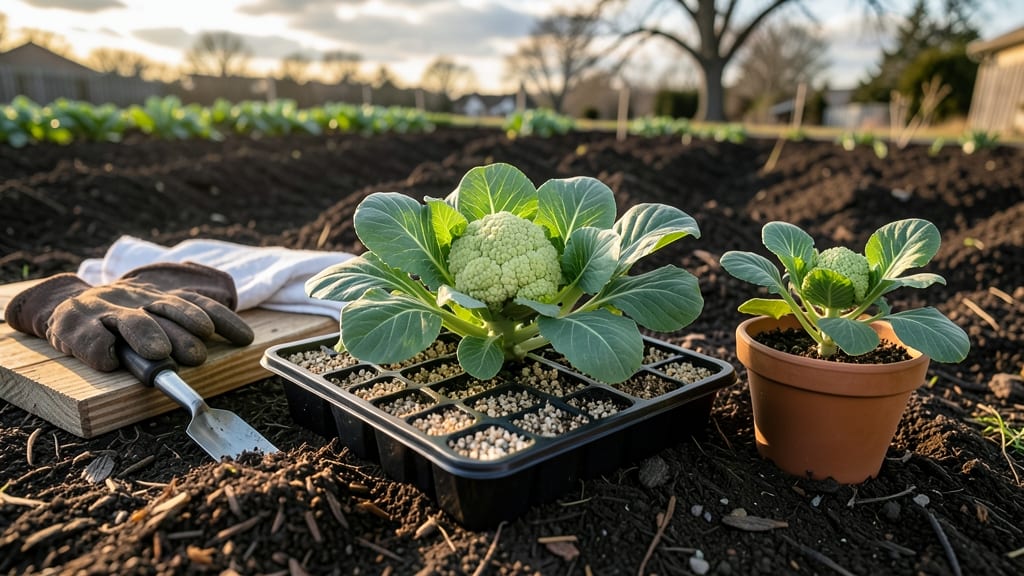
Timing your cauliflower 🥬 planting in Michigan can mean the difference between a thriving garden and a wasted effort—because those 150 frost-free days fly by faster than you think.
If you plant too early, a late frost will turn your seedlings into sad, wilted memories; too late, and summer’s heat sends your heads bolting before they’re ready to harvest.
I’ve learned the hard way that Michigan’s 5b-6b climate demands precision—spring plantings need to happen between March 15 and April 30, while fall varieties get their second chance from July 15 to August 15.
But here’s the kicker: the exact window depends on your variety, soil prep, and even which corner of the state you’re in.
What you’re about to discover isn’t just a calendar—it’s a game-changer for avoiding common pitfalls like stunted growth or bitter heads.
I’ll break down the best strategies for succession planting, frost protection, and how to adjust for early or late seasons so you can enjoy fresh cauliflower from June through November.
Let’s get your garden on track for a harvest that’ll make your neighbors green with envy—literally.
Michigan cauliflower planting calendar by variety type (early, mid, late season)
Michigan’s USDA zones 5b-6b create a unique challenge for growing cauliflower—cool springs and hot summers demand precise timing.
Whether you’re planting early-season varieties like Snowball Y Improved or late-season varieties like Graffiti, knowing your last frost date (typically April 15) and first frost date (around October 15) is critical. Northern Michigan’s shorter growing season may require adjustments, while southern regions can push boundaries slightly.
Cauliflower thrives in 60-100 days to maturity, but Michigan’s 150-180 frost-free days limit your window. Spring plantings must happen 4-6 weeks before last frost, while fall plantings need 10-12 weeks before first frost to mature.
This means March 15-April 30 for spring and July 15-August 15 for fall—timing that varies by 1-2 weeks depending on your county.
Here’s how to align your cauliflower varieties with Michigan’s climate zones for maximum success:
| Variety Type | Planting Window | Days to Maturity | Best For | Michigan Notes |
|---|---|---|---|---|
| Early Season (Snowball Y Improved, Early White) | March 15 - April 15 | 60-70 days | Spring harvest | Use row covers for frost protection; ideal for northern Michigan. |
| Mid-Season (Purple of Sicily, Romanesco) | April 1 - April 30 | 70-80 days | Spring/fall flexibility | Versatile for both seasons; watch for bolting in heat. |
| Late Season (Graffiti, Violetta) | July 15 - August 15 | 80-100 days | Fall harvest | Heat-tolerant; plant in partial shade if possible. |
| Dwarf Varieties (Mini Purple, Snowball 479) | April 15 - May 15 OR July 1 - July 31 | 50-60 days | Container gardening | Perfect for balconies; harvest earlier in season. |
For northern Michigan (USDA 5b), stick to early-season varieties and prioritize spring plantings. Southern Michigan (USDA 6b) can experiment with late-season varieties and even try a second fall crop if planted by July 15.
Always check your local Michigan State University Extension for last frost updates, as they can vary by 1-2 weeks annually.
Pro tip: Start seedlings indoors 4-6 weeks before transplanting outdoors. Use grow lights for 12-14 hours/day to prevent leggy seedlings. Harden off seedlings for 7-10 days before moving them to your garden to avoid transplant shock—critical for Michigan’s unpredictable spring weather.
Soil temperature is another key factor. Cauliflower seeds need 40-50°F soil to germinate, while seedlings thrive in 60-70°F. Use a soil thermometer to monitor conditions, especially in early spring when cold nights can delay germination. If soil is too cold, consider black plastic mulch to warm it up faster.
Once planted, maintain consistent moisture—cauliflower heads split or become bitter if stressed. Mulch with straw or grass clippings to retain moisture and regulate soil temperature. In summer heat, provide afternoon shade with row covers or shade cloth to prevent bolting, especially for late-season varieties.
For fall plantings, aim to harvest before first frost. If frost threatens early, use row covers or cold frames to extend the season. Purple varieties like Purple of Sicily are more frost-tolerant and can handle light frosts
How to extend your Michigan cauliflower season with succession planting
Michigan’s short growing season doesn’t mean you have to miss out on fresh cauliflower. With succession planting, you can stretch your harvest from early summer to crisp fall.
The key is timing: plant in two waves—spring and fall—to avoid the brutal summer heat that causes bolting and bitter heads. I’ve found that staggering plantings by 3-4 weeks maximizes my yield without overcrowding.
Start your first batch 4-6 weeks before the last frost date (around March 15-April 1 for most of Michigan). This gives seedlings enough time to mature before summer’s intensity peaks. For fall, aim for July 15-August 15, ensuring heads form before the first frost (mid-October).
Use row covers to extend both early and late seasons by 2-3 weeks—they shield tender plants from unexpected chills.
Here’s my 3-step succession planting checklist to plan like a pro:
Use Michigan State University’s frost maps to pinpoint your last spring frost (typically April 15) and first fall frost (October 15). Adjust for your USDA zone (5b-6b).
Plant your first batch 4-6 weeks before last frost, then repeat 3 weeks later for a second wave. For fall, plant July 15 and again August 1 to ensure a continuous harvest.
Install floating row covers over seedlings to add 2-3°C warmth and deter pests. Remove covers when plants are established (about 4-6 weeks old) to prevent overheating.
Pro tip: Choose heat-tolerant varieties like Graffiti or Purple of Sicily for summer plantings. These hold up better in Michigan’s 85°F+ heat than classic white varieties. Pair them with shade cloth (30-50%) during peak afternoon sun to keep heads tight and sweet.
Don’t forget to rotate planting locations each season to prevent soil-borne diseases. I mark my garden grid with stakes labeled “Spring Cauliflower” and “Fall Cauliflower” to keep track. This simple system has doubled my harvest over the years—no fancy tools required!
With these strategies, you’ll enjoy homegrown cauliflower from June through November, even in Michigan’s unpredictable climate. The secret? Plan ahead, stagger plantings, and protect your crops—just like the pros do. 🌱