
Trees
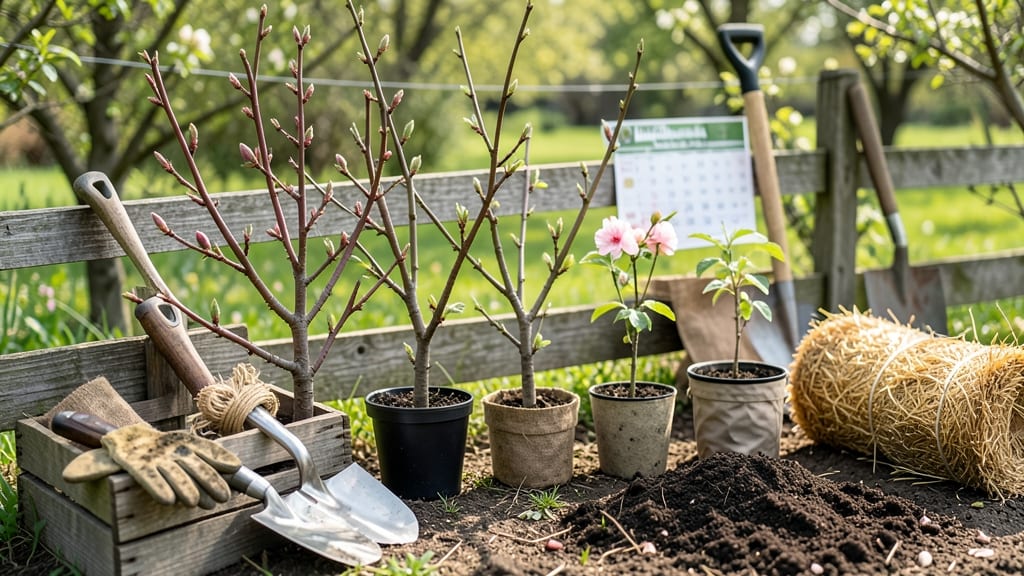
Planting your fruit trees at the wrong time in Indiana could mean the difference between a bountiful harvest and years of disappointment—especially when dealing with chill-hour requirements and frost-sensitive varieties like 🍎 Honeycrisp apples or Reliance peaches.
Most gardeners assume early spring is the only window, but Indiana’s Zone 6a climate actually offers two prime opportunities: late winter (February–March) for bare-root trees and early spring (April) for container-grown varieties.
The key? Timing it 4–6 weeks before the last frost—typically around April 15—to give roots time to establish before summer heat sets in.
Here’s the catch: not all fruit trees thrive on the same schedule. Stone fruits (peaches, cherries) need cooler soil to root, while pome fruits (apples, pears) tolerate slightly warmer conditions.
I’ll break down the exact planting windows for each, plus soil prep tricks to ensure your trees take hold—no matter which method you choose.
Ready to avoid the 3 biggest mistakes Indiana growers make? Let’s dive into the science behind successful planting, so you can enjoy that first homegrown peach in June instead of waiting years for a missed opportunity.
Indiana’s Best planting months for fruit trees by chill-hour Zone
Indiana’s climate demands precision when planting fruit trees, as chill-hour requirements and frost dates vary dramatically across the state. The USDA Zone 5-6 range means some northern counties need trees with 900+ chill hours, while southern areas thrive with 300-600 hour varieties.
Timing isn’t just about months—it’s about matching your location’s last frost date (typically April 15) with your tree’s dormancy needs.
For most of Indiana, the ideal planting window spans from late February to early April, but this shifts based on your chill-hour zone.
Northern Indiana (e.g., Gary, Fort Wayne) favors late winter planting to capitalize on spring rains, while southern Indiana (e.g., Louisville, Evansville) can extend planting into early May with minimal frost risk. Always verify your local Purdue Extension frost map before digging.
Here’s how to align your planting with Indiana’s 5 key chill-hour zones and avoid common timing mistakes:
| Chill-Hour Zone | Best Planting Month | Top Varieties | Frost Risk | Pro Tip |
|---|---|---|---|---|
| 300-500 hours | March–April | Peach ‘Reliance’, Apricot ‘Goldbar’, Fig ‘Chicago Hardy’ | Low (Southern IN) | Use row covers for late frosts. |
| 500-700 hours | Late Feb–March | Apple ‘Honeycrisp’, Pear ‘Kieffer’, Cherry ‘Montmorency’ | Moderate (Central IN) | Plant bare-root trees in moist soil. |
| 700-900 hours | Late Feb–Early April | Apple ‘Zestar!’, Plum ‘Stanley’, Pear ‘Moonglow’ | High (Northern IN) | Avoid container-grown trees—bare root preferred. |
| 900+ hours | Early March–April | Cherry ‘Stella’, Apple ‘Freedom’, Plum ‘Methley’ | Very High (Lake County) | Use windbreaks for young trees. |
Spring planting (March–April) is the gold standard for Indiana fruit trees because it allows roots to establish before summer heat. However, late fall planting (October–November) works for bare-root trees if soil temps stay above 40°F. The key is avoiding frost-heave damage—never plant when ground is frozen or soggy.
For stone fruits like peaches and cherries, prioritize early spring planting (February–March) to prevent silver leaf fungus, which thrives in wet spring soil. Pome fruits (apples, pears) are more forgiving and can handle April planting as long as you water deeply every 7–10 days until roots establish.
Indiana’s microclimates add complexity—urban areas like Indianapolis can be 5°F warmer than rural counties, delaying frost. Use a local weather station (like Indiana State Climate Office) to track your specific last frost date. Pro tip: Plant 2–3 weeks before the average date to account for variability.
If you miss the spring window, container-grown trees can be planted through May, but expect slower growth. Always amend soil with compost and mulch heavily to retain moisture. For dwarf varieties, consider black plastic mulch to warm roots faster in cooler zones.
Remember: Root establishment is your #1 priority. A tree planted in March will outperform one planted in May by 30–50% in its first year. Use a soil probe to check depth—roots need 12–18 inches of loose soil to thrive.
🌱
How to choose fruit tree varieties that thrive in Indiana’s climate
Indiana’s climate demands fruit trees that can handle chill hours (40°F or below) and sudden temperature swings. The wrong variety might bloom too early and get fried by late frosts, while the right one will reward you with abundant harvests for decades.
Start by checking your USDA Zone (typically 5-6b in Indiana) and chill-hour range—most of the state falls between 600-1,000 hours.
For apples, prioritize varieties like ‘Honeycrisp’ (850 chill hours) or ‘Zestar!’ series (600-800 hours), which are bred for cold climates. Peaches and nectarines need at least 500 chill hours, so opt for ‘Reliance’ or ‘Redhaven’—both thrive in Indiana’s shorter chill seasons. Cherries, like ‘Montmorency’, require 1,000+ chill hours, making them riskier in southern Indiana.
When shopping at nurseries, ask about disease resistance—Indiana’s humid summers invite fire blight and apple scab. Look for varieties labeled “Liberty” (apples) or “Redhaven” (peaches), which resist common fungal diseases.
Dwarf or semi-dwarf trees (12-18 ft tall) are ideal for small yards, while standard varieties (20+ ft) suit spacious properties. Always buy from local nurseries or Purdue Extension-recommended sources to ensure climate-matched stock.
Don’t forget pollination partners—most fruit trees need a second variety blooming at the same time for fruit set. For example, ‘Honeycrisp’ apples pair well with ‘Fuji’, while ‘Reliance’ peaches are self-fertile.
Plant two trees 20-40 feet apart to ensure cross-pollination. If space is limited, consider columnar varieties like ‘Columnar Golden Delicious’, which grow just 8-10 ft tall and produce fruit like standard trees.
Pro tip: Label your trees immediately after planting with variety names and purchase dates. This helps track bloom times and harvest windows—critical for Indiana’s short growing season. For example, ‘Honeycrisp’ apples ripen in late September, while ‘Redhaven’ peaches are ready by mid-July.
Knowing these dates lets you plan pruning and harvesting around Indiana’s first frost dates (typically October 15).
Finally, prioritize rootstock—dwarf trees on M.9 rootstock mature faster but need staking, while semi-dwarf trees on MM.106 offer a balance of size and hardiness. Always check the rootstock label at the nursery to match it to your soil type (Indiana’s clay-heavy soils suit MM.111 rootstock for apples).