
Plants
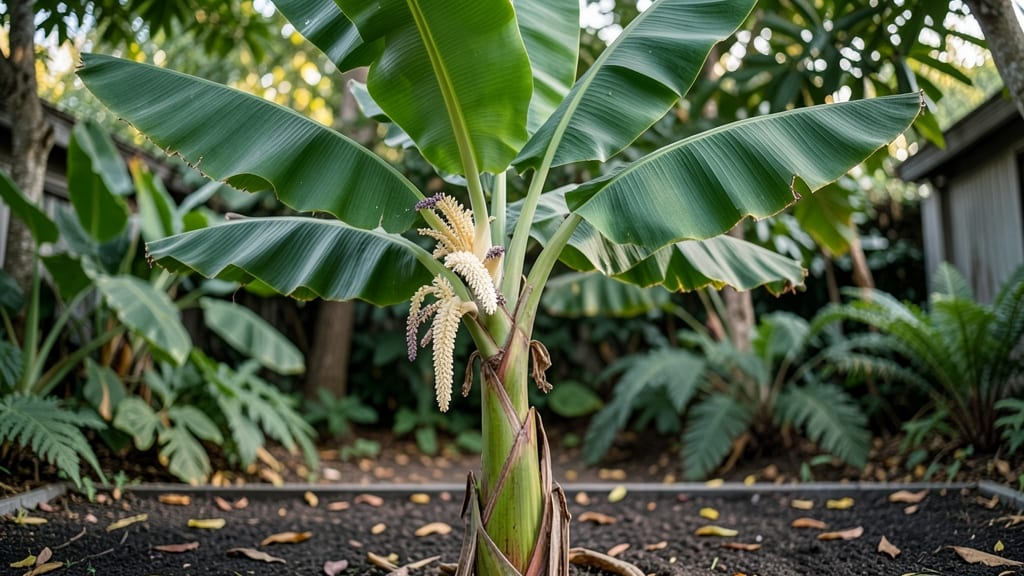
If you’ve ever wondered how tall does a banana plant grow, you’re in for a surprise—these tropical giants can tower over your backyard fence, reaching heights taller than a two-story house!
While most varieties grow between 15 to 25 feet at maturity, the height depends entirely on the type you’re growing, from the compact Dwarf Cavendish to the sky-reaching Gros Michel.
But here’s the catch: banana plants don’t grow overnight. In their first year, they’ll shoot up 6 to 10 feet, and by year two, they can double that height if given the right care.
Whether you’re in USDA zones 10-12 or a microclimate like 9b, understanding how tall your banana plant will grow helps you plan for space—and maybe even save your roof from becoming a snack stand.
Let’s break down the varieties, the factors that influence their height, and how you can manage them—whether you’re dreaming of a backyard jungle or just want a manageable 8-foot plant for your patio. Spoiler: yes, you can control how tall they get, even in small spaces.
Ready to turn your garden into a tropical paradise? I’ll show you how to nurture your banana plant to its full potential—without it turning into a green skyscraper overnight.


Banana plant height ranges by variety: from dwarf to towering giants
Banana plants are architectural wonders of the garden, with some varieties reaching heights that rival small trees. The Musa genus includes over 1,000 species, but only a handful are commonly grown for fruit or ornamental purposes.
Their mature height can vary dramatically—from compact dwarf varieties perfect for containers to giant tropical specimens that need acres of space. Understanding these differences helps you choose the right plant for your garden or balcony.
Most banana plants grow in a rapid, upward trajectory during their first year, with growth slowing as they mature. The pseudostem (the thick, leafy trunk) is what gives them their towering appearance, but it’s actually made of tightly wrapped leaves rather than true wood.
This unique structure means they can’t support their own weight indefinitely, which is why they often need staking or support as they grow.
The Dwarf Cavendish, the most popular variety in grocery stores, typically reaches 8-12 feet tall at maturity. This makes it an excellent choice for home gardens, especially in containers or small yards.
Meanwhile, the Lady Finger variety grows slightly taller, usually 12-15 feet, and produces smaller, sweeter bananas. These semi-dwarf varieties strike a balance between manageable size and productive fruiting.
On the opposite end of the spectrum, tall varieties like Red Dacca or Gros Michel can soar to 18-25 feet tall, making them more suited for large estates or tropical climates.
These giants require ample space, strong winds can damage their leaves, and they often need additional support structures to prevent toppling. In urban settings, these varieties are rarely practical unless you’re committed to regular pruning and maintenance.
Here’s a quick comparison of how these varieties stack up in height and suitability for different growing conditions:
| Variety | Mature Height | Growth Rate | Best For |
|---|---|---|---|
| Dwarf Cavendish | 8–12 ft | Fast (6–10 ft/year) | Containers, small yards |
| Lady Finger | 12–15 ft | Moderate (10–12 ft/year) | Home gardens, tropical climates |
| Red Dacca | 18–25 ft | Very fast (12–15 ft/year) | Large estates, tropical regions |
| Gros Michel | 20–25 ft | Fast (10–14 ft/year) | Commercial farms, rural areas |
If you’re growing bananas in cooler climates (USDA zones 9b-10), even dwarf varieties may struggle to reach their full height potential. The Dwarf Cavendish, for example, might only grow to 6-8 feet in these conditions, while tropical varieties like Red Dacca may fail to thrive altogether.
This is why many gardeners in these zones opt for container-growing or microclimate protection to extend the growing season.
One fascinating aspect of banana growth is that they’re not true trees—they’re giant herbaceous plants that die after producing fruit. This means each plant only lives for 1-2 years before it’s replaced by suckers (offspring) that grow from the base.
This cycle ensures a continuous harvest if you’re growing multiple plants, but it also means you’ll need to plan for replacement plants as your mature specimens decline.
For those with limited space, ornamental banana varieties like the Ice Cream Banana or Japanese Banana offer stunning foliage and edible (though less sweet) fruit. These often stay under 10 feet tall and are perfect for adding tropical drama to gardens without overwhelming them.
Their broad, arching leaves also make them excellent screening plants or focal points in landscape design.
Regardless of the variety, all banana plants share one common trait: they grow incredibly fast when conditions are ideal. In tropical climates, you can expect 3-5 feet of growth per year, while cooler climates may see half that rate.
This rapid growth is one of the reasons they’re so rewarding to grow—you’ll see dramatic changes in just a few months! 🌱
Banana plant height ranges by variety: from dwarf to towering giants
Banana plants are famous for their dramatic height, but not all varieties reach skyscraper status. The Dwarf Cavendish, a popular choice for home gardens, typically matures between 8–12 feet, making it ideal for smaller yards or containers.
In contrast, tall varieties like Red Dacca can soar to 18–25 feet, rivaling a two-story house!
Even within dwarf types, growth varies. For example, the 'Lady Finger' banana averages 10–15 feet, while 'Ice Cream' bananas stay compact at 6–10 feet. These differences stem from genetics, but climate and care play a role too.
In ideal conditions, a single plant can grow 3–5 feet per year until it reaches maturity.
🌱
| Variety | Mature Height | Growth Rate | Best For |
|---|---|---|---|
| Dwarf Cavendish | 8–12 ft | 3–5 ft/year | Containers, small yards |
| Lady Finger | 10–15 ft | 4–6 ft/year | Tropical gardens, balconies |
| Red Dacca | 18–25 ft | 5–7 ft/year | Large gardens, tropical climates |
| Ice Cream | 6–10 ft | 2–4 ft/year | Indoor pots, urban gardens |
If you’re growing bananas in cooler climates (USDA zones 9b–10), expect slightly slower growth. Plants may reach 50–70% of their potential height unless protected from frost. In tropical zones (10–12), however, they grow aggressively—sometimes adding a foot per month during peak season!
🌿
Pro tip: Harvesting bananas doesn’t stop growth—it actually encourages new shoots! After fruiting, your plant will send up pups (offspring plants) from the base. These can be transplanted to create a banana grove, but each pup will follow the same height pattern as its parent variety.
For container gardening, stick to dwarf varieties. Even the 'Dwarf Cavendish' needs a 15–20 gallon pot to avoid root binding, which stunts growth. Without proper space, your banana’s height potential will shrink by 30–50%.