
Plants
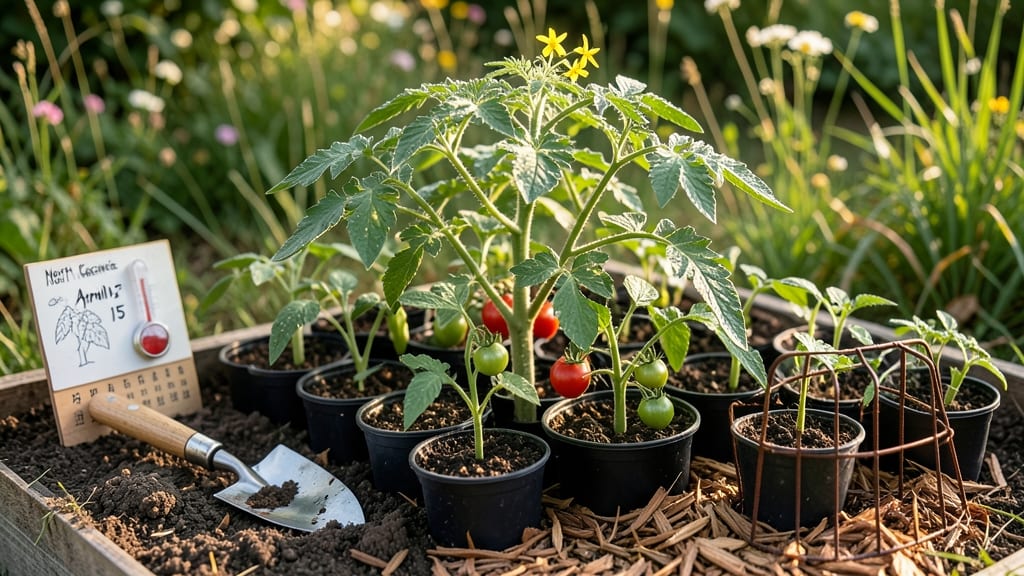
Planting tomatoes in North Carolina at the wrong time could mean watching your 🍅 plants wilt before they even fruit—but getting the timing right unlocks a harvest from June through October.
With frost dates shifting from coastal warmth to mountain chill, your county’s last frost (anywhere from mid-March to early April) dictates when to start seeds indoors or transplant seedlings outdoors.
Most NC gardeners swear by the mid-April to early June window for spring planting, but heat-loving varieties like 'Celebrity' or 'Better Boy' need warmer soil—wait until nighttime temps stay above 55°F to avoid stunted growth.
Meanwhile, late-summer starts (July to early August) give you a second harvest just as fall flavors peak.
Here’s the game-changer: soil temperature matters more than calendar dates. Use a soil thermometer to confirm 60°F+ before transplanting, or risk delayed ripening. I’ll show you how to adjust for your specific USDA zone (6a–8b) and even extend your season with row covers or black plastic mulch.
Whether you’re in the Piedmont’s 7a-7b zone or the coast’s milder 8a, this guide cuts through the guesswork. You’ll know exactly when to plant for zero-frost success—and which varieties thrive in NC’s unpredictable spring weather.
NC county-specific tomato planting deadlines by frost Zone
North Carolina’s microclimates create wildly different tomato planting windows—coastal Zone 8b gardeners can start as early as March 15, while mountain regions (Zone 6a) must wait until May 1.
These variations mean your last frost date determines whether you’ll harvest heirloom beefsteaks in July or miss the season entirely. Let’s break down the exact transplant windows by region so you can align your planting with NC’s 180-240 frost-free days.
For central NC (Zones 7a-7b), the sweet spot is April 15 to May 1 for transplants, but coastal areas like Wilmington (Zone 8a) can begin as early as March 1.
Meanwhile, Asheville (Zone 6b) gardeners should hold off until May 15 to avoid late spring frosts. These deadlines assume you’ve hardened off 6-week-old seedlings and your soil stays above 60°F.
🌱
| Region | USDA Zone | Last Frost Date | Transplant Window | Fall Planting |
|---|---|---|---|---|
| Coastal (e.g., Wilmington, Morehead City) | 8a-8b | Feb 28 - Mar 15 | Mar 1 - Apr 15 | Jul 15 - Aug 15 |
| Piedmont (e.g., Raleigh, Charlotte) | 7a-7b | Mar 15 - Apr 1 | Apr 15 - May 1 | Jul 1 - Jul 31 |
| Mountains (e.g., Asheville, Boone) | 6a-6b | Apr 15 - May 1 | May 15 - Jun 1 | Aug 1 - Aug 15 |
| Tidewater (e.g., Norfolk, Elizabeth City) | 8a | Feb 15 - Mar 1 | Feb 28 - Apr 1 | Jul 1 - Jul 31 |
If you’re growing heat-tolerant varieties like ‘Celebrity’ or ‘Solar Fire’, you can push your fall planting into early August for a second harvest before the first frost.
But for cool-season varieties like ‘Stupice’, stick to the early spring window—these tomatoes thrive in 60-75°F soil and bolt if planted too late.
For container gardeners, add 2-3 weeks to these deadlines since pots warm up slower. Use black plastic mulch to raise soil temps by 5-10°F and accelerate your planting schedule.
Pro tip: Check your local Cooperative Extension Service for hyper-local frost data—some years, Piedmont frosts hit as late as April 15!
🌿
Soil temperature is just as critical as air temperature. Use a soil thermometer to confirm your soil is 60°F+ before transplanting—cold soil stunts root growth and delays fruiting by 2-3 weeks.
In mountain regions, wait until May 15 even if seedlings look ready; late frosts can wipe out your crop in 24 hours.
💧
Don’t forget about succession planting! In coastal NC, you can stagger transplants every 2 weeks from March through May for a continuous harvest until frost. For Piedmont gardeners, focus on one massive planting in early May and a fall follow-up in early August.
This strategy maximizes your 180+ frost-free days and ensures you’re not overwhelmed with ripe tomatoes all at once.
🌱
For organic gardeners, boost soil fertility with composted manure or worm castings 4-6 weeks before planting.
How to adjust planting timing for early vs late varieties
North Carolina’s 180-240 frost-free days mean you can grow tomatoes twice a year—spring and fall—but the key is matching varieties to your planting window. Early varieties like 'Stupice' or 'Mountain Merit' tolerate cooler soils and can handle 50°F+ nighttime temps, while heat-lovers like 'Solar Fire' need 65°F+ soil to thrive.
For spring planting, start indoor seeds 6-8 weeks before your last frost date (mid-March to early April). In the Piedmont (7a-7b), transplant seedlings outdoors by mid-April, but wait until late April to early May in the mountains (6a) where frosts linger longer.
Coastal gardeners in 8a zones can plant as early as February-March for extended harvests.
🌱 Pro Tip: Use black plastic mulch to warm soil faster—it can add 5-10°F to soil temperature, letting you plant 2-3 weeks earlier without frost risk. I’ve seen 'Early Girl' tomatoes ripen 3 weeks faster with this trick in my Raleigh garden!
- 📅 Spring Planting: Start seeds indoors by March 1 (Piedmont) or April 1 (mountains) for 60-day varieties like 'Celebrity'.
- ☀️ Soil Temp Check: Wait until soil hits 60°F+ (use a thermometer!) before transplanting—cold soil stunts roots.
- 🌿 Succession Plant: Sow new seeds every 2 weeks from April to June for staggered harvests.
- 🍅 Fall Planting: Transplant heat-tolerant varieties (e.g., 'Solar Fire') by July 15-August 1 for fall harvests.
- 🛡️ Extend Season: Use row covers or cold frames to push harvests into October-November.
If you’re in Zone 6a (mountains), focus on early-maturing varieties like 'Mountain Spring' (55 days) to avoid early frosts. In Zone 8a (coastal), you can even try year-round production with greenhouse protection—I’ve grown 'Sweet 100' tomatoes in December using grow lights!
For container gardeners, dwarf varieties like 'Tiny Tim' or 'Patio' thrive in pots but need warmer microclimates. Place them near south-facing walls or use heat mats to compensate for cooler soil in containers.
Always use well-draining potting mix to prevent root rot—my balcony tomatoes wilted last year because I reused old soil.
🌿 Remember: NC’s humidity and unpredictable springs demand flexibility. If a late frost hits, cover seedlings with frost cloth or move pots to a sheltered spot. And if summer heat arrives early? Prune suckers aggressively to focus energy on fruit, not foliage.