
Plants
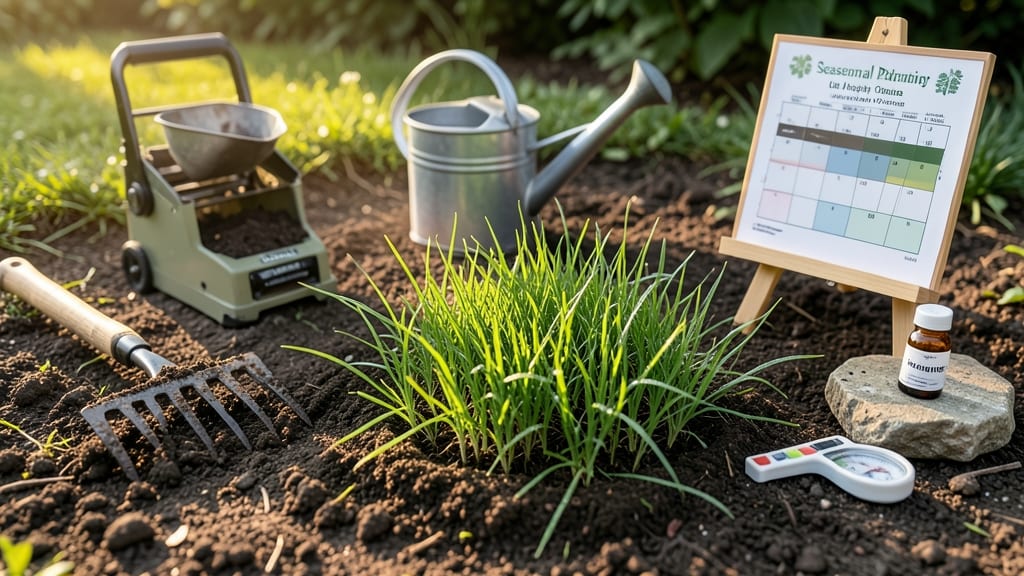
Planting grass seed in Michigan’s fall can be a game-changer for a lush lawn—but when is it too late to plant grass seed in Michigan? You’ve probably heard that September is ideal, but what happens when October rolls around?
The answer depends on your hardiness zone, soil temperature, and how much risk you’re willing to take.
In zones 5a-6b, the last safe window typically closes by mid-October, but cooler northern areas (like the Upper Peninsula) may need to plant by early September.
If you’re in zone 6b, you might squeeze in a late planting, but only if soil temps stay above 50°F for at least 4-6 weeks.
Late plantings can still work with the right grass varieties, like Tall Fescue or Perennial Ryegrass, which germinate faster in cooler weather. However, pushing past the first frost risks weak roots and winter kill—so don’t wait too long.
Let’s break down the exact deadlines by zone and how to maximize your chances of success, even if you’re planting on the late side. You’ll learn which varieties thrive in Michigan’s short fall window and how to protect your investment from frost.
Michigan grass seed planting deadlines by hardiness Zone (USDA 4-6)
Michigan’s three USDA hardiness zones (4-6) mean your last planting date varies dramatically—from early October in Zone 6 (southern Michigan) to mid-September in Zone 4 (Upper Peninsula).
The key rule? Plant when soil temps stay above 50°F (10°C) for 4-6 weeks before winter dormancy. This window shrinks fast as frost nears.
For Zone 6 (Detroit, Grand Rapids), you can push it to October 15 with cold-tolerant varieties, but Zone 4 (Marquette, Traverse City) gardeners should finish by September 15 to avoid winter kill. Zone 5 (Lansing, Saginaw) sits in the middle, with a cutoff around October 1 for reliable germination.
Use a soil thermometer to confirm temps—below 50°F slows germination, and below 40°F stops it entirely. Michigan’s first frost typically arrives in mid-October (Zone 6) to late September (Zone 4), leaving little margin for error if you wait too long.
🌱
📅 Michigan Grass Seed Planting Deadlines by Zone
| Zone | Last Planting Date | Soil Temp Threshold | Frost Risk |
|---|---|---|---|
| 4 (Upper Peninsula) | September 15 | 50°F+ for 4 weeks | High (late Sept) |
| 5 (Northern Lower) | October 1 | 50°F+ for 5 weeks | Moderate (early Oct) |
| 6 (Southern Michigan) | October 15 | 50°F+ for 6 weeks | Low (mid-Oct) |
⚠️ Note: These dates assume average frost timelines. Check your local Almanac for 30-day forecasts before planting.
If you’re in Zone 6 and still see warm days in late October, you might get away with planting, but germination slows drastically below 60°F. For Zone 4, even September plantings can struggle if soil temps drop below 45°F—which happens fast in the UP.
Always test your soil with a thermometer before committing.
Pro tip: Overseeding in late September (even if you miss the ideal window) can still work if you use fast-germinating varieties like Perennial Ryegrass and cover with straw mulch to insulate seeds. This buys you 2-3 extra weeks of growth before winter.
For Zone 5 gardeners, September 20–October 1 is the sweet spot—cool nights and warm days create perfect germination conditions. But if you wait until October 10+, your grass may only sprout 50% before frost, leaving thin, weak patches. Prioritize early September plantings for the best results.
🌡️
Remember: Soil temperature > air temperature. A 60°F day with 45°F soil can still kill seeds. Use a soil thermometer (not a weather app) to avoid costly mistakes. If temps dip below 50°F for more than 3 days, germination halts entirely.
For late plantings, focus on shade-tolerant varieties like Fine Fescue, which handle cooler soils better than Kentucky Bluegrass. Pair this with lightweight mulch (straw, not hay) to retain heat and prevent crusting. Even with these steps, expect slower growth and more weeds competing for space.
🔍
Need to know if you’ve already missed the window? Check for frost warnings in your area.
If a hard freeze (<32°F) is forecast within 2 weeks, your seeds won’t survive. Zone 4 gardeners: Stop planting by September 15—no exceptions. Zone 6 can stretch to October 20 with heavy mulching, but results will be 50% weaker than a September planting.
5 Signs your late-season grass seed planting will fail (and how to fix it)
Planting grass seed in late fall can be a gamble, especially in Michigan’s unpredictable climate. Even if you’ve sown seeds in October, 5 common mistakes can derail germination before winter sets in. Recognizing these red flags early gives you time to adjust and salvage your lawn—before it’s too late.
First, soil temperatures below 50°F are the #1 killer of late-season grass. Seeds need warmth to sprout, and cold soil slows or stops germination entirely. Check temps with a soil thermometer—if it’s consistently under 50°F, your seeds may never wake up.
This is especially risky in USDA Zone 4 (Upper Peninsula), where frosts can arrive by early October.
Next, thin seed coverage leaves patches vulnerable to weeds and erosion. If you’re scattering seeds lightly to "save money," you’re likely creating bare spots where weeds will take over.
Aim for 10–15 seeds per square inch—double the usual rate for late plantings to ensure density. A broadcast spreader helps achieve even distribution.
Heavy frost forecasts within 2–3 weeks of planting are another dealbreaker. Grass seeds need 4–6 weeks of growth before winter dormancy, so if a hard freeze is predicted, your lawn won’t survive. Monitor the National Weather Service for frost advisories and delay planting if risks are high.
Inconsistent watering is just as damaging as drought. Late-season plantings need daily watering for the first 2 weeks, but many gardeners cut back as temps drop. Without moisture, seeds dry out and fail to sprout. Use a rain gauge to track 1 inch of water per week—early morning is best to prevent fungal growth.
Finally, poor soil prep (like skipping compost or aeration) leaves seeds struggling to access nutrients. Amend your soil with 2–3 inches of compost before planting, and consider a light mulch layer (like straw) to insulate seeds from temperature swings.
This is especially critical in compacted clay soils, common in Michigan’s southern regions.
🌱
🚨 Late-Season Grass Planting Checklist
- ✅ Soil Temp: Must stay above 50°F for 4+ weeks
- ✅ Seed Rate: Double usual rate (10–15 seeds/sq in)
- ✅ Watering: Daily for first 2 weeks (1" total)
- ✅ Frost Window: No hard freeze for 3+ weeks
- ✅ Soil Prep: Add compost + light mulch
If you’ve already planted and spot uneven germination or yellowing patches, don’t panic. Adjust your watering schedule, add a light mulch layer, and monitor soil temps closely. With the right fixes, your late-season lawn can still thrive—just give it time and attention.
🌿