
Companion Plants
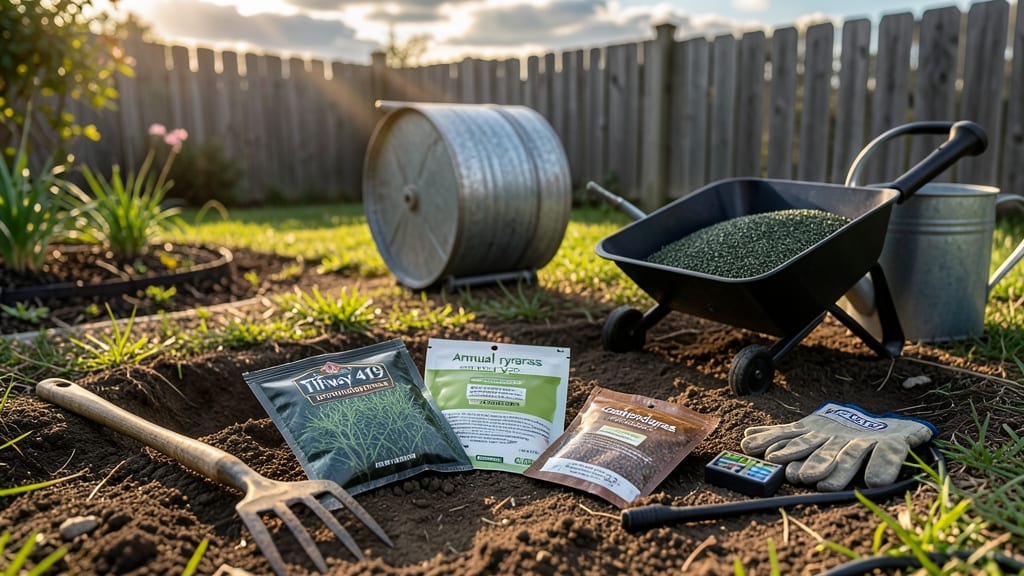
Planting grass seed in Georgia at the wrong time can mean weeks of waiting for patchy growth—or worse, watching your investment wither under the sun.
The best time to plant grass seed in Georgia isn’t just about avoiding summer’s brutal heat; it’s about tapping into the cool-season window when soil temperatures drop to the perfect range for strong germination and deep root growth.
Georgia’s 7b-8b climate gives you two ideal planting opportunities: early spring (March–April) and late summer/early fall (August–September). These windows avoid the stress of summer heat and winter dormancy, setting your lawn up for success from day one. Whether you’re seeding a new yard or repairing bare spots, timing is everything.
I’ve seen firsthand how a well-timed planting can transform a struggling lawn into a lush, resilient carpet—even in Georgia’s challenging humidity and heat.
In this guide, I’ll break down the exact conditions your soil needs, the best grass seed varieties for your region, and step-by-step prep to ensure your grass takes root fast and stays strong.
Ready to skip the guesswork? Let’s dive into the proven strategies that’ll have your Georgia lawn thriving in no time—without the trial-and-error headaches.
Georgia’s optimal grass seed planting months: cool season timing explained
Georgia’s climate creates a perfect cool-season window for grass seed planting—just narrow enough to demand precision. The University of Georgia Extension confirms that September through November is ideal for cool-season grasses like tall fescue and ryegrass, while warm-season grasses like Bermuda thrive when planted in late spring (April–May).
Missing this window risks shallow roots, drought stress, or poor germination.
Soil temperature is the critical factor. Grass seeds germinate best when soil stays between 60–75°F—too hot (above 80°F) causes stress, and too cold (below 55°F) slows growth.
In North Georgia (USDA Zone 7b), aim for late August to early October, while South Georgia (Zone 8a–8b) can extend planting until mid-November before winter dormancy sets in.
Here’s how Georgia’s climate zones break down for optimal planting:
Spring planting is a secondary option for cool-season grasses, but timing is tricky. Plant in early March (after the last frost, typically around March 15) to avoid summer heat stress.
However, spring seeds often struggle to establish deep roots before Georgia’s 100°F+ summers, making them more vulnerable to drought.
Why does timing matter so much? Grass seeds need consistent moisture and moderate temperatures to germinate. Planting in summer (June–July) risks seed desiccation, while planting in winter (December–February) delays growth until spring. The 60-day window from September to November strikes the perfect balance for Georgia’s climate.
Pro tip: Use a soil thermometer to confirm temperatures. If the top 2 inches of soil read below 60°F, wait a week or two. For cool-season grasses, September 15–October 15 is the sweet spot for most of Georgia.
In Coastal Plain regions, extend planting until November 1 to take advantage of milder winters.
Rainfall patterns also play a role. Georgia’s September–October typically offers steady rainfall, reducing the need for supplemental irrigation. In drier years, plan to water daily for the first 2–3 weeks post-planting to keep soil moist but not soggy.
A light mulch (straw or peat moss) helps retain moisture and regulate soil temperature.
Common mistakes to avoid: Planting when forecasted rain is over 1 inch in 24 hours (can wash seeds away), ignoring soil compaction (rent a core aerator if needed), or using warm-season grass seed in fall (it won’t germinate). Stick to cool-season blends for fall planting and warm-season varieties for spring.
For established lawns, overseeding in fall (late September) can fill thin spots. Use a slit seeder to deposit seeds ¼-inch deep in the existing turf, then water gently. This method leverages Georgia’s cool, moist fall for rapid germination without disturbing the entire lawn.
🌱
How to prepare Georgia soil for grass seed: pre-planting checklist
Georgia’s soil can be a double-edged sword—rich in nutrients but often heavy with clay or sandy patches that resist grass seed germination. Before you plant, preparing your soil is the single most critical step to ensure your grass seed takes root quickly and grows strong.
Skipping this step means battling poor drainage, weed competition, or weak seedlings from the start.
Start by testing your soil’s pH—Georgia’s ideal range for grass seed is 6.0 to 7.0. If your soil is too acidic (below 6.0), add pelletized lime 2–3 months before planting.
For alkaline soil (above 7.0), incorporate sulfur or peat moss to lower the pH. I’ve seen lawns fail because the soil was off by just 0.5 points—don’t let that happen to you.
Next, remove all debris, rocks, and weeds. Use a broadfork or tilling tool to loosen the top 4 inches of soil, breaking up compacted layers. This isn’t just about aesthetics—aeration helps roots penetrate deeper, making your grass drought-resistant.
In Georgia’s Piedmont region, clay soils benefit from sanding or compost to improve drainage, while Coastal Plain areas may need more organic matter to retain moisture.
After tilling, level the soil with a rake, filling low spots with a mix of topsoil and compost (a 50/50 blend works well). For large areas, a land leveler saves time and ensures even seed distribution.
Georgia’s unpredictable rainfall means slope drainage is key—grade the soil to 1–2% slope away from structures to prevent water pooling, which can drown seedlings.
Finally, add a starter fertilizer with a high-phosphorus blend (e.g., 5-10-10) to promote root growth. Spread it evenly over the prepared soil and lightly rake it in. This isn’t the time for heavy nitrogen—save that for after germination.
For shady areas, mix in composted leaves or pine fines to mimic Georgia’s natural forest floor conditions, which encourage finer grass varieties like fine fescue to thrive.
With your soil prepped, you’re ready to plant during Georgia’s cool-season window. The next step? Choosing the right grass seed variety for your climate and sunlight conditions. A little prep now means fewer headaches and a lawn that stays green through Georgia’s hottest summers.