
Trees
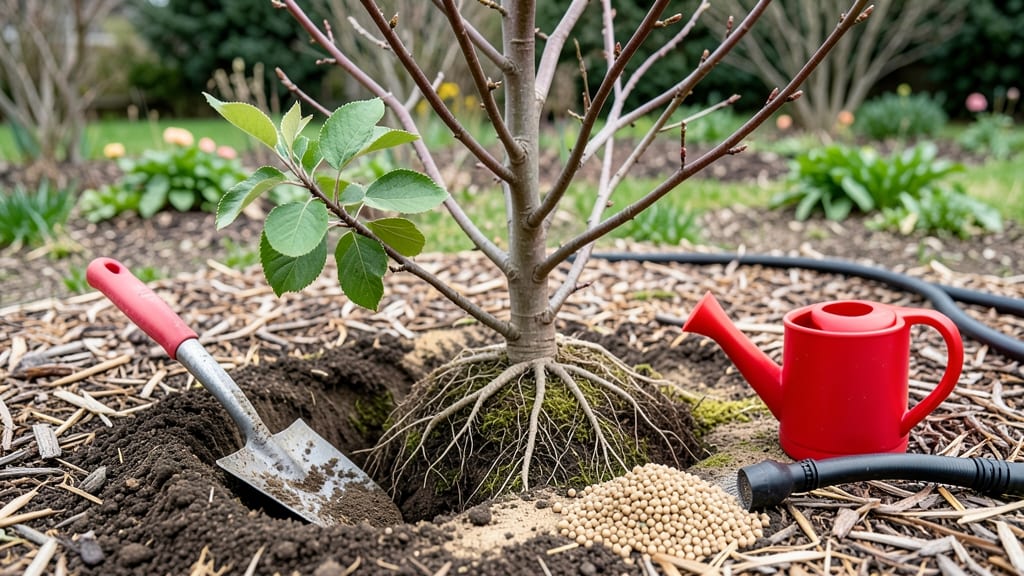
Planting an apple tree 🍎 in Arkansas isn’t just about grabbing a sapling and sticking it in the ground—it’s about matching your variety to the region’s chill-hour needs.
Get this wrong, and you might end up with beautiful leaves but no fruit, or worse, a tree that struggles to survive Arkansas’s humid summers and unpredictable winters.
Most Arkansas gardeners in zones 7a-8b assume spring is the only time to plant, but fall can actually give your tree a head start—if you time it right.
The key is understanding when your local climate allows roots to establish before the first frost hits, usually around November 15, while avoiding the heat stress of late spring planting.
In this guide, I’ll break down the exact planting windows for Arkansas, from late winter to early spring, and how to pick apple varieties that thrive in your specific chill-hour range.
Whether you’re a first-time grower or a seasoned orchardist, these tips will help you avoid common mistakes and set your tree up for a bountiful harvest.
Ready to turn your backyard into a fruit-bearing oasis? Let’s dive into the science—and the secrets—of planting apple trees in Arkansas the right way.
Arkansas planting zones & chill-hour requirements for apple trees
Arkansas spans USDA zones 5b through 8a, creating a challenge for apple growers.
Unlike northern states, Arkansas’s mild winters and hot summers demand apple varieties with moderate chill-hour needs—typically between 300–1,000 hours below 45°F. Planting the wrong variety in your zone could mean no fruit set or poor-quality apples.
For example, Northern Arkansas (zones 6–7) gets 500–800 chill hours, while Southern Arkansas (zones 7b–8a) often sees 300–600 hours. Matching your tree’s chill needs to your location is the #1 rule for success. Let’s break down the zones and how they impact your planting timeline.
🌱 Arkansas Apple Tree Planting Guide
Chill-Hour Matching| USDA Zone | Chill Hours | Best Planting Window | Recommended Varieties |
|---|---|---|---|
| 5b–6a (North AR) | 800–1,000+ | Early spring (Feb–March) | 'Golden Delicious', 'Jonathan', 'Honeycrisp' |
| 6b–7a (Central AR) | 500–800 | Fall (Oct–Nov) or early spring (March) | 'Akane', 'Gala', 'Fuji' |
| 7b–8a (South AR) | 300–600 | Fall (Oct–Nov) only | 'Anna', 'Dorsett Golden', 'Ein Shemer' |
📌 Pro Tip: Use a chill-hour calculator (like from the Arkansas Cooperative Extension) to confirm your local chill hours before buying trees.
In Northern Arkansas (zones 6–7), where chill hours are higher, you have flexibility for both fall and spring planting. However, Southern Arkansas (zones 7b–8a) requires fall planting only to ensure roots establish before summer heat arrives. Skipping this rule often leads to stressed trees or even death.
Another critical factor is last frost dates. In North Arkansas, the average last frost is March 15, while South Arkansas sees it as early as February 28.
Planting too early risks frost damage to new growth, while planting too late delays root establishment. Aim to plant 2–3 weeks before your local last frost date for the best results.
For container-grown apple trees, timing shifts slightly. Since potted trees have limited root zones, plant them 1–2 weeks earlier than in-ground trees to account for slower root development. Use well-draining soil mixes with added compost to prevent root rot in Arkansas’s heavy clay soils.
One common mistake Arkansas gardeners make is ignoring microclimates. A hilltop or sunny slope may experience 100+ extra chill hours than a valley, while a low-lying area might lose chill hours due to warmer nighttime temperatures.
Observe your yard’s frost pockets and sun exposure before choosing a planting spot.
If you’re unsure about your chill hours, check with your local Arkansas Cooperative Extension office. They can provide free soil tests and climate data tailored to your county.
For example, Fayetteville (zone 7a) has 650 chill hours, while Little Rock (zone 7b) averages 550 hours—a difference that matters for variety selection.
Remember: Chill hours ≠ cold nights. It’s the total hours below 45°F over winter that matter. A short but cold winter (like Arkansas often gets) can still provide enough chill for the right varieties.
Pair this knowledge with proper soil prep (loamy, slightly acidic, and well-draining), and you’ll set your apple tree up for a bountiful harvest.
🌱
Fall vs. early spring planting: Arkansas-specific timing tips to avoid common mistakes
Arkansas gardeners often debate whether to plant apple trees in fall or early spring. The answer depends on your USDA zone and local climate patterns. In most of Arkansas (zones 6b–8a), fall planting (October–November) gives roots time to establish before winter, while spring planting (February–March) avoids late frosts.
I’ve found fall planting works best in northern Arkansas, where winters are colder.
For southern Arkansas (zones 7b–8a), early spring planting (February–March) is safer to dodge humid, disease-prone conditions that linger into late winter. The key is timing: plant 4–6 weeks before ground freezes in fall or 2–3 weeks before last frost in spring.
Check your local Arkansas Cooperative Extension Service frost dates for precision.
Planting too late in spring (April+) risks deer damage and late frost injury. Young trees struggle to recover from frost damage after bud break. In fall, planting after November 15 leaves roots vulnerable to winter heaving.
Soil prep is critical for both seasons. Arkansas’s clay-heavy soils drain poorly, so amend with compost and sand to improve aeration. I mix in 2–3 inches of organic matter and test pH (ideal: 6.0–6.5).
For fall plantings, mulch heavily with wood chips (3–4 inches) to insulate roots. In spring, use mulch to retain moisture during Arkansas’s hot, dry summers.
Protect young trees from deer and rabbits, which are aggressive in Arkansas. Use tree guards or fencing immediately after planting. I’ve lost multiple saplings to deer in my Zone 7a garden—a painful lesson! Also, avoid planting near overhead power lines or large shade trees that compete for sunlight.
Watering schedules differ by season. In fall, water deeply once a week until ground freezes. In spring, aim for 1–2 inches per week, more during Arkansas’s drought-prone summers. Drip irrigation works best to keep foliage dry and reduce fungal diseases like apple scab, which thrives in Arkansas’s humidity.
Remember: Arkansas’s microclimates matter. A neighbor’s successful planting time in Bentonville (Zone 7a) may not work in Little Rock (Zone 8a). Always scout your specific area and adjust accordingly. With the right timing, your apple tree will thrive—and you’ll enjoy homegrown fruit for years to come! 🍏