
Plants
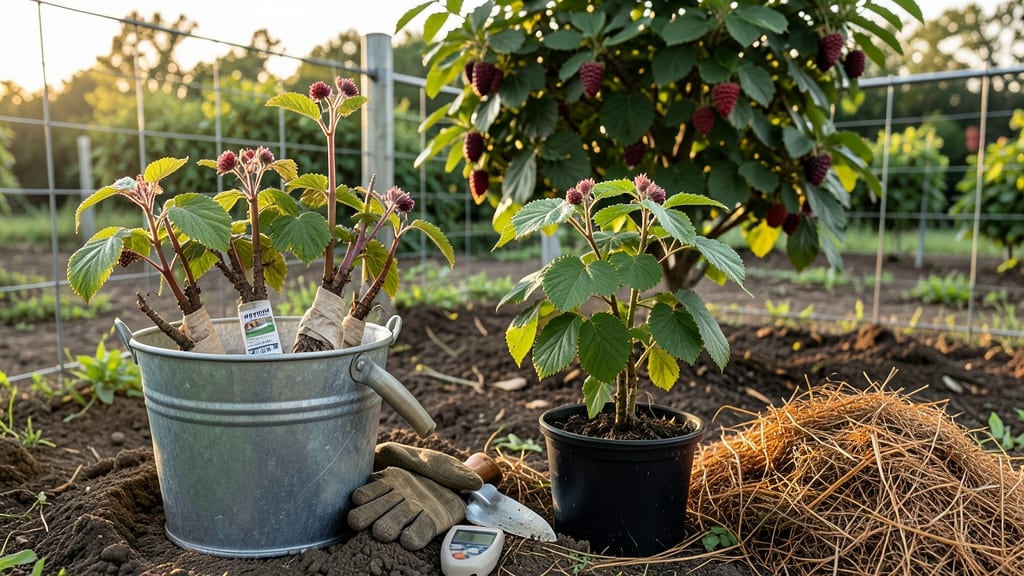
Planting blackberries in Georgia isn't just about grabbing a few canes and sticking them in the ground—timing is everything, especially with our hot summers and unpredictable winters. If you get the schedule wrong, your 🫐 bushes might either wilt before they take root or freeze before they establish themselves.
I’ve learned the hard way that the ideal window—late winter to early spring or fall—gives your blackberries the best shot at thriving in Georgia’s 7b-8b climate. But here’s the catch: not all varieties play nice in our heat, and coastal regions behave differently than the Piedmont.
Let me break down exactly when to plant for your specific zone and microclimate.
You’ll discover how to match your blackberry variety to Georgia’s chill hours, avoid common planting mistakes, and even extend your planting window with simple tricks.
Whether you’re working with bare-root canes or potted plants, these insights will help you set up your bushes for a productive harvest from May through August.
Ready to skip the guesswork? Let’s dive into the perfect planting schedule—so you can enjoy juicy, homegrown blackberries without the stress of trial and error.
Georgia’s best blackberry planting months by chill-hour requirements
Georgia’s diverse climate zones mean blackberry planting success hinges on matching chill-hour needs with your region’s winter cold. Most Georgia gardeners fall into USDA Zones 7b–8a, where Southern Highbush and Primocane varieties thrive, but rabbiteye blackberries dominate in warmer areas like Coastal Georgia.
The key? Plant when daytime temps stabilize above 60°F and nights stay above 50°F—typically late winter to early spring or fall.
For fall planting (ideal for Georgia), aim for September–October when soil temps drop below 80°F. This gives roots time to establish before winter dormancy. Spring planting (February–March) works too, but younger plants face summer heat stress.
Always check your local chill hours—most Georgia regions average 500–1,000 hours, with rabbiteye varieties needing 300+ hours and Primocanes tolerating as little as 200 hours.
Why timing matters: Plant too early (e.g., January in North Georgia), and freeze-sensitive roots may suffer. Too late (e.g., November in South Georgia), and limited root growth weakens winter survival. Georgia’s humidity also demands well-draining soil—amend clay soils with compost to prevent root rot.
🌱
| Variety | Chill-Hour Needs | Best Planting Window | Heat Tolerance | Georgia Regions |
|---|---|---|---|---|
| Southern Highbush | 500–800 hours | September–October (fall) or February–March (spring) | Moderate (struggles above 90°F) | North Georgia (Zone 7b) |
| Primocane (e.g., 'Natchez', 'Ouachita') | 200–500 hours | September–October (fall preferred) | High (thrives in 95°F+) | Coastal & Piedmont (Zone 8a) |
| Rabbiteye (e.g., 'Arapaho', 'Cheyenne') | 300–600 hours | February–March (spring only) | Very High (drought-resistant) | South Georgia & Coastal (Zone 8b) |
📌 Pro Tip: Test soil 2 weeks before planting—ideal pH is 5.5–6.5.
In North Georgia (Zone 7b), where winters are cooler, Southern Highbush varieties like 'Chester' excel when planted in late winter (February). The 1,000+ chill hours here satisfy their dormancy needs, while Primocanes (like 'Natchez') can be planted as late as October for summer fruiting.
For Coastal Georgia (Zone 8a–8b), rabbiteye blackberries are the gold standard—plant them in February to avoid summer heat stress during root establishment.
If you’re in Central Georgia (Piedmont region), focus on Primocane varieties like 'Ouachita' for their heat tolerance.
These thrive when planted in September, giving roots time to harden off before winter. Mulch heavily (4–6 inches of straw) to protect roots from temperature swings—a common issue in Georgia’s microclimates. Always choose bare-root canes over potted plants for fall planting; they establish faster in cooler soil.
For container gardening in Georgia’s urban areas, Primocane varieties are your best bet—they fruit on new wood, so they adapt better to limited root zones. Plant in large pots (15+ gallons) with drainage holes and use a lightweight potting mix.
Water daily in summer to prevent heat stress, but reduce to every 3–4 days in winter.
One critical mistake Georgia gardeners make? Ignoring soil temperature. Use a soil thermometer—plant when soil temps are 55–65°F. In sandy soils (common in Coastal Georgia), roots dry out faster, so water deeply 2–3 times weekly after planting.
In clay-heavy soils (Piedmont), amend with compost and sand to improve drainage.
Finally, prune canes to 12–18 inches before planting to reduce transplant shock. Stake young plants if your region has high winds (common in Coastal Georgia). With the right timing, your blackberries will fruit in 1–2 years—and Georgia’s heat actually sweetens the berries!
How to time your blackberry planting for Georgia’s microclimates
Georgia’s diverse climate—from the coastal humidity of Savannah to the mountainous chill of the Blue Ridge—means your blackberry planting schedule should adapt to your specific region. Coastal areas (Zone 8a) can handle late fall planting, while Piedmont regions (Zone 7b) often prefer early spring.
Even within these zones, microclimates like sheltered valleys or exposed ridges can shift your ideal window by weeks.
Start by identifying your local last frost date—typically mid-March for most of Georgia, but earlier in coastal areas. Planting 4-6 weeks before this date gives young roots time to establish before warm soil temperatures arrive.
For example, late February to early March works well in the Piedmont, while September to early October suits coastal gardeners.
Soil type also plays a critical role. Sandy soils in coastal Georgia drain quickly but lose moisture fast, so plant in September to capture fall rains. Clay-heavy soils in the Piedmont retain moisture longer, making early spring (March) a safer bet.
Amend clay with compost to improve drainage, while sandy soils benefit from organic mulch to retain moisture.
Mulch isn’t just for aesthetics—it’s a game-changer for Georgia’s extreme temperatures. Apply 3–4 inches of straw or wood chips after planting to insulate roots. In summer, mulch keeps soil cool; in winter, it prevents freeze-thaw cycles that damage young canes.
For coastal areas, add mulch in late summer to prepare for winter rains, while Piedmont gardeners should mulch in early spring to warm the soil faster.
Don’t overlook watering adjustments based on your microclimate. Coastal blackberries need consistent moisture due to sandy soils, while Piedmont plants can handle slightly drier conditions once established. Water deeply once a week in summer, but reduce to every 10–14 days in fall.
Use a soil moisture meter to avoid overwatering—soggy roots lead to root rot, a common issue in Georgia’s humid climate.
Finally, consider wind exposure. Blackberries thrive with 4–6 feet of spacing, but in windy coastal areas, plant near a windbreak (like a fence or hedge) to protect canes. In the mountains, where winds are less intense, focus on soil drainage—avoid low spots where frost pockets form.
By tailoring your approach to your microclimate, you’ll set your blackberries up for strong root growth and abundant harvests year after year.