
Trees
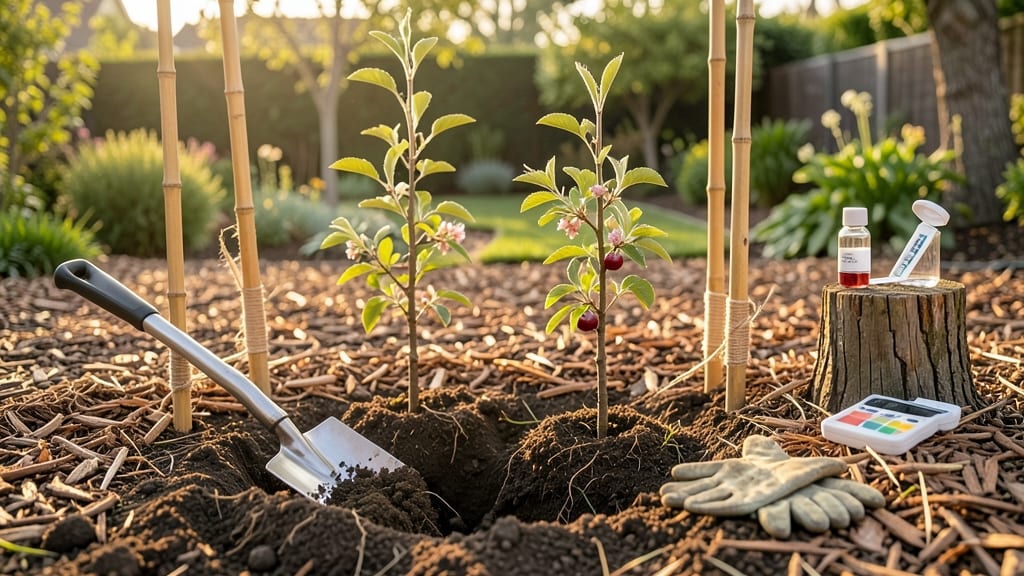
Planting fruit trees in British Columbia at the wrong time can mean wasted effort—and a dead tree. But timing it right unlocks bountiful harvests for years, whether you're in Vancouver’s mild coastal climate or the colder Interior.
The key lies in understanding your region’s unique frost-free windows and chill-hour zones, which vary dramatically from 5b in Northern BC to 8a in Vancouver.
If you’ve ever wondered why some fruit trees thrive while others struggle, the answer often comes down to when you plant them. Fall planting in September or October works best for container-grown trees, while late winter to early spring (February to April) is ideal for bare-root varieties.
This timing ensures your 🍎 has time to establish roots before the growing season kicks in.
Let’s break down the best planting windows for your specific BC region, including microclimate adjustments for urban heat islands or rural orchards. You’ll learn how to avoid common mistakes like planting too early in frost-prone areas and how to prepare your soil for maximum success.
By the end, you’ll have a clear, region-specific roadmap for planting fruit trees that grow strong, bear fruit, and last for decades. Ready to get started?
BC fruit tree planting deadlines by chill-hour zone (coastal vs Interior)
British Columbia’s diverse climate means one planting window doesn’t fit all. From Vancouver’s mild coastal zone to the cold Interior valleys, chill-hour requirements and frost risks vary dramatically.
Understanding your USDA zone and last frost date is critical—plant too early, and frost will kill tender roots; too late, and your tree won’t establish before winter.
Most BC fruit trees need 300-1,000 chill hours (below 7°C/45°F) to flower properly. Apples and pears thrive in cooler zones, while peaches and nectarines prefer milder winters. The key? Match your tree variety to your region’s chill-hour zone and plant during the dormant season (bare-root) or early fall (container-grown).
Here’s your region-by-region breakdown, including ideal planting months, frost-free deadlines, and top varieties for each zone:
| Region | USDA Zone | Chill Hours | Last Frost | Best Planting Window | Top Varieties |
|---|---|---|---|---|---|
| Vancouver Coastal | 8a-9a | 300-500 | March 15 | Late Feb–April (bare-root) or Sept–Oct (container) | Dwarf apple (e.g., Honeycrisp), plum, fig |
| Okanagan Valley | 5b-7a | 800-1,000 | May 1 | March–April (bare-root) or Sept–early Oct (container) | Cherry (Stella), pear (Bartlett), apricot |
| Kootenays | 5a-6b | 600-900 | April 30 | April–May (bare-root) or Sept (container) | Apple (Gala), sour cherry, plum |
| Northern BC | 3b-5a | 1,000-1,500 | June 15 | May–June (bare-root) or early Sept (container) | Hardy apple (McIntosh), saskatoon berry, crabapple |
For bare-root trees, plant as soon as soil is workable—February in Vancouver but May in Northern BC. Container-grown trees are more flexible; fall planting (September–October) gives roots time to establish before winter. Pro tip: Soak bare-root trees for 1-2 hours before planting to rehydrate roots.
Peach and nectarine trees are high-risk in cold zones—they need fewer than 500 chill hours and often fail in the Interior. Stick to cherries, apples, or pears for zones 5b and colder. Dwarf varieties (like columnar apples) are ideal for urban gardens with limited space.
Watch for false springs, where warm spells trick trees into blooming too early. In the Interior, late frosts in May can devastate blossoms. Use frost cloth or a windbreak if planting early in frost-prone areas.
🌱
How to adjust planting timing for BC’s microclimates (urban vs rural)
BC’s urban heat islands and rural wind patterns can shift your ideal planting window by weeks. In Vancouver, container-grown fruit trees can go in as early as late August thanks to milder winters, while the Okanagan Valley often waits until October’s cooler temps to avoid summer drought stress.
City gardeners face unique challenges like limited space and compacted soil. Raised beds with well-draining mixes (50% compost, 30% topsoil, 20% perlite) help mimic rural conditions. Rural orchards, meanwhile, benefit from natural windbreaks like hedgerows or fences to protect young trees from Interior BC’s strong winds.
🌱 Microclimate Planting Checklist
- ☑️ Urban: Test soil pH (aim for 6.0-7.0) and amend with gypsum if clay-heavy
- ☑️ Rural: Install windbreaks if exposed to 20+ km/h winds
- ☑️ Both: Plant dwarf varieties (e.g., Honeycrisp apples) in containers for urban spaces
- ☑️ Both: Mulch with wood chips (3-4 inches) to retain moisture
Vancouver’s coastal fog often delays spring planting until mid-April, while the Kootenays’ earlier last frost (around May 15) allows earlier bare-root planting in March. Always check your local frost-free dates—the BC Ministry of Agriculture provides free chill-hour maps for precise planning.
For container planting, urban gardeners can extend the season by 1-2 months using black plastic pots (warmer soil) and self-watering systems. Rural gardeners should prioritize deep soil prep—digging 18-inch holes and mixing in composted manure to improve drainage in heavy clay soils.
Remember: Peach and nectarine trees need 400-700 chill hours, while apples and pears thrive with 800-1,000 chill hours. The Okanagan’s warm winters may struggle with high-chill varieties—opt for ‘Lapins’ cherries or ‘Spencer’ plums instead.
Whether you’re in a Vancouver backyard or a Kamloops orchard, local nurseries know the best region-specific varieties. Ask about disease-resistant rootstocks like M.9 for apples or Mazzard for cherries—these adapt better to BC’s wet springs and dry summers.