
Trees
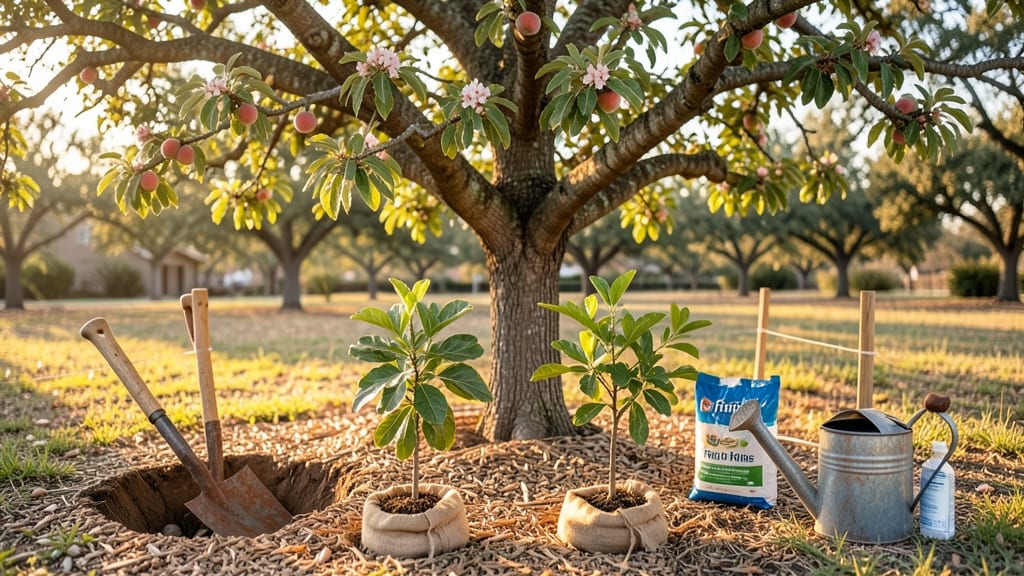
Planting fruit trees 🍎🍑🍊 in Central Texas isn’t just about grabbing a sapling and sticking it in the ground—timing makes all the difference between a thriving orchard and a sad, wilted investment.
The late winter to early spring window (February-March) is your sweet spot, but even then, you’ve got to match varieties to chill-hour needs or risk heat shock before roots take hold.
If you’ve ever watched a peach tree struggle under Austin’s summer sun or a citrus tree fight off winter chill, you know the stakes. The key is understanding how microclimates—like urban heat islands versus hill country shade—change what works best for each variety.
We’ll break down exactly which trees thrive when planted in March versus those that need the cooler February start.
You’ll also discover how to prep your soil, avoid common pitfalls like poor drainage, and even adjust for last frost dates (March 15) so your trees get a head start. No more guessing—just a clear, step-by-step guide to planting fruit trees that actually grow into bountiful harvests.
Ready to turn your Central Texas yard into a fruit-bearing paradise? Let’s get those roots in the ground at the perfect time—for healthier trees, bigger yields, and fewer headaches down the road.
Central Texas fruit tree planting calendar by chill-hour requirements
Central Texas gardeners face a unique challenge: our mild winters and hot summers demand precise timing for fruit trees. Unlike northern climates, we can't rely on long cold snaps—chill-hour requirements become our best friend.
These hours (below 45°F) trigger blooming, and missing them means poor fruit set or no harvest at all.
Most Central Texas varieties need between 300-900 chill hours, but extremes like apples (900+) struggle here. Instead, we focus on low-chill peaches, plums, and persimmons that thrive in our USDA Zones 8a-8b. The key window? Late February through early April, when soil warms but frost risk drops.
Here’s how to match your tree to the calendar—because planting a 900-hour apple in Austin is like inviting a snowman to a pool party. Let’s get specific.
🌱 Central Texas Fruit Tree Planting Guide by Chill Hours
| Variety | Chill Hours | Best Planting Month | Notes |
|---|---|---|---|
| Peach ('Redhaven') | 300-400 | February-March | Low-chill; avoid late spring planting (heat stress). |
| Plum ('Santa Rosa') | 400-500 | February-March | Drought-tolerant; prune in late winter for airflow. |
| Fig ('Celeste') | 100-200 | March-April | Heat-loving; plant after last frost (March 15 avg.). |
| Persimmon ('Fuyu') | 200-300 | February-March | Cold-hardy; mulch heavily in winter. |
| Citrus ('Meyer Lemon') | 0-100 | March-April | Avoid frost; plant in sheltered microclimates. |
Notice how figs and citrus wait until March-April? That’s because they’re heat-seekers and can’t handle Central Texas’ unpredictable late frosts. Meanwhile, peaches and plums need that February-March window to establish roots before summer’s relentless sun.
Pro tip: Use a chill-hour calculator (like the one from Texas A&M AgriLife) to verify your tree’s needs. For example, a ‘Elberta’ peach (600+ hours) won’t thrive here—stick to ‘Redhaven’ or ‘Contender’ for guaranteed success.
Timing isn’t just about months—it’s about soil temperature. Aim for 60°F+ soil to prevent root rot. Test with a soil thermometer or wait until mid-March when the ground reliably stays warm.
In urban heat islands (like Austin), soil warms faster, so you can plant 1-2 weeks earlier than rural areas.
One more critical note: Bare-root trees must be planted before bud break (usually late February in Central Texas). Container-grown trees offer flexibility but need extra watering during their first summer to compensate for transplant shock.
Let’s say you planted a ‘Santa Rosa’ plum in April. By June, it’ll be struggling with 100°F+ heat and minimal root growth. That’s why February-March is non-negotiable for most varieties.
But what if you’re in Hill Country vs. Austin’s urban core? That’s where microclimates change the game—and we’ll dive into those next.
How to match fruit tree varieties to Central Texas microclimates
Central Texas isn’t one-size-fits-all when it comes to fruit trees. Austin’s urban heat islands, San Antonio’s hill country, and Waco’s river valleys each create unique microclimates that demand variety-specific choices.
For example, ‘Redhaven’ peaches thrive in Austin’s cooler pockets, while ‘Santa Rosa’ plums handle San Antonio’s drier heat better. Let’s break down the best matches for your zone.
First, identify your microclimate by observing local patterns. Urban areas like Austin often face heat islands with 5-10°F warmer nights, while hill country zones near San Antonio experience cooler nights but hotter days.
River valleys like Waco benefit from moderate humidity, reducing stress on drought-sensitive varieties. Use this map from AgriLife Extension to pinpoint your exact conditions.
Your next step is selecting low-chill varieties that align with Central Texas’s 300-900 chill hours. High-chill trees like ‘Honeycrisp’ apples (800+ hours) won’t thrive here, but ‘Dixie Red’ peaches (300-400 hours) will. For citrus lovers, ‘Meyer lemon trees (200-300 hours) are perfect for Austin’s milder winters.
| Microclimate | Best Varieties | Chill Hours | Key Notes |
|---|---|---|---|
| Austin Urban Heat Island | ‘Redhaven’ Peach, ‘Santa Rosa’ Plum, ‘Meyer’ Lemon | 300-500 | Needs afternoon shade; mulch heavily |
| San Antonio Hill Country | ‘Elberta’ Peach, ‘Black Diamond’ Fig, ‘Dwarf Citrus’ | 400-600 | Drought-tolerant; plant on north side of house |
| Waco River Valley | ‘Dixie Red’ Peach, ‘O’Henry’ Plum, ‘Celeste’ Pear | 200-400 | Humidity-friendly; stake young trees |
For urban gardeners in Austin, prioritize dwarf or semi-dwarf varieties to save space. ‘Bonanza’ peach trees stay under 10 feet tall and produce early-season fruit, perfect for small yards.
Meanwhile, hill country gardeners should opt for deep-rooted varieties like ‘Black Diamond’ figs, which handle caliche soil and limited water better than most.
If you’re planting near water sources like creeks or lakes, consider ‘Celeste’ pears or ‘O’Henry’ plums. These varieties thrive in higher humidity and moderate temperatures, making them ideal for Waco’s river valleys. Just be sure to elevate root zones slightly to prevent waterlogging during heavy rains.
Pro tip: Pair your fruit trees with companion plants like marigolds (to deter pests) or clover (to fix nitrogen). In Austin, I’ve seen ‘Santa Rosa’ plums paired with rosemary to improve pollination and reduce stress. Experiment with combinations to find what works best for your microclimate!