
Trees
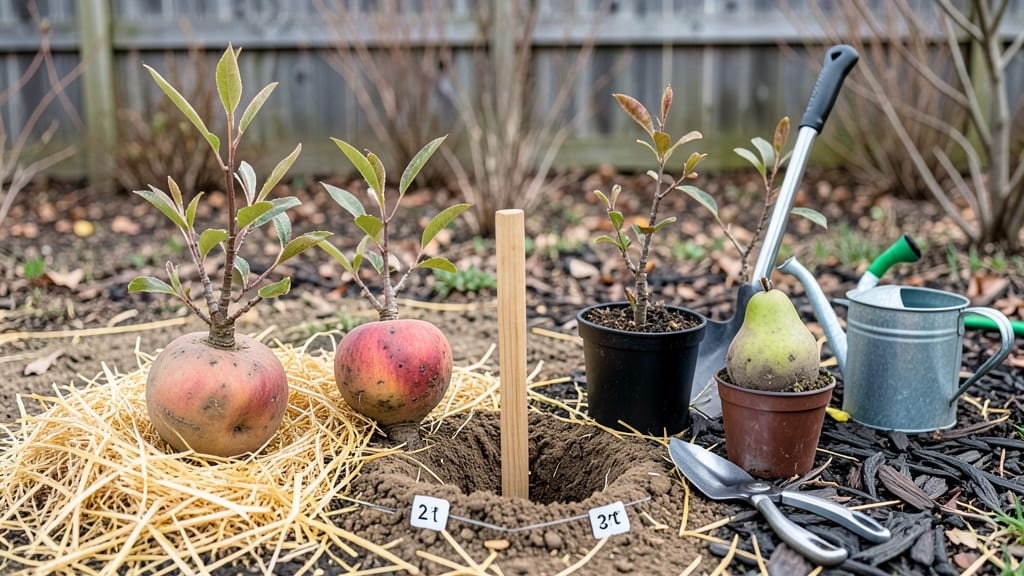
Planting a fruit tree 🍎 in Virginia at the wrong time could mean waiting years for that first harvest—or worse, losing your investment before it even takes root.
The key isn’t just picking the right month; it’s matching your variety to Virginia’s chill-hour zones, where 6a-8a climates demand precision timing to avoid frost damage and ensure proper dormancy.
Most gardeners know spring is ideal, but did you know fall planting works too—just with different prep? I’ll break down the exact windows (late winter through April or October-November) and how to prep your soil for Virginia’s unpredictable springs, where late frosts after March 15 can still threaten young trees.
Whether you’re planting peaches (low-chill) or apples (medium-chill), the right timing maximizes survival rates and sets your tree up for a bountiful harvest in June-October. Let’s dive into the science behind chill hours and how to pick the perfect moment for your variety.
You’ll leave here knowing not just when to plant, but why—and how to adjust for your specific Virginia microclimate. Ready to turn your backyard into an orchard? Let’s get started.
Virginia’s chill-hour zones: how cold requirements dictate planting timing
Virginia’s diverse climate—spanning USDA zones 6a to 8a—creates a unique challenge for fruit tree growers. Unlike most states, Virginia’s chill-hour requirements (the number of hours below 45°F needed for dormancy) vary dramatically from the mountains to the coast.
Planting at the wrong time—especially for high-chill varieties like pears—can leave your tree blooming but failing to fruit. Understanding your local chill zone is the first step to success.
For example, Roanoke’s 6b zone (600-800 chill hours) thrives with apples like ‘Liberty,’ while Norfolk’s 8a zone (300-500 chill hours) struggles with traditional peaches. Even within the same county, microclimates can shift chill hours by 100+ hours.
Use the Virginia Cooperative Extension’s chill-hour map (linked below) to pinpoint your exact zone before selecting varieties.
Most fruit trees need 200–1,000 chill hours, but Virginia’s low-chill zones (300–500 hours) along the coast limit options to varieties like ‘Bonanza’ peaches or ‘GoldRush’ plums.
Meanwhile, mountain regions (800+ hours) can grow European pears or tart cherries. Planting outside these ranges risks poor flowering or no fruit—even with perfect care.
📌 Key Takeaway: Match your tree’s chill needs to your zone. A 500-hour peach in a 800-hour zone will fruit well, but the same tree in Norfolk may bloom but fail to set fruit.
| Virginia Region | Chill-Hour Range | Best Planting Window | Example Varieties |
|---|---|---|---|
| Mountains (6a-6b) | 800–1,000+ hours | Late Feb–March | ‘Bartlett’ pear, ‘Liberty’ apple |
| Piedmont (7a-7b) | 600–800 hours | Mid-March–April | ‘Gala’ apple, ‘Elberta’ peach |
| Coastal (8a) | 300–500 hours | April–early May | ‘Bonanza’ peach, ‘GoldRush’ plum |
⚠️ Pro Tip: Use a chill-hour calculator (like Virginia Tech’s tool) to verify local data.
Timing isn’t just about chill hours—it’s also about avoiding late frosts. Virginia’s average last frost date hovers around March 15, but coastal areas can see frost into April.
Planting bare-root trees in late winter (February–March) gives roots time to establish before buds break, while container-grown trees can handle slightly later planting (April). For high-chill varieties, aim to plant 4–6 weeks before bud break to ensure root establishment.
Soil temperature also plays a role. Roots need 40–50°F soil to grow actively. In colder zones (6a), wait until soil thaws—usually mid-to-late March. Warmer zones (8a) can plant as early as February, but avoid soggy soil.
A simple soil thermometer ($10 at garden centers) takes the guesswork out of timing.
One common mistake? Planting too early in heavy clay soils (common in Virginia). Cold, compacted soil stunts root growth. Amend with compost or sand to improve drainage, and mulch heavily to regulate soil temperature. In sandy soils (coastal areas), water more frequently to prevent drought stress during establishment.
For fall planting (October–November), focus on container-grown trees or bare-root varieties like figs or persimmons, which tolerate cooler soils. But avoid planting high-chill trees in fall—they won’t have enough time to acclimate before winter dormancy. Always plant before the first hard frost (typically November 15 in Virginia).
🌱 Final Tip: If you’re unsure about your chill hours, start with low-maintenance varieties like ‘Contender’ peach (500 hours) or ‘Honeycrisp’ apple (600 hours), which adapt well to Virginia’s range.
Best fruit tree varieties for Virginia planting months (by chill needs)
Choosing the right fruit tree varieties for Virginia means matching chill-hour requirements with your local climate zone. The state spans USDA Zones 6a-8a, so some varieties thrive in low-chill areas (like Norfolk) while others need high-chill conditions (like the Shenandoah Valley).
Let’s break down the best planting months for each category.
For low-chill varieties (300-500 hours), like peaches ('Redhaven') and plums ('Santa Rosa'), plant in late February to early March while the ground is still workable. These trees bloom early and need to establish roots before Virginia’s late spring frosts (often around March 15).
Medium-chill varieties (500-800 hours), such as apples ('Gala' or 'Fuji') and cherries ('Stella'), can handle slightly cooler winters. These are best planted in March to early April, giving them time to root before summer heat. Container-grown trees can even go in October or November for an early start.
High-chill varieties (800-1,000+ hours), like pears ('Bartlett') and blueberries ('Duke'), require deeper dormancy. Plant these in late March to mid-April to avoid early blooms that frost can damage. In colder zones (e.g., Zone 6a), wait until after the last frost—usually mid-April—to ensure survival.
🍎 Virginia Fruit Tree Planting Guide by Chill Needs
| Variety | Chill Hours | Best Planting Month | Notes |
|---|---|---|---|
| Peach ('Redhaven') | 400-500 | Late Feb–Early Mar | Blooms early; avoid late frosts |
| Apple ('Gala') | 500-700 | March–Early Apr | Medium chill; adaptable |
| Pear ('Bartlett') | 800-1,000 | Late Mar–Mid Apr | High chill; wait for frost-free |
| Blueberry ('Duke') | 900-1,100 | April–Early May | Acidic soil needed; late bloomer |
If you’re planting bare-root trees, do it in late winter or early spring while they’re dormant. For container-grown trees, you have more flexibility—plant in fall (October-November) or spring (March-April). Just ensure the root ball stays moist until roots establish, especially in Virginia’s clay-heavy soils.
Pro tip: Check your local chill-hour data (available from Virginia Cooperative Extension) to fine-tune your choice. For example, Roanoke (Zone 7a) can handle more chill hours than Richmond (Zone 7b), so adjust accordingly. Always plant on a cloudy day or in the evening to reduce transplant shock.
With the right variety and timing, your Virginia fruit trees will thrive—and you’ll be picking homegrown peaches, apples, and pears in just a few years! 🌱