
Plants
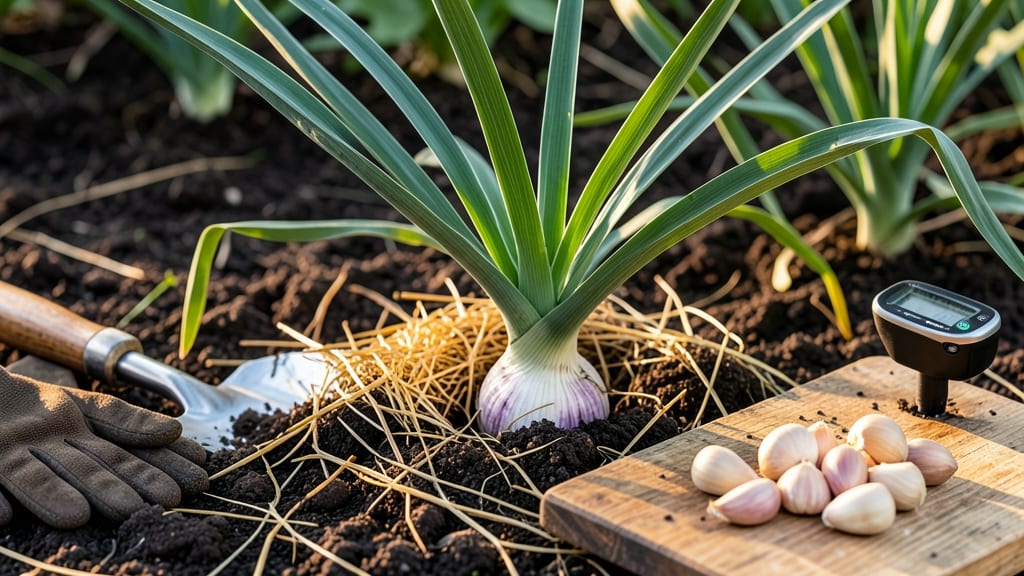
Planting garlic in New Mexico isn’t just about timing—it’s about matching your hardneck varieties to the state’s chill-hour demands, where a single misstep can leave you with puny bulbs instead of the bold, flavorful 🧄 harvest you crave.
If you’ve ever wondered why some gardeners swear by October planting while others insist on February, the answer lies in your local microclimate. New Mexico’s 6a-8a zones create dramatic differences: Albuquerque’s lower elevations need early fall starts, while Santa Fe’s higher altitudes can wait until late winter.
The key? Understanding how many chill hours your chosen variety needs—300–700 hours for hardnecks—to trigger proper bulb formation.
I’ll walk you through the exact planting windows that work in your region, from soil prep tricks for sandy loam to protecting cloves from gophers and unpredictable freeze-thaw cycles.
Whether you’re a first-timer or a seasoned gardener, these insights will help you avoid common mistakes that ruin harvests—and get you closer to those prized, paper-skinned bulbs by late June.
Ready to grow garlic that rivals the best at farmers’ markets? Let’s dive into the precision timing and local adaptations that make all the difference in New Mexico’s high desert gardens.
New Mexico’s garlic planting zones: matching chill-hours to hardneck varieties
New Mexico’s high desert climate and elevation-driven microclimates mean your garlic’s success hinges on matching chill-hour requirements to your specific location. Most gardeners here rely on hardneck varieties like Rocky Mountain or German White, which need 300–700 chill hours to form bulbs.
But planting too early in Albuquerque (Zone 7a) or too late in Santa Fe (Zone 8a) can ruin your harvest.
At higher elevations like Farmington (Zone 6a), where winters are colder, you’ll need varieties like Chesnok Red (600+ chill hours). Meanwhile, low-desert areas (Zone 8b) near Las Cruces can grow softneck varieties like Silverskin, though they lack the bold flavor of hardnecks.
The key is understanding your local frost dates and adjusting planting windows accordingly.
For example, in Albuquerque (5,300 ft), aim for 400–500 chill hours—plant in late October to ensure bulbs get enough cold before spring growth. In Santa Fe (7,200 ft), where winters are harsher, Rocky Mountain garlic thrives with 600+ chill hours, so plant by mid-October.
Use your local cooperative extension office for precise chill-hour data if unsure.
Here’s how elevation impacts chill-hour needs in New Mexico:
| Location | USDA Zone | Avg. Elevation | Chill-Hour Range | Best Varieties | Planting Window |
|---|---|---|---|---|---|
| Albuquerque | 7a | 5,300 ft | 400–500 hrs | Rocky Mountain, German White | Late Oct–Nov 15 |
| Santa Fe | 8a | 7,200 ft | 500–600 hrs | Chesnok Red, German White | Mid-Oct–Nov 1 |
| Farmington | 6a | 5,500 ft | 600–700 hrs | Chesnok Red, Music | Early Oct–Nov 1 |
| Las Cruces | 8b | 3,900 ft | 300–400 hrs | Silverskin, Artichoke | Nov 1–Dec 15 |
Pro tip: If you’re unsure about chill hours, plant a mix of varieties with varying requirements. For example, include German White (400 hrs) alongside Chesnok Red (600 hrs) to hedge your bets. This way, even if one variety underperforms
Step-by-step planting timeline: from October to February in New Mexico
New Mexico’s high desert climate means your garlic planting window isn’t just a single month—it’s a 4-month window that shifts with elevation.
For low desert areas (Albuquerque, Las Cruces), aim for October 1–November 15, while higher elevations (Santa Fe, Taos) can plant as late as February 1–March 15 without risking frost damage.
The key is planting 4–6 weeks before your first hard frost. In Albuquerque (USDA Zone 7a), that’s typically by November 1, while in Farmington (Zone 6a), you’ve got until December 15. Use your local cooperative extension office frost dates as your guide—don’t guess!
🌱Pro Tip: If you’re unsure about frost dates, plant a test row in October and a backup row in late January. This hedges your bets against unpredictable El Niño winters or early freezes.
📅 New Mexico Garlic Planting Timeline
- 🌿 October 1–15: Plant in low desert zones (Albuquerque, Las Cruces). Soil temps should be 50–60°F.
- 🌱 November 1–15: Ideal for mid-elevation gardens (Santa Fe, Rio Rancho). Mulch with straw (4–6 inches) to insulate.
- ❄️ December 1–15: Last chance for high desert zones (Taos, Los Alamos). Use row covers if temps dip below 20°F.
- 🌱 January 15–February 1: Early spring planting for late bloomers. Soil should thaw to 45°F+.
- ✅ February 15–March 15: Final window for Zone 6a gardens (Farmington, Gallup). Prioritize drought-resistant varieties like German White.
For soil prep, New Mexico’s sandy loam drains too quickly—amend with 2–3 inches of compost and a 1-inch layer of worm castings to retain moisture. Test your soil’s pH (6.0–7.0 is ideal) and adjust with lime or sulfur if needed.
When planting, break apart hardneck garlic bulbs into individual cloves, ensuring each has a root nub. Plant the pointy end up, 2–4 inches deep, and 4–6 inches apart in rows 12 inches apart.
In sandy soils, add 1 inch of mulch immediately to lock in moisture.
After planting, water deeply once to settle the soil, then hold off until spring—overwatering in winter causes rot. In drought-prone areas, consider drip irrigation set to 1 inch per week once growth resumes in March–April.